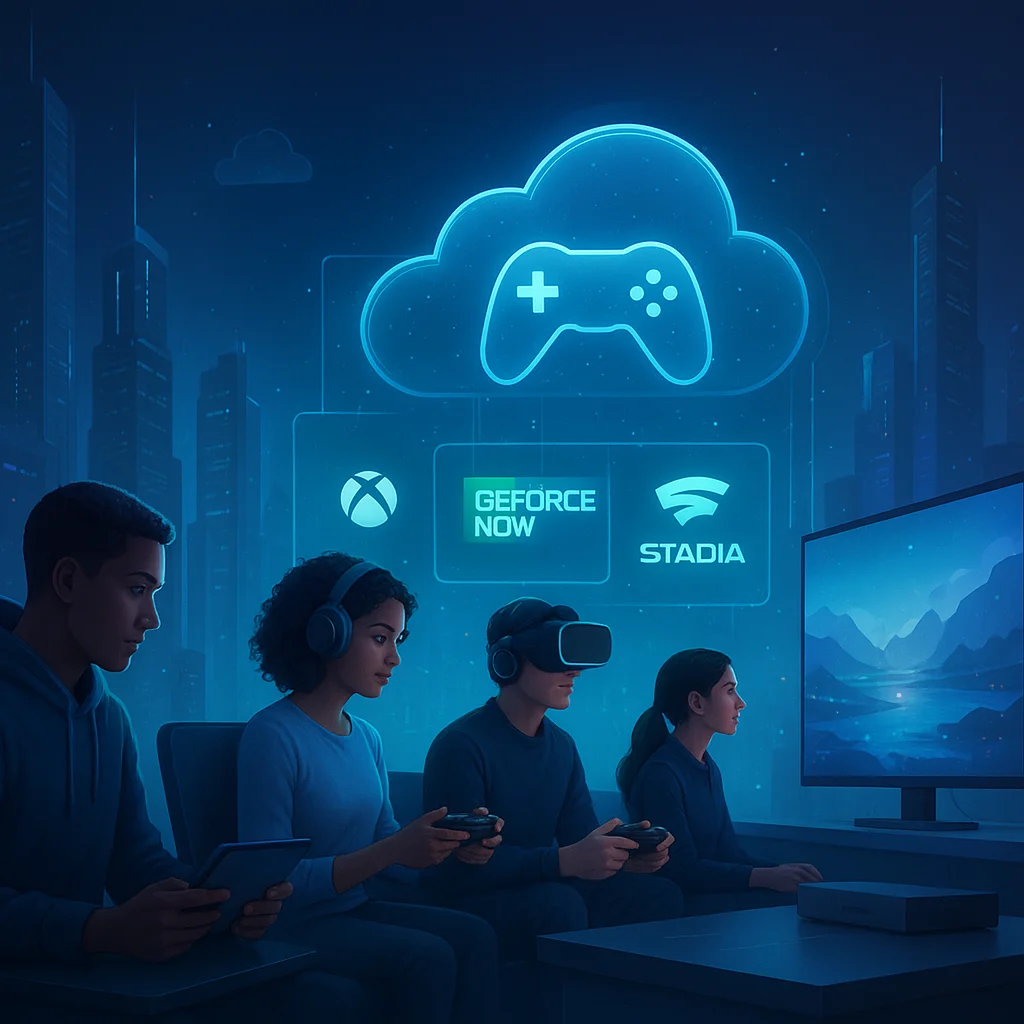

Streaming Play: A Snapshot of Cloud Gaming's Rise
Imagine a world where the latest AAA games load instantly, without hefty downloads or expensive hardware upgrades. This vision is increasingly reality as cloud gaming platforms redefine how players access and experience games. According to Statista, the global cloud gaming market surpassed $5 billion in 2025 and is projected to grow exponentially in the coming years, fueled by advances in 5G and edge computing. Yet, not all cloud gaming services are created equal. Each platform touts unique strengths and limitations, influencing player experience, game libraries, and accessibility. To understand which platform truly delivers on the promise of seamless, high-quality gaming, a detailed comparison is essential.
Early cloud gaming efforts like OnLive struggled with latency and content restrictions, but today's services have evolved significantly. As of 2026, major players such as NVIDIA GeForce NOW, Xbox Cloud Gaming (xCloud), Google Stadia’s successor platforms, and emerging contenders like Amazon Luna vie for dominance. Each offers distinct technological approaches, pricing models, and ecosystem integration. This article explores these cloud gaming platforms through a rigorous lens, revealing how they stack up on performance, library depth, device support, and future readiness.
Historical Context: From Niche Experiment to Mainstream Contender
Cloud gaming’s journey began over a decade ago with the ambition to break free from hardware constraints by streaming games from remote servers. OnLive’s 2010 launch was pioneering yet premature, hindered by infrastructural limits and consumer skepticism. However, the concept persisted, buoyed by improvements in broadband speeds and cloud infrastructure.
Microsoft’s entry with Xbox Cloud Gaming in 2019 marked a turning point, leveraging Azure’s global data centers to offer a robust streaming experience tightly integrated with Xbox Game Pass. NVIDIA’s GeForce NOW, initially a beta in 2017, capitalized on the company’s GPU expertise to provide gamers with access to their existing PC game libraries on virtually any device. Google Stadia, launched the same year, promised a vast library and instant play but faltered due to limited content, higher latency, and controversial business strategies.
By 2024, the market had consolidated somewhat, with Microsoft and NVIDIA leading, and Amazon introducing Luna to the fray focusing on subscription flexibility. According to industry reports, consumer interest shifted from raw novelty to quality of experience, ecosystem compatibility, and affordability. These factors now heavily influence platform adoption.
Cloud gaming’s evolution is also shaped by the rise of mobile gaming and smart TVs, broadening access beyond traditional PC and console markets. This expansion fuels competition but also demands nuanced service differentiation to attract diverse user segments, as detailed in WriteUpCafe’s Beginners Guide to Cloud Gaming Platforms Compared.
Core Performance and Features Analysis
Performance remains the cornerstone of cloud gaming success. Players demand minimal latency, smooth frame rates, and high-resolution streaming. Based on recent benchmarks from Digit and GIZBOT, NVIDIA GeForce NOW and Xbox Cloud Gaming lead in performance, each optimized for different use cases.
NVIDIA GeForce NOW excels in streaming PC games from a user’s existing library across platforms, including Windows, macOS, Android, and smart TVs. It supports up to 1440p at 120 FPS with RTX ray tracing, benefiting from NVIDIA’s proprietary RTX servers. One notable advantage is the ability to play purchased games from stores like Steam and Epic Games Store without repurchasing, appealing to users with extensive PC libraries.
Conversely, Xbox Cloud Gaming integrates seamlessly with Xbox Game Pass Ultimate, offering over 500 games accessible instantly on consoles, PCs, and mobile devices. It streams at 1080p resolution with up to 60 FPS, prioritizing a balance between accessibility and quality. Microsoft's vast server network and Azure cloud infrastructure reduce latency globally, a crucial factor for competitive multiplayer games.
Emerging platforms like Amazon Luna offer a channel-based subscription model, allowing users to subscribe to different game bundles. Luna supports 1080p streaming and is integrated with Twitch, enhancing social gaming aspects. Google’s latest cloud gaming iteration, though diminished from its Stadia origins, focuses on Android TV integration and offers 4K streaming in select regions.
Comparing core features:
- Game Library: Xbox Cloud Gaming offers the largest curated catalog, driven by Game Pass exclusives.
- Device Compatibility: GeForce NOW is the most flexible, supporting over 30 device types including legacy PCs and smart TVs.
- Latency and Quality: NVIDIA's RTX-enabled servers provide superior visual fidelity, while Xbox Cloud Gaming benefits from Azure's global edge nodes for better latency.
- Pricing Models: Xbox Cloud Gaming comes with Game Pass Ultimate at $15/month, GeForce NOW offers a free tier with session limits and paid tiers up to $20/month, and Luna uses a modular subscription starting at $6/month per channel.
“The choice between NVIDIA GeForce NOW and Xbox Cloud Gaming often comes down to whether users value visual fidelity and library ownership or seamless integration and game variety,” explains a senior analyst at Digit.
Recent Developments in 2026
This year has seen significant shifts in the cloud gaming landscape. Xbox Cloud Gaming expanded its 4K streaming beta to select markets, enhancing the experience for premium users. Microsoft also deepened integration with Windows 12's gaming mode, allowing ultra-low latency streaming directly from the Xbox app.
NVIDIA GeForce NOW launched localized data centers in India and Southeast Asia, dramatically reducing latency for those regions. This move directly challenges Xbox Cloud Gaming’s regional dominance, as noted by Republic World. Additionally, GeForce NOW introduced AI-driven bandwidth optimization, adjusting stream quality in real time to balance resolution and latency even on fluctuating connections.
Amazon Luna, despite slower global uptake, released a revamped user interface and announced partnerships with indie developers to diversify its library. Its integration with Amazon Prime has also become more seamless, offering free trials and exclusive in-game content.
Meanwhile, Google’s rebranded cloud gaming service focuses on smart TV integration, reflecting industry reports that show a 30% increase in smart TV gaming sessions year-over-year (TechTimes). This pivot indicates a strategic bet on living room gaming rather than competing head-to-head with Xbox or NVIDIA on PC.
These developments reflect a broader trend towards regional specialization, AI enhancements, and ecosystem convergence. Players now expect cloud gaming platforms to be part of a larger digital entertainment package, beyond just streaming games.
“Cloud gaming in 2026 is no longer a niche but a staple component of gaming ecosystems, demanding continuous innovation and regional adaptation,” remarks a top cloud gaming engineer at Microsoft.
Industry Impact and Expert Perspectives
Cloud gaming platforms are reshaping the gaming industry’s supply chain and user engagement models. Experts note that by decoupling hardware requirements from gameplay, these platforms lower barriers to entry, potentially expanding the gaming population globally.
However, challenges remain. Network infrastructure disparities limit access in developing regions, despite localized data centers. Moreover, concerns about game ownership, digital rights management, and platform exclusivity persist. As highlighted in WriteUpCafe’s What You Need to Know About Cloud Gaming Platforms Compared, players weigh convenience against control over their games.
From a developer standpoint, cloud gaming demands optimization for streaming, influencing game design and update cycles. The rise of live-service models benefits from cloud platforms’ ability to deploy patches rapidly without user intervention. Esports also gain new audiences as cloud platforms enable cross-device participation without hardware constraints.
Industry veterans emphasize the importance of partnerships. Microsoft’s Xbox ecosystem thrives partly through exclusive content deals, while NVIDIA partners with hardware manufacturers for integrated streaming solutions. Amazon’s Twitch synergy exemplifies how social platforms enhance cloud gaming’s reach.
- Key expert insights:
- Cloud gaming is accelerating the shift towards subscription-based models.
- Latency improvements remain critical for competitive gaming viability.
- Cross-platform support is a decisive factor for consumer adoption.
Looking Ahead: What to Watch in Cloud Gaming’s Future
As cloud gaming matures, several trends will define its trajectory. Advances in 6G technology and edge computing promise sub-10ms latency, potentially rivaling local console performance. This could finally dissolve remaining skepticism about streaming as a substitute for physical hardware.
Artificial intelligence is poised to play a larger role in adaptive streaming, predictive latency compensation, and personalized game recommendations. Platforms investing in AI to optimize user experience will likely gain competitive advantage.
Content remains king. Exclusive, high-quality games drive subscriptions and loyalty. We anticipate more studio acquisitions and exclusive launches on cloud platforms, echoing Microsoft’s strategy with Xbox Game Pass. Additionally, cloud platforms will increasingly focus on integrating social features, co-streaming, and community-driven content.
From a consumer perspective, pricing flexibility and device interoperability will remain crucial. Hybrid models that combine cloud streaming with downloadable content may emerge to serve diverse user preferences. Environmental sustainability will also gain attention, as data centers’ energy consumption faces scrutiny.
Players and industry watchers should monitor these indicators:
- Expansion of high-speed networks and data center infrastructure in emerging markets.
- Innovations in cloud rendering and compression technologies.
- New partnerships between cloud platforms and gaming hardware manufacturers.
- Regulatory developments affecting digital rights and data privacy.
For gamers eager to embark on cloud gaming, WriteUpCafe’s How to Get Started With Cloud Gaming Platforms Compared in 2026 offers an excellent roadmap to navigate this dynamic field.






















Sign in to leave a comment.