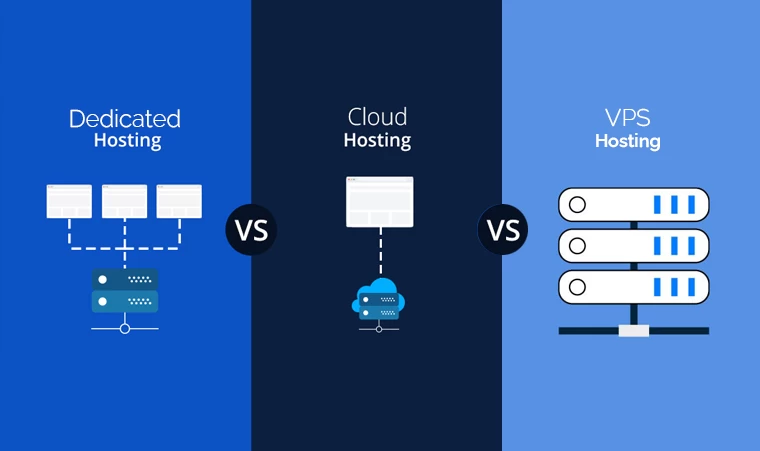

When it comes to hosting your website or web application, you'll encounter three primary options: cloud hosting, VPS hosting, and dedicated hosting. Each offers distinct advantages and disadvantages, making the choice crucial for your project's success. In this cloud vs VPS vs dedicated comprehensive guide, we'll delve into the intricacies of each option, helping you make an informed decision.
Cloud Hosting
Cloud hosting has revolutionized the way we think about web hosting. It leverages a network of virtual servers to distribute resources and ensure high availability. This means your website or application can scale seamlessly to accommodate fluctuating traffic and resource demands.
Key Features of Cloud Hosting:
- Scalability: Easily adjust your resources (CPU, RAM, storage) as needed to meet growing demands.
- High Availability: Minimize downtime with redundant servers and automatic failover mechanisms.
- Cost-Effective: Pay only for the resources you consume, making it ideal for businesses of all sizes.
- Flexibility: Deploy and manage your applications across multiple data centers.
Ideal for:
- E-commerce businesses: Handle fluctuating traffic and peak sales periods.
- High-traffic websites: Ensure optimal performance and reliability.
- Startups and small businesses: Scale as your business grows without significant upfront costs.
VPS Hosting
VPS (Virtual Private Server) hosting offers a more traditional approach, where a physical server is divided into multiple virtual servers. Each VPS has its own dedicated resources, providing a higher level of control and performance compared to shared hosting.
Key Features of VPS Hosting:
- Root Access: Gain full control over your server environment, allowing for customization and optimization.
- Dedicated Resources: Allocate specific resources (CPU, RAM, storage) to your VPS, ensuring consistent performance.
- Scalability: Upgrade your resources as needed to accommodate growth.
- Security: Implement advanced security measures to protect your data.
Ideal for:
- Medium-sized businesses: Require more control and performance than shared hosting.
- Developers: Test and deploy applications in a controlled environment.
- E-commerce stores: Handle moderate to high traffic volumes.
Dedicated Hosting
Dedicated hosting provides the ultimate level of control and performance. You have an entire physical server dedicated to your website or application, giving you complete control over hardware and software configurations.
Key Features of Dedicated Hosting:
- Complete Control: Customize your server environment to meet specific needs.
- Maximum Performance: Leverage the full power of a dedicated server for optimal speed and responsiveness.
- Security: Implement robust security measures to safeguard your data.
- Scalability: Add additional hardware or virtualize your server for future growth.
Ideal for:
- Large-scale businesses: Demand maximum performance and reliability.
- High-traffic websites: Handle heavy loads and complex applications.
- Security-sensitive applications: Require stringent security measures.
Choosing the Right Hosting Solution
When selecting the best hosting solution, consider the following factors:
- Website Traffic: Anticipate future growth and choose a solution that can handle increasing traffic.
- Resource Requirements: Determine the amount of CPU, RAM, and storage needed for your website or application.
- Budget: Evaluate your budget and choose a cost-effective solution that aligns with your needs.
- Technical Expertise: Assess your technical skills and consider managed hosting options if you need assistance.
- Scalability: Select a solution that can easily scale as your business grows.
- Security: Prioritize security and choose a provider with robust security measures.
By carefully considering these factors, you can make an informed decision and select the optimal hosting solution for your specific requirements.
In Conclusion
While cloud hosting offers unparalleled scalability and flexibility, VPS hosting provides a balance of control and affordability. Dedicated hosting, on the other hand, delivers maximum performance and control but comes with higher costs.
Ultimately, the best choice depends on your unique needs and budget. By understanding the key differences between these hosting options, you can make an informed decision that will empower your online presence.








Sign in to leave a comment.