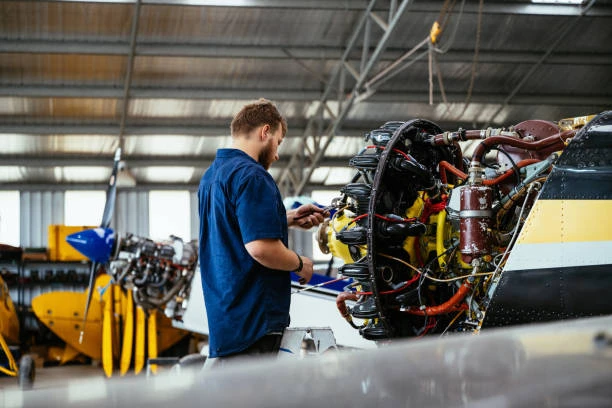
The demand for ultra-precise, reliable, and innovative parts in the aerospace industry has never been greater. With the global aerospace sector rapidly evolving, manufacturers are turning to advanced CNC machining to meet stringent safety and performance requirements.
In this context, aerospace industry advancements depend heavily on modern machining processes, material integrity, and exceptional engineering.
Understanding the Aerospace Industry’s Unique Demands
The aerospace sector, which encompasses both commercial aviation and defense, is one of the most technologically demanding industries. It requires components that are:
- Lightweight yet structurally strong
- Resistant to extreme temperatures and atmospheric conditions
- Produced within microscopic tolerances
- Certified to strict safety and quality standards
These requirements are not optional; they are fundamental to ensuring the safety and performance of aircraft in flight.
Why CNC Machining Is a Perfect Fit
Computer Numerical Control (CNC) machining has revolutionized component production in aerospace by offering:
- Unmatched Precision: CNC technology can deliver tolerances as tight as ±0.0001 inches, which is critical for components such as turbine blades and engine housings.
- Repeatability at Scale: Whether manufacturing 10 or 10,000 parts, CNC ensures consistency in every piece.
- Complex Geometry: Aerospace parts often have intricate internal and external features that CNC machining handles with ease.
- Multi-Material Compatibility: From lightweight aluminum to heat-resistant titanium and Inconel, CNC machining supports a broad range of aerospace-grade materials.
Key Components Manufactured Through CNC Machining
CNC machining plays a vital role in producing components such as:
- Engine Parts: Including combustion chambers, valves, and shafts requiring high heat resistance.
- Landing Gear Systems: Which must withstand massive mechanical stress during takeoff and landing.
- Wing and Fuselage Components: Precision drilling and milling for structural assemblies.
- Interior Components: From cabin pressure regulators to seat frames, CNC machining ensures ergonomic and functional designs.
- Avionics Housings: Shielded enclosures for sensors, control units, and flight computers.
Material Considerations in Aerospace CNC Machining
Choosing the right material is as critical as the machining process itself. The most used materials in aerospace machining include:
- Aluminum Alloys: Known for their lightweight and corrosion resistance.
- Titanium Alloys: Exceptional strength-to-weight ratio, ideal for structural frames and engine parts.
- Inconel and Other Superalloys: Perfect for high-temperature applications.
- Composites and Plastics: Used in non-load-bearing structures and interior assemblies.
Each material has distinct machining challenges, requiring expertise, specialized tools, and optimized cutting parameters.
Quality Control and Certifications: A Non-Negotiable Standard
Aerospace CNC manufacturers must adhere to rigorous quality systems such as:
- AS9100 Certification: Aerospace-specific quality standard that ensures compliance with FAA and global aviation regulations.
- ISO 9001 Certification: A baseline for quality management and process optimization.
- NADCAP Accreditation: For processes such as non-destructive testing, welding, and heat treatment.
Every component undergoes multiple layers of inspection including:
- Coordinate Measuring Machines (CMM)
- Laser scanners
- Visual and dimensional inspections
- Non-destructive testing (NDT)
These processes ensure that no defective component makes it into an aircraft—where failure is not an option.
Digitalization and Innovation in Aerospace Manufacturing
Modern aerospace machining is embracing Industry 4.0, with:
- CAD/CAM Integration: Streamlining design-to-production workflows.
- Simulation Software: Testing and validating machining paths before production.
- Real-Time Monitoring: Ensuring zero downtime and predictive maintenance.
- Additive Manufacturing Hybridization: Combining 3D printing with CNC finishing for complex components.
This digital shift not only increases manufacturing efficiency but also ensures that aerospace manufacturers stay ahead of the curve.
Environmental and Cost Efficiency: The Twin Challenge
The aerospace sector is increasingly focused on sustainability. CNC machining contributes by:
- Minimizing Material Waste: Precision machining reduces scrap rates.
- Energy-Efficient Machinery: Modern machines consume less power with optimized tool paths.
- Recyclability: Many aerospace metals are recyclable without degradation.
- Lightweight Components: Reducing aircraft weight means lower fuel consumption and emissions.
At the same time, CNC machining offers cost-efficiency through automation, scalability, and error reduction.
Choosing the Right CNC Partner for Aerospace Projects
Not all machine shops are built for aerospace-level production. When selecting a partner, aerospace OEMs and Tier 1 suppliers must evaluate:
- Experience with aerospace-grade materials and tolerances
- A proven track record in AS9100 and ISO-compliant operations
- State-of-the-art multi-axis machining capabilities
- Transparent communication and design-for-manufacturability (DFM) support
Firms like MYT Machining specialize in precisely this: delivering aerospace components that meet global standards while optimizing costs and timelines.
The Future of Aerospace Machining
Looking ahead, the aerospace industry is set to see rapid evolution driven by:
- Electric Aircraft Components: Smaller, more efficient parts will be needed.
- Spacecraft Part Production: Extremely high tolerance components for space exploration.
- AI-Driven Design: Generative design paired with CNC for optimal performance.
- Increased Autonomy: From pilotless aircraft to automated maintenance systems.
CNC machining will remain central to this progress, offering the adaptability, precision, and efficiency that tomorrow's aerospace solutions demand.
Conclusion
The aerospace industry’s uncompromising standards for safety, precision, and performance make CNC machining an essential manufacturing method. With its ability to handle complex designs, high-performance materials, and mass production without sacrificing accuracy, CNC machining continues to support innovations in air and space travel. As aerospace technology moves toward greater digitalization and environmental responsibility, CNC machining will undoubtedly evolve to meet the next generation of challenges.

























Sign in to leave a comment.