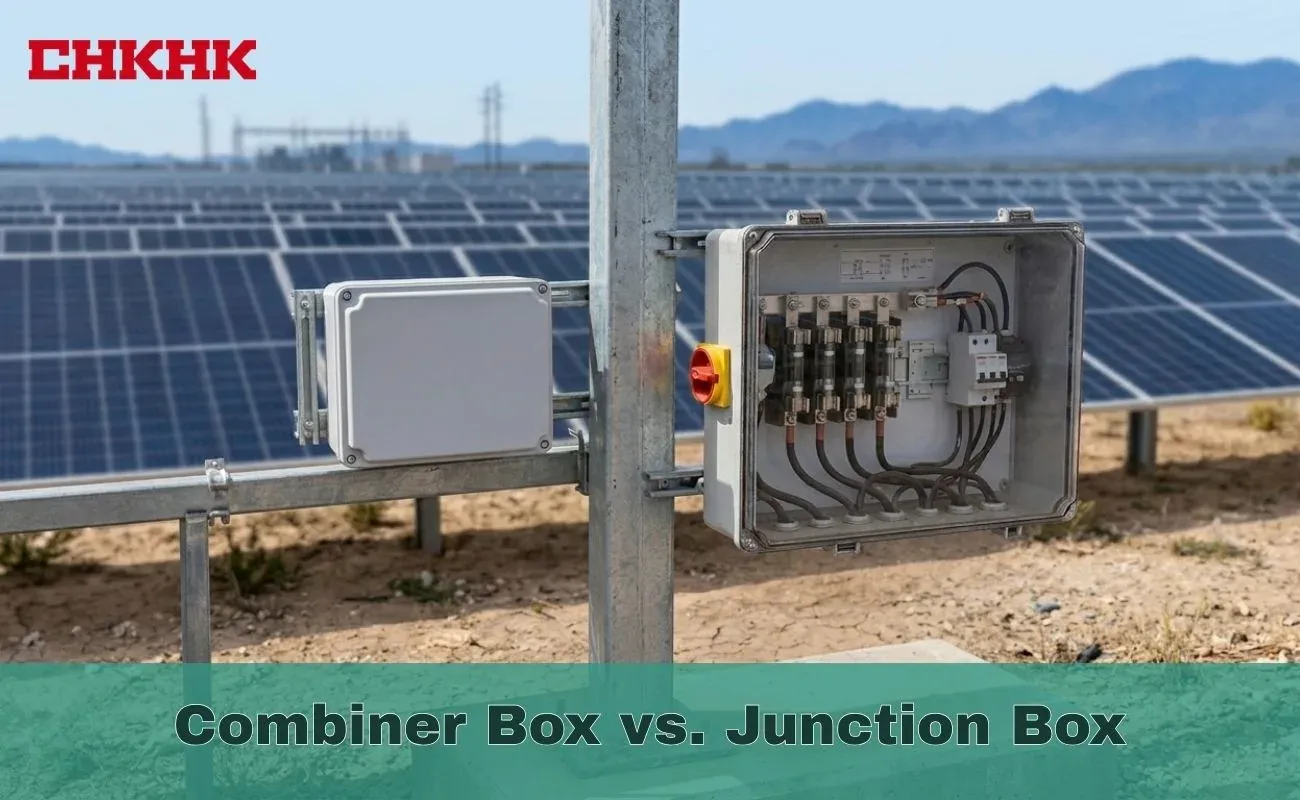

When designing a solar energy system, understanding the specific roles of various electrical components is crucial for safety, efficiency, and longevity. Two components that often cause confusion for beginners are the Combiner Box and the Junction Box. While they may look similar and both serve as enclosures for electrical connections, their functions within a photovoltaic (PV) system are distinct.
What is a Junction Box?
A junction box is a basic electrical enclosure used to protect wire connections. In the context of solar panels, every individual solar module has a junction box attached to its rear side. Its primary purpose is to house the connections where the strings of solar cells are joined together, providing a weatherproof output point for the panel’s wiring. It protects the connections from oxidation and environmental damage, ensuring that power can safely travel from the panel to the rest of the circuit.
What is a Combiner Box?
As a solar array grows in size, managing multiple strings of panels becomes more complex. This is where the combiner box becomes essential. Instead of running dozens of separate wires from every panel string directly to the inverter, the wires are routed into a combiner box. This device "combines" several DC inputs into a single main output.
Modern units do more than just consolidate wires; they house essential safety components like fuses, circuit breakers, and surge protection devices. For large-scale projects, sourcing from reputable Combiner Box Manufacturers is vital to ensure these components meet international safety standards and can withstand high-voltage DC loads.
Direct Comparison: Combiner Box vs. Junction Box
The main difference lies in the scale and complexity. A junction box is usually a simple "pass-through" or connection point for a single module or a small series. In contrast, a combiner box acts as a central nervous system for multiple strings.
- Complexity: Junction boxes are simple enclosures. Combiner boxes contain sophisticated monitoring and protective hardware.
- Placement: Junction boxes are mounted on the back of each panel. The combiner box is usually mounted between the solar array and the inverter.
- Protection: Combiner boxes provide overcurrent protection for the entire system, whereas junction boxes primarily provide environmental protection for wire splices.
Conclusion
In summary, while a junction box is a fundamental component of an individual solar panel, a combiner box is a strategic necessity for larger arrays. Choosing the right equipment ensures your solar system operates at peak efficiency while remaining protected against electrical faults. Knowing the nuances of each will help you build a safer, more professional solar installation.




























Sign in to leave a comment.