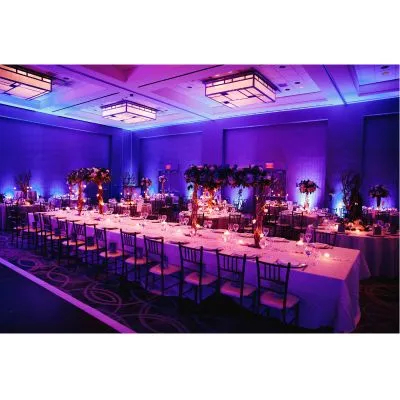

Smart Lighting Choices Can Transform Any Event
Commercial lighting services help you run a smooth, clear event. Good lights help your crowd see speakers on stage. They let guests view every performer with ease. You can point attention right where you want it. Lights boost the mood in plain rooms fast but it needs change for corporate meetings or charity events. You also need different setups for graduations and sporting events. Concerts and celebrations take custom care too. Every plan fits your venue, audience, stage design, and main purpose.
Commercial event lighting uses many tools. You can use stage fixtures, moving lights, wash lighting, special effects, decorative fixtures, trussing, and wireless LED systems. Your main goal is not just to make a room brighter. You want controlled lighting that supports the whole event experience.
What Does Commercial Event Lighting Include?
A professional lighting setup combines several types of fixtures. Each piece serves a very specific purpose.
- Stage Lighting: Wash and profile fixtures give steady, clear light for your performers, presenters, and speakers.
- Moving Lights: These smart fixtures change position, color, and focus to give you active stage effects.
- Special Lighting: Lekos, gobos, blinders, strobes, and ACL fixtures add bold patterns, focus, and movement.
- Decorative Lighting: Battery-powered wireless LED fixtures add rich color and style without long, messy cables.
- Structural Support: Trussing, towers, and strong frames safely put your lights wherever your venue needs them.
North State Audio Visual uses professional lighting gear for concerts, dance floors, decor, and other event spaces. They use top control platforms like Avolites and Grand MA to run your stage lighting.
How Should Lighting Match the Venue?
You must look at venue conditions before picking your equipment. A big outdoor concert needs high light spots, wide coverage, and heavy gear built for tough sites. A corporate meeting needs clean front lighting. This keeps presenters clear without bothering your guests.
Some venues lack strong ceiling points to hang lights. You can support gear using Genie towers, chain motors, or ground truss stands instead. Your room shape, power outlets, guest seats, stage size, and sightlines all guide how you place your setup.
Why Is Decorative Lighting Different?
Decorative lighting focuses on the room style rather than the main stage. It changes how your walls, building features, tables, entry ways, and key spots look during an event.
Wireless battery-powered LED fixtures work great when long wires cause clutter or restrict light spots. Gobos and leko fixtures also project custom patterns, leafy shapes, themes, or company logos around your room.
This style works best for business events, weddings, fundraisers, and parties where pure mood matters just as much as clear sight.
What Should Event Planners Consider?
Before you pick commercial lighting services, you should consider:
- Event Type: Live concerts and corporate talks need very different lighting priorities.
- Venue Size: Bigger spaces need extra fixtures, wide light coverage, and strong support structures.
- Stage Requirements: Your speakers and performers need dependable front and performance lighting.
- Audience Experience: Your lights must help guests see clearly without blinding or distracting them.
- Production Integration: Lights must work seamlessly alongside sound, video, staging, and tech gear.
This joined approach works best. North State Audio Visual handles total event production across sound, lighting, and video. You can plan all these technical parts together as one system rather than separate pieces.
How Does Professional Planning Help?
Great lighting starts long before you turn on your first fixture. Your production team must know your show timeline, venue rules, gear needs, and visual goals. You can then pick equipment for your real needs instead of grabbing whatever gear sits on a shelf.
For instance, a lively dance floor benefits from synced moving lights, haze, trussing, and fun visual tricks. Yet a formal stage speech needs a clean and quiet setup. Smart planning makes the difference because every fixture must have a purpose.
A Practical Approach to Event Lighting
Effective commercial event lighting balances guest view, room mood, safety, gear strength, and room limits. You may need simple stage light, decorative effects, dance-floor colors, or big concert production. Your lighting design should support your event rather than compete with it.
North State Audio Visual blends top equipment, skilled professionals, and deep event knowledge to build great light setups for events of any size. When you focus on venue limits and event goals first, you build a setup that looks great, works well, and delights your crowd.
Frequently Asked Questions
Q: What Are Commercial Lighting Services Used For?
Commercial lighting services are used for concerts, corporate events, charity functions, graduations, weddings, sporting events, and other productions requiring controlled stage, decorative, or atmospheric lighting.
Q: What Is Included in Commercial Event Lighting?
Commercial event lighting can include LED fixtures, moving lights, wash lights, profile fixtures, gobos, strobes, blinders, trussing, haze, and other equipment selected according to venue and production requirements.
Q: Can Event Lighting Be Used Without Existing Rigging Points?
Yes. Depending on venue conditions, lighting may be supported using Genie towers, ground-based truss structures, or other suitable configurations rather than relying exclusively on existing overhead rigging points.
Q: Is Decorative Lighting Different From Stage Lighting?
Yes. Stage lighting primarily supports performers and presentations, while decorative lighting focuses on transforming the appearance and atmosphere of the surrounding venue using color, patterns, textures, and architectural emphasis.
Q: How Should a Planner Choose Event Lighting?
A planner should consider the event type, venue dimensions, stage requirements, audience sightlines, available power, rigging conditions, and how lighting needs to coordinate with sound and video systems.





















Sign in to leave a comment.