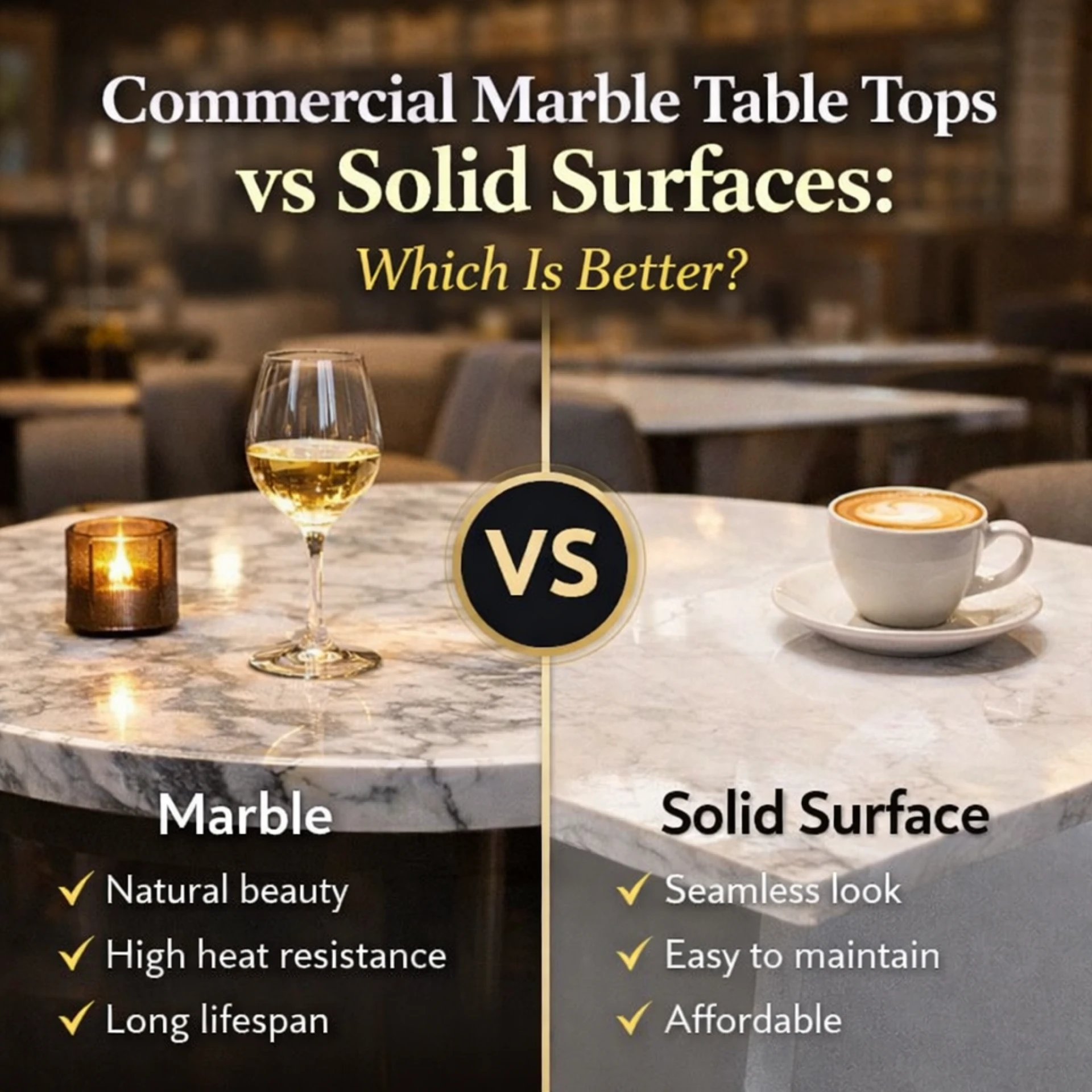

When choosing surfaces for restaurants, hotels, cafés, and offices, the decision often comes down to commercial marble table tops vs solid surface materials. Both options look premium and work well in commercial spaces. However, they differ in durability, cost, maintenance, and design flexibility.
Hospitality spaces need surfaces that handle heavy traffic and still look elegant. This guide compares both materials in simple terms. It helps business owners, designers, and contractors make the right choice.
What Are Commercial Marble Table Tops?
Commercial marble table tops are made from natural stone. Marble forms under heat and pressure over time. Each slab has unique veining and color patterns.
Marble is widely used in hotels, fine dining restaurants, and luxury lounges. It gives a classic and high end look.
According to the Natural Stone Institute, natural stone products are valued for their durability and long life cycle. Marble remains one of the most preferred stones in commercial interiors.
Key Features of Marble
- Natural stone material
- Unique patterns
- High heat resistance
- Long lifespan
- Premium appearance
What Is Solid Surface Material?
Solid surface is a man made material. It is usually made from acrylic or polyester resins mixed with minerals. It looks smooth and uniform.
Many commercial brands use solid surface for counters, table tops, and wall cladding. It offers design flexibility and seamless joints.
The American Society of Interior Designers notes that engineered materials like solid surface are popular for modern commercial interiors due to their flexibility and easy fabrication.
Key Features of Solid Surface
- Non porous surface
- Seamless finish
- Easy to repair
- Wide color range
- Modern look
Commercial Marble Table Tops vs Solid Surface: Detailed Comparison
1. Appearance and Design Impact
Marble stands out for its natural beauty. No two pieces look the same. It creates a luxury feel. It works well in fine dining and boutique hotels.
Solid surface offers uniform colors and custom shapes. It suits modern cafés and office spaces.
Factor Marble Solid Surface
Look Natural and unique Smooth and uniform
Luxury Feel High Medium to High
Custom Shapes Limited High
Seamless Joints No Yes
If brand image focuses on elegance and tradition, marble works better. If you want clean lines and modern style, solid surface may suit you.
2. Durability in High Traffic Areas
Hospitality tables face daily stress. They handle hot plates, spills, and constant cleaning.
Marble has strong heat resistance. It handles hot dishes well. However, it can scratch or stain if not sealed properly.
Solid surface resists stains better because it is non porous. It can scratch, but scratches are often repairable.
According to hygiene guidance from the Food Standards Agency, surfaces in food areas must be easy to clean and maintain. Both materials meet this requirement when installed correctly.
3. Maintenance and Cleaning
Maintenance plays a big role in long term cost.
Marble Maintenance
- Needs periodic sealing
- Must wipe spills quickly
- Avoid acidic cleaners
- Use mild soap solution
Solid Surface Maintenance
- No sealing required
- Easy daily cleaning
- Minor scratches can be sanded
- Resistant to moisture
Solid surface requires less routine maintenance. Marble needs more care but rewards with timeless beauty.
4. Lifespan and Long Term Value
Marble can last 20 years or more with proper care. Many historic hotels still use marble installed decades ago.
Solid surface usually lasts 10 to 20 years depending on usage and quality.
Estimated Lifespan Comparison
Material Average Lifespan Replacement Frequency
Marble 20+ years Low
Solid Surface 10 to 20 years Medium
Marble often has higher upfront cost. However, its long life can reduce replacement expenses.
5. Cost Considerations
Marble generally costs more per square meter. Installation also requires skilled craftsmanship.
Solid surface is often more affordable. Fabrication is easier and faster.
However, cost should not be judged only on purchase price. Consider:
- Lifespan
- Maintenance cost
- Brand value
- Customer perception
In high end hospitality settings, marble may justify its higher cost due to premium appeal.
6. Sustainability Factors
Sustainability matters for many businesses.
Marble is a natural material. It does not require heavy chemical processing. It also has long service life, which reduces waste.
Solid surface uses synthetic materials. Some brands include recycled content. However, production involves energy intensive processes.
The UK Green Building Council highlights that durable materials with long life cycles support sustainable design goals.
Which Is Better for Hospitality Spaces?
The answer depends on your business type.
Choose Marble If You Want:
- Luxury dining atmosphere
- Classic or timeless design
- Strong heat resistance
- Long term investment value
Choose Solid Surface If You Want:
- Seamless modern look
- Easy maintenance
- Custom shapes and branding
- Budget friendly option
Both materials work well when chosen for the right environment.
For example, a fine dining restaurant may prefer marble for table tops. A quick service café may choose solid surface for easier upkeep.
You can also combine both materials in one space. For instance, marble table tops with solid surface bar counters.
Common Mistakes to Avoid
- Choosing based only on price
- Ignoring maintenance needs
- Not considering brand positioning
- Skipping professional installation
Always match the surface with your operational needs and design goals.
FAQ Section
Is marble better than solid surface for restaurants?
Marble offers higher luxury appeal and strong heat resistance. Solid surface is easier to maintain. The better option depends on your concept and budget.
Do solid surface table tops stain?
Solid surface is non porous and resists stains well. It is easier to clean than unsealed marble.
Are marble table tops hard to maintain?
They need sealing and careful cleaning. With proper care, maintenance is manageable.
Which lasts longer, marble or solid surface?
Marble often lasts longer if maintained well. Solid surface also has good lifespan but may need refinishing over time.
Is solid surface cheaper than marble?
Yes. Solid surface usually costs less upfront. However, total cost depends on lifespan and maintenance.
Final Thoughts
The debate around commercial marble table tops vs solid surface depends on your goals. Marble delivers timeless elegance and strong long term value. Solid surface offers flexibility and low maintenance.
Both materials can enhance hospitality spaces when chosen wisely. Think about guest experience, traffic level, cleaning routine, and brand image.
If you are planning a commercial project and need expert advice on marble or solid surface solutions, Versital UK offers tailored surfaces for restaurants, hotels, and commercial interiors. Their experience helps businesses choose the right material for performance and visual impact.
Original Sourec:- https://bit.ly/4ubb1Rx


























Sign in to leave a comment.