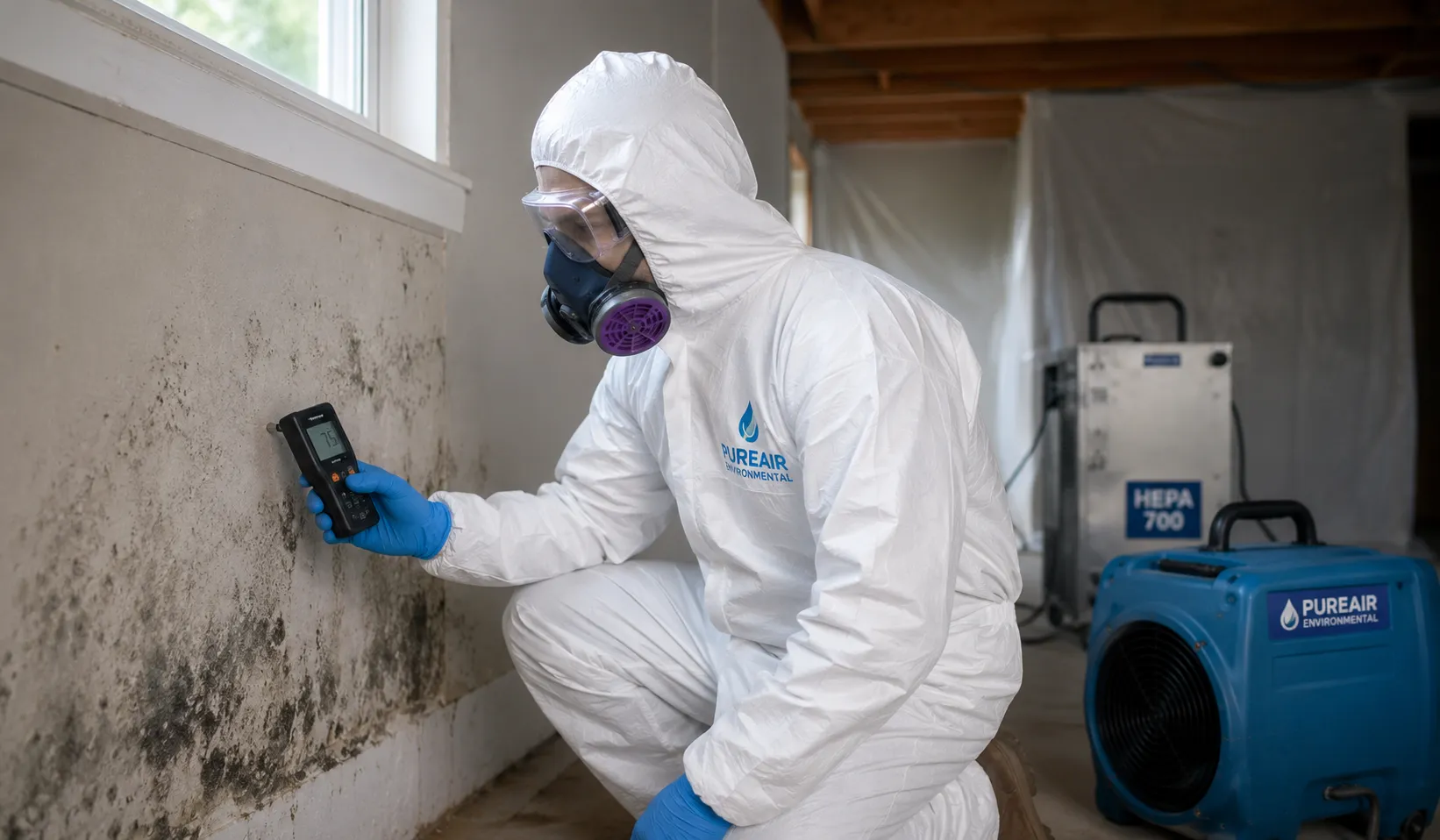

A hidden mold problem can quietly affect your employees, tenants, customers, and even your business reputation long before it becomes visible.
Whether you manage an office building, apartment complex, retail store, healthcare facility, warehouse, hotel, or educational institution, moisture and mold are risks that should never be ignored. Poor indoor environments can contribute to unpleasant odors, damaged building materials, tenant complaints, and unhealthy indoor conditions.
That's why commercial mold services and indoor air quality testing have become essential parts of responsible property management.
If you're searching for reliable guidance, Northeast Mold Experts helps homeowners, property managers, landlords, businesses, and real estate professionals connect with licensed and insured independent mold remediation professionals throughout New Jersey, New York, Pennsylvania, Connecticut, Delaware, and Maryland.
This guide answers the most common questions property owners ask while helping you understand when professional assistance is necessary.
What Are Commercial Mold Services?
commercial mold services include professional inspection, mold testing, moisture detection, mold remediation, indoor air quality testing, post-remediation verification, and preventative recommendations for commercial properties.
Unlike residential projects, commercial buildings often involve:
- Office buildings
- Apartment complexes
- Schools
- Medical facilities
- Hotels
- Retail stores
- Restaurants
- Warehouses
- Industrial buildings
- Government facilities
Professional remediation helps identify moisture sources, safely remove contamination, and restore healthier indoor environments while minimizing disruption to business operations.
Why Does Mold Develop in Commercial Buildings?
Mold only needs three things:
- Moisture
- Organic material
- Time
Commercial properties often experience hidden moisture from:
- Roof leaks
- Plumbing failures
- HVAC condensation
- Flooding
- High humidity
- Poor ventilation
- Window leaks
- Foundation moisture
- Burst pipes
- Water intrusion after storms
Because many commercial spaces have large HVAC systems and enclosed areas, mold can spread unnoticed for weeks or months.
What Are the Signs You May Need Commercial Mold Services?
Many business owners don't discover mold until employees or tenants begin reporting problems.
Common warning signs include:
- Persistent musty odors
- Water stains on ceilings or walls
- Peeling paint
- Visible mold growth
- Increased allergy complaints
- High indoor humidity
- Condensation around HVAC systems
- Discolored drywall
- Warped flooring
- Previous flooding or water damage
If any of these warning signs appear, scheduling a professional inspection is often the safest next step.
What Is Indoor Air Quality Testing?
Indoor air quality testing evaluates the condition of the air inside a building by measuring airborne particles, mold spores, moisture-related indicators, and other environmental factors that may affect occupant comfort and building health.
Testing helps determine whether indoor air conditions differ significantly from normal environmental levels and whether additional investigation is recommended.
Professional indoor air quality testing may include:
- Air sampling
- Surface sampling
- Moisture assessment
- Humidity measurements
- Particle analysis
- HVAC evaluation
- Mold spore analysis
Testing provides valuable information when mold is suspected but not immediately visible.
When Should You Schedule Indoor Air Quality Testing?
Many property owners wait until complaints become widespread.
Instead, consider testing if you notice:
After Water Damage
Even a minor leak can create hidden moisture behind walls.
Before Buying Commercial Property
Environmental testing helps identify hidden concerns before closing.
Employee Health Complaints
Repeated reports of respiratory irritation, headaches, or musty odors deserve investigation.
After Mold Remediation
Testing helps confirm whether remediation objectives have been successfully completed.
During Building Renovations
Construction activities can expose hidden moisture issues.
Can Mold Affect Indoor Air Quality?
Yes.
As mold grows, it can release microscopic spores into the air. Elevated moisture can also encourage microbial growth in hidden areas.
While every situation is different, poor indoor environmental conditions may contribute to:
- Musty odors
- Reduced indoor comfort
- Occupant complaints
- Damage to building materials
- Reduced property value
This is why professional indoor air quality testing is often recommended when mold is suspected.
What Does a Professional Mold Inspection Include?
Although every project is unique, a professional inspection commonly includes:
Visual Assessment
Inspectors evaluate visible mold growth, staining, moisture damage, and ventilation conditions.
Moisture Detection
Specialized moisture meters identify hidden dampness inside building materials.
Thermal Imaging
Infrared cameras may reveal concealed moisture behind walls or ceilings.
Air Sampling
Air samples help evaluate airborne mold concentrations.
Surface Testing
Visible growth can be sampled for laboratory analysis when appropriate.
Written Findings
Property owners typically receive documentation outlining observations and recommended next steps.
How Commercial Mold Remediation Works
Every project varies depending on the building size and contamination level, but the general process includes:
1. Inspection
Professionals identify moisture sources and affected materials.
2. Containment
Affected areas may be isolated to reduce the spread of contaminants during remediation.
3. Air Filtration
HEPA filtration equipment helps capture airborne particles.
4. Mold Removal
Contaminated materials are cleaned, treated, or removed when necessary.
5. Drying
Moisture sources are addressed, and affected areas are thoroughly dried.
6. Verification
Post-remediation verification may be recommended to confirm remediation goals have been met.
Why Moisture Assessments Matter
Mold cannot thrive without moisture.
That's why successful remediation focuses not only on removing mold but also on identifying and correcting the underlying moisture issue.
A professional moisture assessment may locate:
- Hidden plumbing leaks
- Roof failures
- Basement moisture
- Crawl space humidity
- Window infiltration
- HVAC condensation
Without solving the moisture problem, mold is more likely to return.
Industries That Commonly Need Commercial Mold Services
Professional commercial mold services are frequently requested by:
- Property management companies
- Commercial landlords
- Apartment communities
- Office buildings
- Medical offices
- Schools and universities
- Retail businesses
- Hotels
- Manufacturing facilities
- Government buildings
- Real estate professionals
- Assisted living facilities
Each property type presents unique moisture challenges requiring experienced evaluation.
How Northeast Mold Experts Helps Property Owners
Finding qualified professionals shouldn't be stressful.
Northeast Mold Experts simplifies the process by helping customers connect with licensed and insured independent mold remediation professionals throughout:
- New Jersey
- New York
- Pennsylvania
- Connecticut
- Delaware
- Maryland
Whether you're dealing with:
- Visible mold
- Water damage
- Musty odors
- Indoor air quality concerns
- Commercial mold issues
- Moisture intrusion
- Real estate inspections
- Post-remediation verification
Northeast Mold Experts helps connect you with experienced professionals serving your area.
This streamlined approach saves valuable time while helping property owners access trusted environmental services when they need them most.
Preventing Mold in Commercial Buildings
Prevention is almost always less expensive than extensive remediation.
Consider these best practices:
- Repair leaks immediately.
- Keep indoor humidity below recommended levels.
- Maintain HVAC systems regularly.
- Inspect roofs annually.
- Improve ventilation.
- Dry water-damaged materials quickly.
- Inspect plumbing routinely.
- Address condensation problems.
- Monitor crawl spaces and basements.
- Schedule periodic moisture assessments.
Routine maintenance significantly reduces long-term mold risks.
Frequently Asked Questions (People Also Ask)
What are commercial mold services?
Commercial mold services include mold inspections, moisture assessments, mold testing, remediation, indoor air quality testing, and post-remediation verification for commercial properties.
Is indoor air quality testing worth it?
Yes. Indoor air quality testing helps identify airborne mold spores, moisture-related concerns, and other indoor environmental issues that may not be visible during a standard inspection.
When should a business schedule mold testing?
Businesses should consider mold testing after water damage, persistent musty odors, visible mold growth, recurring employee complaints, or before purchasing commercial property.
Can mold grow behind walls?
Yes. Mold often develops behind drywall, ceilings, insulation, flooring, and inside HVAC systems where moisture is present but not immediately visible.
How long does commercial mold remediation take?
Project timelines vary depending on building size, contamination levels, and moisture conditions. Small projects may take a few days, while larger commercial properties may require additional time.
What causes poor indoor air quality?
Poor indoor air quality may result from excess moisture, mold growth, inadequate ventilation, HVAC issues, dust accumulation, volatile organic compounds (VOCs), or other airborne contaminants.
Do all mold problems require remediation?
Not always. A professional inspection helps determine whether remediation is necessary and identifies the most appropriate solution based on the extent of the issue.
What is post-remediation verification?
Post-remediation verification is an evaluation performed after remediation to help confirm that cleanup objectives have been achieved and that affected areas are ready for normal occupancy.
Does Northeast Mold Experts provide services throughout the Northeast?
Yes. Northeast Mold Experts helps connect homeowners, landlords, businesses, property managers, and real estate professionals with licensed and insured independent mold remediation professionals serving New Jersey, New York, Pennsylvania, Connecticut, Delaware, and Maryland.
Final Thoughts
Mold issues rarely resolve on their own, and delaying action can allow moisture problems to worsen over time. Whether you're managing a commercial property, preparing a building for sale, responding to water damage, or investigating indoor environmental concerns, timely evaluation is essential.
Commercial mold services and indoor air quality testing provide valuable insight into the condition of your property, helping you make informed decisions about remediation and long-term prevention. Visit Website
If you're looking for a reliable way to connect with qualified professionals, Northeast Mold Experts makes the process straightforward. By connecting customers with licensed and insured independent mold remediation professionals across New Jersey, New York, Pennsylvania, Connecticut, Delaware, and Maryland, the company helps property owners access trusted expertise for mold inspections, testing, remediation, moisture assessments, indoor air quality testing, and post-remediation verification—supporting healthier indoor environments and greater peace of mind.





























Sign in to leave a comment.