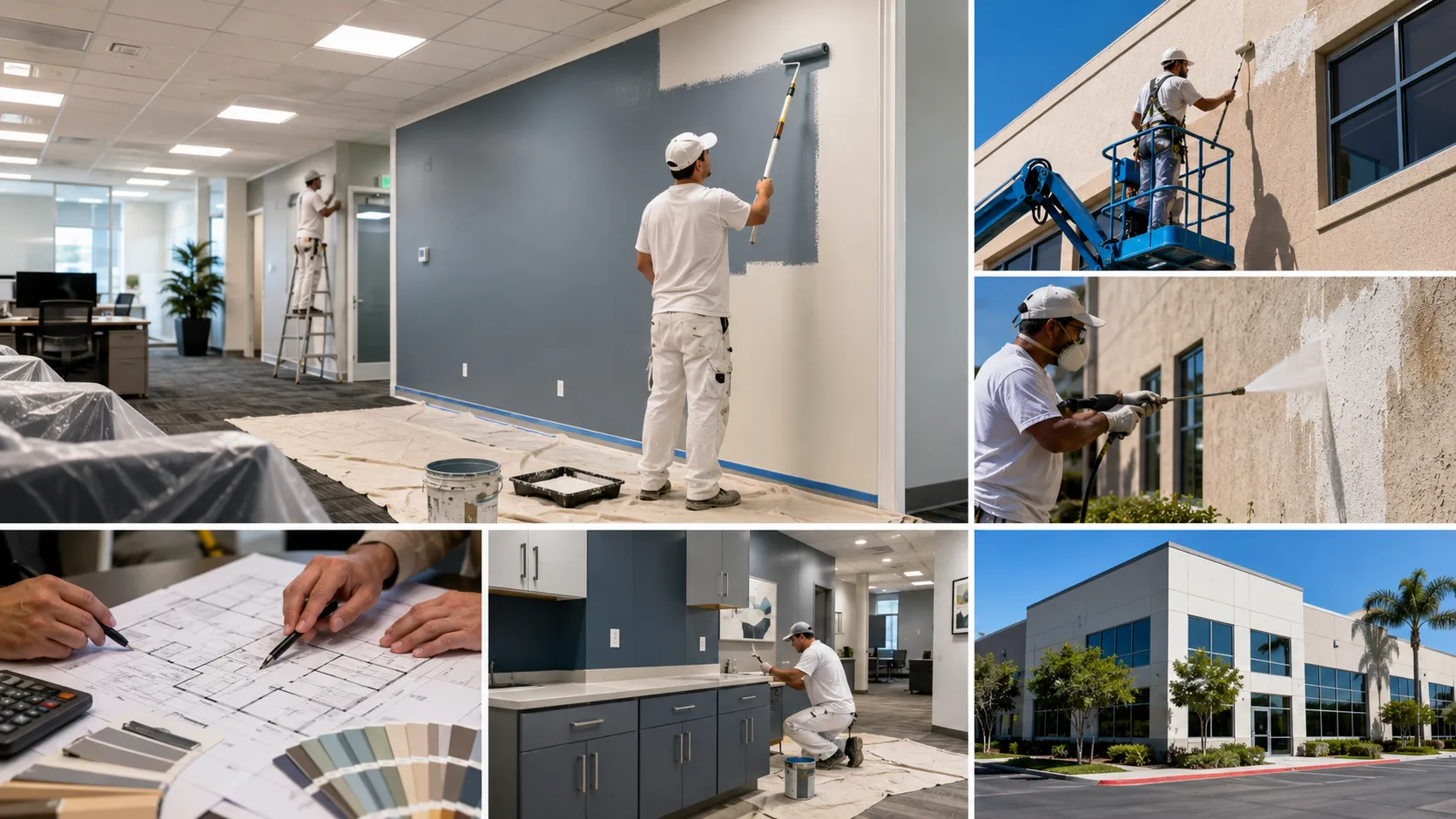

Budgeting for a commercial repaint is rarely as simple as multiplying the building’s floor area by one rate. Different commercial properties have different surfaces, access requirements, schedules, and durability needs. A realistic budget must consider what will be painted, how much preparation is necessary, and how work can proceed without unnecessary disruption.
For San Diego property owners and facility managers, broad price ranges are useful for early planning, but they should not replace an on-site assessment. National guides commonly place Commercial Painting Services at roughly $2 to $6 per square foot of paintable surface for many standard projects. Exterior work, difficult access, specialty coatings, extensive repairs, or after-hours scheduling may move the price higher.

Brad Stoner Paintingprovides interior and exterior commercial work in San Diego and highlights low-odor products, careful site supervision, scheduling around tenants, and supporting work such as pressure washing, carpentry, and cabinet repainting. These details matter because a reliable proposal should cover the entire painting process, not only the final coat.
Start With Paintable Surface, Not Floor Area
A common budgeting mistake is treating the total floor area as though every square foot will receive paint. A 10,000-square-foot office does not automatically have 10,000 square feet of walls. Wall height, layout, ceilings, doors, trim, and exterior elevations determine the actual paintable area.
Measure each wall’s width and height, multiply those figures, and add the results. Then identify every included surface. A walls-only refresh will cost less than a project covering walls, ceilings, doors, frames, baseboards, railings, cabinets, and exposed mechanical elements. Cost guides emphasize paintable surface because it is more useful than the building footprint when estimating labor and materials.
When reviewing Commercial Painting Cost Per Square Footconfirm whether the rate applies to floor area or actual surface area. Ask whether it includes labor, materials, preparation, equipment, cleanup, and multiple coats. Two bids may show similar square-foot rates while covering very different scopes.
What Budget Range Should You Use?
For preliminary planning, many standard interior projects fall within a broad $2-to-$6-per-square-foot range. A straightforward office with sound drywall, limited repairs, and easy access may fall toward the lower or middle portion. Damaged surfaces, high ceilings, occupied zones, specialty products, or detailed trim may cost more.
Exterior work often requires pressure washing, scraping, sealing, repairs, primers, weather-resistant coatings, lifts, scaffolding, and additional safety planning. One contractor guide places many exterior projects around $3 to $8 per square foot, while broader cost data notes that difficult access can push exterior work above standard interior rates.
These figures are planning ranges, not San Diego quotes. Local labor, coastal exposure, building access, substrate type, project timing, and coating specifications can change the total. A written, site-specific proposal should replace the early estimate before funds are approved.
The Main Factors That Change Your Price
Surface Condition and Preparation
Preparation often has a greater effect on performance than the paint itself. Stable drywall may need only minor patching and spot priming. Peeling coatings, water stains, cracked stucco, rust, damaged wood, failing caulk, grease, mildew, or chalky exterior surfaces require more labor and materials.
The proposal should describe cleaning, sanding, scraping, patching, caulking, priming, pressure washing, and repairs clearly enough for you to understand what is included. Industry cost guides consistently identify surface condition as a major pricing variable.
Building Height and Access
A single-story office with open access is easier to stage than a multi-story exterior, atrium, warehouse ceiling, stairwell, or active loading zone. Lifts, scaffolding, containment systems, traffic control, and repeated equipment movement increase setup time and expense.
Paint and Coating Requirements
Standard wall paint is priced differently from elastomeric coatings, epoxies, urethanes, anti-graffiti systems, corrosion-resistant primers, or high-performance finishes. High-traffic interiors may need washable, scuff-resistant products, while exterior coatings must be compatible with stucco, wood, masonry, or metal.

Premium products cost more initially, but better adhesion, cleanability, and durability may reduce touch-ups and extend the repainting cycle. Specialty products can also require different preparation and curing periods.
Number of Colors and Coats
A similar-color repaint may cover efficiently. Changing from a dark shade to a light one can require primer or additional coats. Accent walls, corporate color standards, striping, contrasting trim, and precise cut lines add labor. The estimate should state the assumed number of coats and explain how additional coats will be priced.
Business Hours and Occupancy
Painting an empty building is usually more efficient than working around occupants, furniture, merchandise, or equipment. Night, weekend, or phased work can keep a business operational but may increase labor costs. Local service information emphasizes careful scheduling, low-odor interior products, and minimum disruption for occupied properties.
A Practical Preliminary Budget Formula
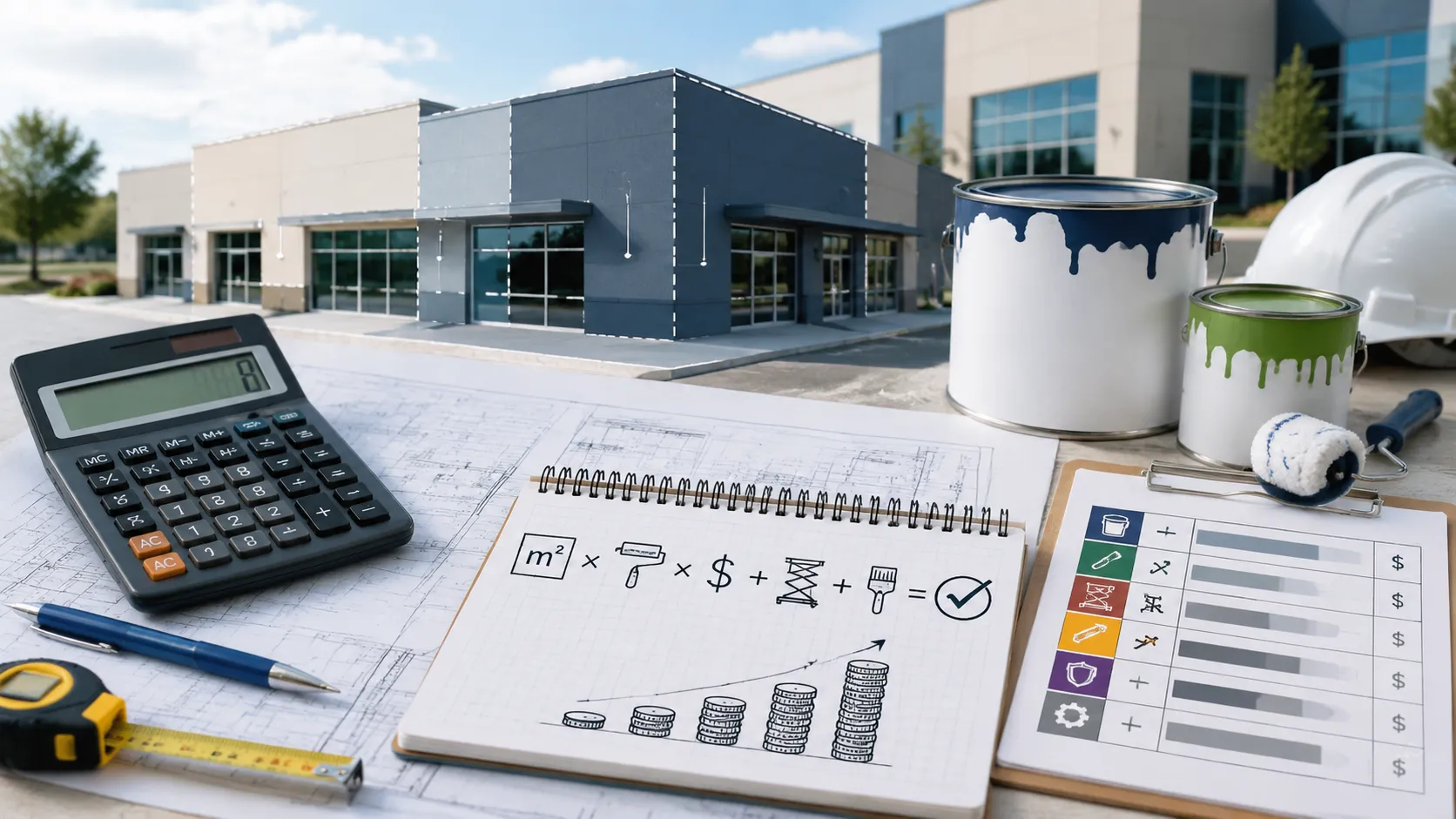
Start with the estimated paintable area and multiply it by a realistic planning rate. For instance, 5,000 square feet of interior surface at $2 to $6 per square foot creates an early range of $10,000 to $30,000. A 12,000-square-foot scope creates a broad range of $24,000 to $72,000. These are budgeting tools, not formal estimates.
Next, identify the cost categories that must be included:
- Cleaning, patching, caulking, priming, and repairs
- Walls, ceilings, trim, doors, cabinets, or exterior elevations
- Number of finish coats and color changes
- Lift, scaffold, containment, or traffic-control requirements
- Night, weekend, or phased scheduling
- Furniture, equipment, and tenant protection
- Specialty coatings, cleanup, inspection, and warranty terms
For older or concealed surfaces, carry a reasonable planning allowance until the site inspection is complete. Instead of choosing an arbitrary percentage, ask the estimator to identify uncertain areas and explain the possible cost if hidden damage is found.
How to Reduce Cost Without Reducing Quality
The most useful savings come from organization rather than removing preparation. Give every bidder the same written scope, finalize colors early, clear accessible areas, identify restricted zones, and coordinate with occupants before work begins.
Combining multiple areas into one mobilization may reduce repeated setup. When the whole property cannot be painted at once, create logical phases based on occupancy, maintenance priority, and budget cycles.
Avoid cutting cleaning, repairs, compatible primer, or sufficient finish coats. Removing those steps may lower the first invoice but increase the risk of peeling, uneven coverage, and early repainting. The goal is not merely the lowest application price; it is a coating system suited to the property’s use and condition.
What a Detailed Estimate Should Include
A professional proposal for Commercial Painting Servicesshould identify the areas included, excluded surfaces, preparation steps, paint product level, sheen, colors, assumed coats, application method, equipment, schedule, protection measures, cleanup, timeline, payment terms, and warranty.
It should also explain how change orders are approved. If damaged stucco, rotten wood, rust, failed caulk, or moisture-related deterioration is discovered, you should know who documents the issue, who authorizes the repair, and how the extra work will be priced.
Compare bids line by line rather than looking only at the total. One may include extensive preparation, premium materials, supervision, protection, and two finish coats, while another excludes several of those items. Current cost guidance recommends confirming preparation, products, insurance, scheduling, safety practices, and warranty coverage before choosing a contractor.
Budget for Long-Term Value
A commercial repaint affects protection, cleanliness, maintenance, brand presentation, and the experience of employees, tenants, and visitors. The right budget balances immediate cost with preparation quality, product suitability, disruption, and expected service life.
For a San Diego property, use square-foot ranges for early planning and then obtain an on-site proposal based on the actual surfaces and working conditions. Brad Stoner Painting can assess interior or exterior requirements, discuss scheduling, and develop a scope aligned with the property’s condition and business needs.
Frequently Asked Questions
1. How accurate is a square-foot estimate before inspection?
It is useful for reserving funds, but it cannot fully account for damaged substrates, wall height, access restrictions, coating compatibility, occupied areas, or detailed trim. Accuracy improves after the contractor measures paintable surfaces, evaluates preparation, confirms coat requirements, and documents included and excluded areas.
2. Can a commercial property remain open during painting?
Many properties can remain operational when work is phased by room, floor, elevation, or operating period. Low-odor products, barriers, signage, protected pathways, and evening or weekend scheduling can reduce disruption. The plan should address ventilation, drying time, customer movement, employee access, and daily cleanup.
3. Is a premium coating worth the additional cost?
It may provide better washability, stain resistance, color retention, adhesion, or weather protection, depending on the environment. It is most valuable when selected for a defined performance need. Ask the contractor to explain the specification, expected maintenance benefit, and whether a lower-cost system would perform adequately.
4. How does San Diego’s climate affect exterior painting costs?
Sun exposure, coastal moisture, salt air in some communities, and inland-to-coastal temperature differences can influence preparation and product selection. South- and west-facing elevations may weather faster. The contractor should inspect chalking, cracking, rust, failed caulk, and moisture entry before recommending primers and exterior coatings.
5. Should repairs be completed before or during painting?
Minor patching, caulking, and surface repairs are often included in the painting scope. Active leaks, structural damage, extensive wood decay, or major stucco failure may require another trade first. Responsibilities should be documented so repairs, drying time, added charges, and warranty coverage are clear.


























Sign in to leave a comment.