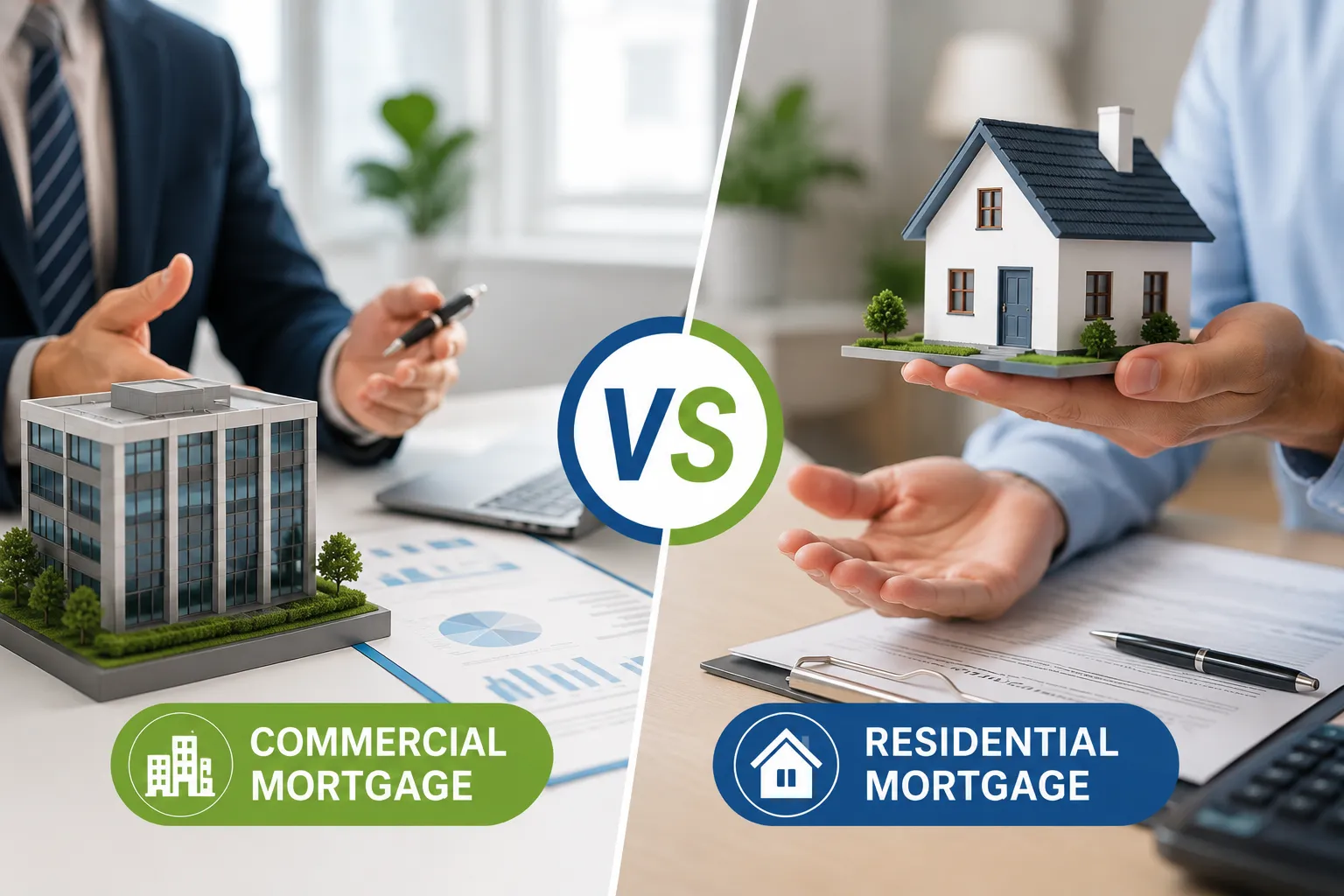

When financing real estate, one of the first decisions borrowers face is whether to use a commercial or residential mortgage. Although both loan types help buyers purchase property, they serve different purposes, have different qualification requirements, and come with unique terms.
Understanding the differences between commercial and residential mortgages can help investors, business owners, and homebuyers choose the financing option that best fits their needs.
What Is a Residential Mortgage?
A residential mortgage is a loan used to purchase or refinance a property intended for personal living.
These loans are designed for individuals or families buying primary residences, vacation homes, or certain investment properties with up to four residential units.
Common residential properties include:
- Single-family homes
- Condominiums
- Townhouses
- Duplexes
- Triplexes
- Four-unit residential buildings
Residential mortgages are typically offered by banks, credit unions, and mortgage lenders with repayment terms ranging from 15 to 30 years. Approval is primarily based on the borrower's personal income, employment history, credit score, and debt-to-income ratio.
What Is a Commercial Mortgage?
A commercial mortgage is a loan used to purchase, refinance, or develop income-producing properties used for business or investment purposes.
Rather than focusing solely on the borrower's personal finances, lenders evaluate the property's ability to generate income and support loan repayment.
Commercial properties include:
- Office buildings
- Retail shopping centers
- Apartment complexes with five or more units
- Industrial warehouses
- Hotels
- Medical offices
- Mixed-use developments
Commercial mortgages are commonly used by business owners, real estate investors, corporations, and property developers seeking to finance larger and more complex real estate investments.
Commercial vs Residential Mortgage: Key Differences
Although both loans are secured by real estate, several important distinctions set them apart.
| Feature | Commercial Mortgage | Residential Mortgage |
|---|---|---|
| Purpose | Business or investment property | Personal residence |
| Property Type | Offices, retail, warehouses, apartments (5+ units) | Homes, condos, duplexes, up to four units |
| Borrowers | Businesses, investors, LLCs, corporations | Individual homebuyers |
| Loan Size | Generally larger | Typically smaller |
| Down Payment | Usually 20%–35% | Often 3%–20% |
| Loan Term | 5–25 years (with amortization up to 30 years) | 15–30 years |
| Approval Criteria | Property income, business finances, borrower credit | Personal income, credit score, employment |
| Interest Rates | Usually higher | Generally lower |
Which Mortgage Is Right for You?
Choosing between a commercial and residential mortgage depends entirely on how the property will be used.
A residential mortgage is the right choice if you are:
- Buying your primary home.
- Purchasing a vacation property.
- Financing a small residential rental property with four units or fewer.
- Looking for lower down payments and longer repayment terms.
A commercial mortgage is better suited if you are:
- Purchasing property for your business.
- Investing in office, retail, or industrial real estate.
- Buying apartment buildings with five or more units.
- Expanding your commercial real estate portfolio.
- Developing income-producing properties.
Business owners often prefer commercial mortgages because they can finance properties that generate revenue while helping build long-term equity.
Final Thoughts
While commercial and residential mortgages both provide financing for real estate purchases, they are designed for very different purposes. Residential mortgages focus on helping individuals buy homes, whereas commercial mortgages are tailored for businesses and investors purchasing income-producing properties.
Before choosing a loan, consider how the property will be used, your financial goals, and the lender's qualification requirements. Working with a trusted mortgage broker in Canada, such as Diverse Mortgage Group, can help you compare options, understand costs, and secure financing that aligns with your investment or homeownership objectives.
























Sign in to leave a comment.