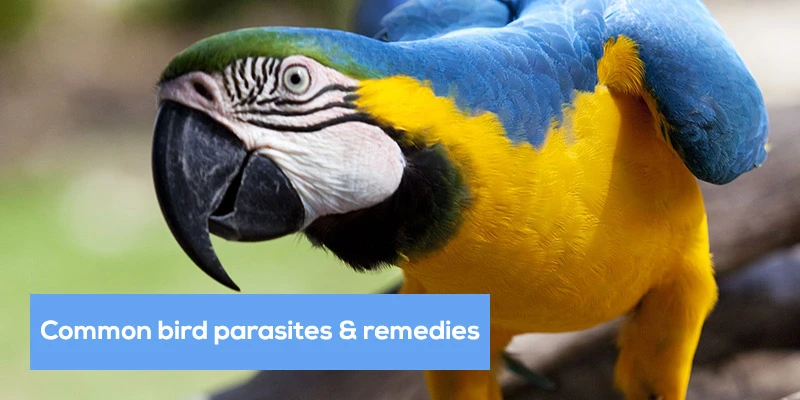

It is important to take care of your pet bird. Pet birds are distinct from cats and dogs, but keeping them safe is no more different. The basics are the correct pet bird diet, a clean cage, fresh bird food and water, bird toys, daily exercise, and a lot of attention.
But sometimes even this is not enough. Parasites can infect birds easily and cause them serious health issues. Bird parasites are of different types and can be treated or prevented if proper care is taken at the right time.
To familiarize you and ease your task, here are a list of common bird parasites, how to recognize them and what treatments are available:
1. Trichomoniasis
Trichomoniasis is caused by a group of one-celled protozoa and is known to affect many bird species.
In this disease, birds develop sore throat or mouth because they are unable to swallow food. Contaminated food is dropped and consumed by other birds, thus spreading the infection to them.
Trichomoniasis is also transmitted between birds through direct contact and therefore can spread relatively easily.
Symptoms:
Weight lossDiarrheaAnorexiaDull appearanceDifficulty in standingDifficulty in breathingDifficulty in eating/drinkingDifficulty in swallowingLoss of appetiteTreatment: Emtryl Soluble Powder for Birds
Easy to dose and water-soluble powderPrepared solution retains its activity for at least 3 daysThe most cost-effective Trichomoniasis treatment2. Lyme Disease
Due to their ability to fly long distances, birds play a significant role in transmitting tick-borne disease.
Ticks get attachedto skin around the eyes of birds, making it difficult for the bird to visualize.
Symptoms:
Extreme weaknessStiffnessEye irritationWeight lossRed spots on skinTreatment: Ultrum Flea and Tick Powder
Eliminates fleas and ticksControls feather mites, red mites and lice on birdsPrevents flea and tick infestationRemoves 100% fleas within a dayProvides protection against flea eggs and larvae for up to three months3. Coccidiosis
Coccidian parasite is one of the most common and is found in almost every bird species. Infected birds discharge feces with eggs into the environment. A healthy bird can ingest this. The infectiousoocysts then invade the intestines of the bird, where the parasites undergo several stages of development.
Eggs laid by these parasites are passed out with the feces.
As the parasites enter the bird’s body, they start to invade the intestinal tract, kidneys and liver of birds.
Symptoms:
Blood in fecesWeaknessReduced head sizeInflamed cloacaTreatment: Coximed for birds
One dose cures up to 98% of Coccidiosis casesPrevents resistance build-upHighly effectiveCost-effectiveDouble strength tablet4. Hexamitiasis
Hexamitiasis is an intestinal disease of pigeons,transmitted by faeces, fomites, carriers. There may be inter-species transmission too. In many cases, affected birds refuse to eat and drink water causing health deterioration due to starvation.
Symptoms:
Watery diarrheaWeight lossWeaknessDepressionTreatment: Medizole for Birds
Highly effective and very safewater-soluble powderEasy to doseSafe to use in the breeding seasonWater is not given at all during the usage of MedizoleYou should take birds to visit an avian veterinarian before the purchase of these doses from CanadaPetCare. Afterwards, routine visits help to understand the progress and keep the birds healthy.









Sign in to leave a comment.