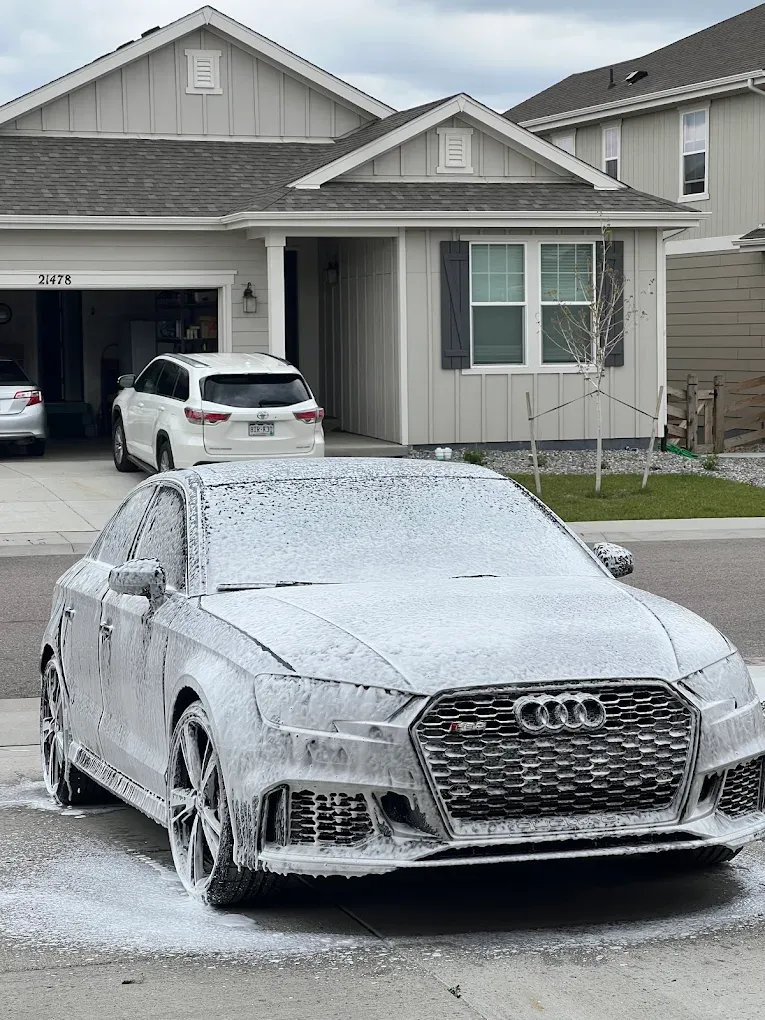

One thing I've noticed repeatedly is that people tend to rush the wash because they're focused on making the car look clean before the weekend. The vehicle may look spotless under cloudy skies, but once sunlight hits the paint, countless fine scratches suddenly appear. Those marks are almost always the result of improper washing techniques rather than normal driving.
Understanding what causes this damage can help you avoid unnecessary paint correction and keep your vehicle looking newer for much longer.
Washing a Dry, Dusty Car
One of the biggest mistakes is spraying a little water on a dusty vehicle and immediately scrubbing it with a sponge.
Dust contains tiny particles of dirt, sand, pollen, and even microscopic road debris. When these particles are rubbed across the paint, they behave like fine sandpaper.
Instead:
- Thoroughly rinse the vehicle before touching the paint.
- Allow water to loosen loose contaminants.
- Wash from top to bottom after the initial rinse.
Removing as much loose dirt as possible before physical contact dramatically reduces scratching.
Using Household Cleaning Products
Dish soap may remove grease from kitchen plates, but it isn't designed for automotive finishes.
Many household detergents strip protective waxes and sealants while drying out plastic trim. Repeated use leaves paint more exposed to UV rays and environmental contamination.
A pH-balanced automotive shampoo cleans effectively without removing existing paint protection.
The difference may not be obvious after one wash, but over several months, paint protected with proper car shampoo generally maintains a deeper gloss.
Using a Single Bucket
Many vehicle owners still wash using one bucket filled with soapy water.
The problem is simple.
Every time the wash mitt touches the dirty paint, contaminants enter the bucket. Dipping the mitt back into that same water spreads grit over the rest of the vehicle.
The two-bucket method greatly reduces this problem:
- One bucket contains clean shampoo solution.
- The second bucket is used for rinsing the mitt before returning it to the soap.
This simple habit significantly lowers the chance of creating swirl marks.
Washing in Direct Sunlight
A sunny afternoon seems like the perfect time to wash a car, but bright sunlight actually creates several problems.
Water evaporates quickly, leaving behind mineral deposits that become stubborn water spots.
Soap also dries faster, making it difficult to rinse away completely.
Whenever possible:
- Wash early in the morning.
- Choose late afternoon.
- Park in a shaded area.
Working on cool paint gives much better results and reduces streaking.
Using Old Sponges
Traditional kitchen sponges trap dirt close to the surface.
Once trapped, those particles repeatedly scrape the paint during every pass.
Modern microfiber wash mitts lift dirt deeper into the fibers, reducing direct contact with the paint.
Replacing worn wash tools is equally important. A mitt that's been dropped on the ground should be thoroughly cleaned before touching the vehicle again.
Ignoring the Wheels First
Many people wash the body before cleaning the wheels.
Unfortunately, wheels often contain brake dust, tiny metal particles, and road grime.
When wheel cleaners or brushes splash dirty water onto freshly washed paint, extra cleaning becomes necessary.
Professional detailers usually clean:
- Wheels
- Tires
- Wheel wells
before moving on to painted surfaces.
This keeps contamination away from already-clean panels.
Drying with Bath Towels
After washing, many drivers reach for an old bathroom towel.
While convenient, standard cotton towels often drag across paint and leave fine scratches.
High-quality microfiber drying towels absorb much more water while reducing friction.
Patting or gently gliding the towel across the surface is safer than aggressively rubbing.
Skipping the Pre-Wash Stage
One insider tip that many enthusiasts overlook is using a foam pre-wash before hand washing.
A layer of snow foam softens road film and loosens dirt so that much of it slides off during rinsing.
This means fewer contaminants remain for the wash mitt to drag across the paint.
Even if you wash only once every couple of weeks, adding a pre-wash stage noticeably reduces paint marring over time.
Forgetting to Clean the Wash Mitt
Another overlooked mistake is using the same dirty wash mitt week after week.
Even after rinsing, tiny particles can remain embedded inside the fibers.
Regular machine washing with microfiber-safe detergent keeps wash mitts performing properly.
Avoid fabric softeners, as they reduce microfiber performance and leave residue behind.
Using Circular Motions
Many swirl marks become highly visible because of circular washing motions.
Straight-line motions are generally safer.
If a small scratch occurs, it blends into the natural airflow direction of the vehicle and is often much less noticeable than circular patterns.
This small adjustment can noticeably improve the appearance of darker paint colors.
Neglecting Paint Protection
Washing removes dirt, but it doesn't provide lasting protection.
Paint is constantly exposed to:
- UV rays
- Bird droppings
- Tree sap
- Industrial fallout
- Road salt
- Rain contaminants
Applying a protective layer makes future washing easier while helping contaminants release more easily from the surface.
For drivers interested in long-term paint preservation, this guide on ceramic coating surrey bc explains how professional ceramic coatings help protect automotive finishes and simplify regular maintenance.
Overusing Automatic Brush Car Washes
Brush-style automatic car washes remain popular because they're fast.
However, those rotating brushes collect dirt from hundreds of previous vehicles throughout the day.
Even with regular maintenance, trapped grit can create thousands of tiny scratches over time.
Touchless washes are generally a safer alternative when hand washing isn't practical, although they may not remove heavy contamination as effectively.
Forgetting Hidden Areas
Paint isn't the only surface that benefits from careful cleaning.
Many people forget areas like:
- Door jambs
- Fuel filler area
- Lower rocker panels
- Around badges
- Under mirrors
Cleaning these sections prevents grime from dripping onto freshly washed paint later.
It also helps reduce long-term staining and corrosion around seams.
Rushing the Final Rinse
The last rinse often receives little attention, yet it can influence the overall finish.
An insider habit used by experienced detailers is allowing a gentle stream of water—rather than a forceful spray—to flow across the panels.
This "sheeting" action carries away much of the remaining water, leaving fewer droplets behind. Less standing water means less drying effort and fewer opportunities for water spots to develop.
Final Thoughts
A proper car wash is about much more than removing visible dirt. Every step, from the initial rinse to the final drying towel, affects the long-term condition of your vehicle's paint. Small mistakes repeated over months can leave permanent swirl marks, dullness, and unnecessary wear, while careful techniques preserve the finish with very little extra effort.

























Sign in to leave a comment.