
Introduction
Manufacturers today operate in an environment where product lifecycles are shorter, customer expectations are higher, and production downtime is increasingly expensive. Organizations are constantly searching for ways to improve existing products, replace discontinued components, and accelerate innovation without compromising quality.
Professional Reverse engineering services have become an essential engineering solution for addressing these complex challenges. By converting physical components into accurate digital models, businesses can recover design intent, improve manufacturing processes, and extend the life of valuable equipment.
Whether supporting legacy systems or enabling digital transformation, reverse engineering provides reliable engineering data that helps organizations make informed decisions throughout the product lifecycle.
Understanding Reverse Engineering Services
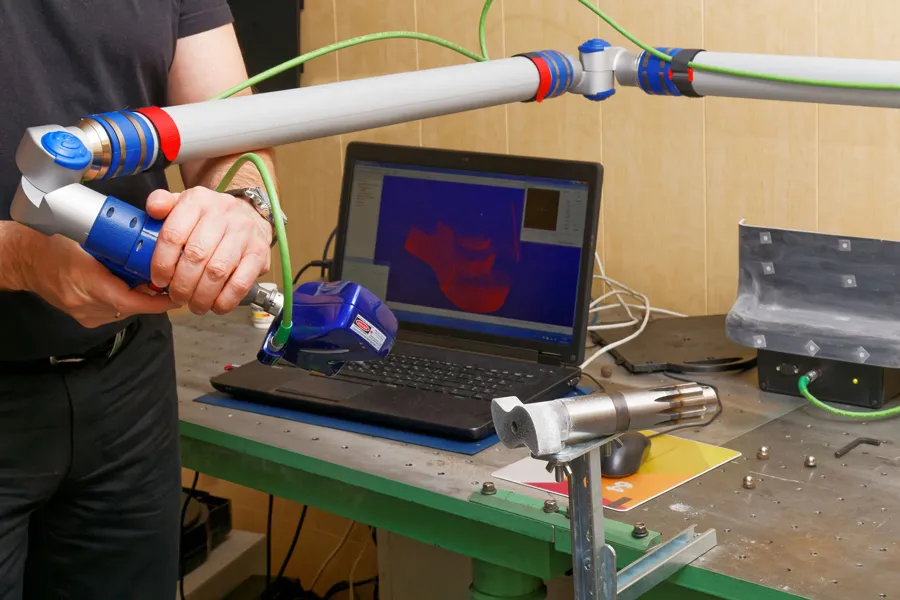
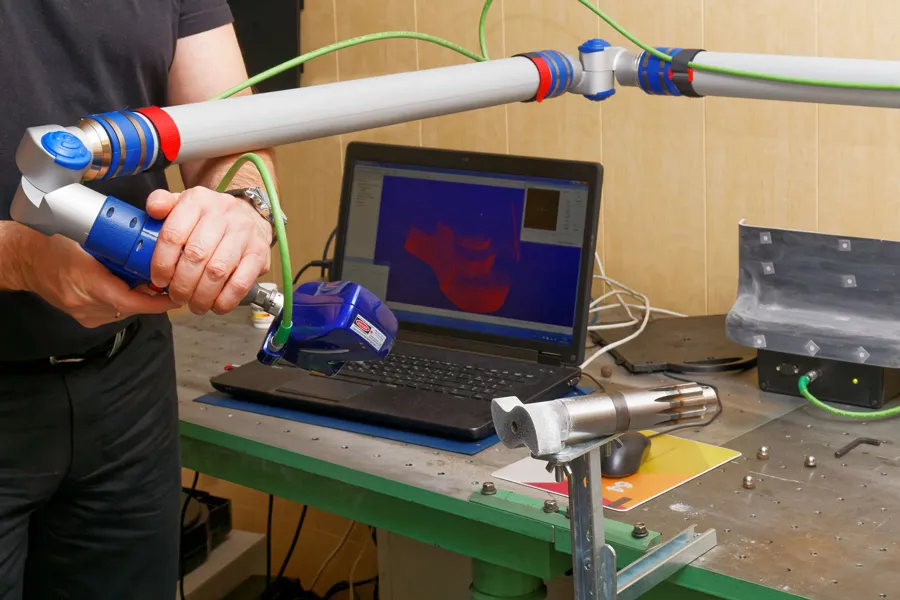
Reverse engineering is the process of analyzing an existing physical object to recreate its geometry, dimensions, material characteristics, and functional design. Advanced technologies such as 3D laser scanning, structured light scanning, and CAD modeling enable engineers to develop precise digital representations of complex components.
Unlike traditional measurement methods, modern reverse engineering captures millions of data points, ensuring high accuracy even for intricate geometries.
As industries embrace digital manufacturing, professional reverse engineering has evolved from a repair-focused practice into a strategic engineering capability.
Challenge 1: Replacing Obsolete Components
One of the biggest challenges manufacturers face is sourcing replacement parts for aging equipment. Original manufacturers may discontinue products, merge with other companies, or simply stop providing technical support.
Without engineering drawings or CAD files, replacing damaged components becomes extremely difficult.
Professional reverse engineering recreates these missing digital assets by accurately scanning existing parts and generating manufacturing-ready CAD models.
This enables organizations to reproduce obsolete components while maintaining dimensional accuracy and functional compatibility.
Challenge 2: Missing or Incomplete Design Documentation
Many industrial facilities continue operating machinery that was installed decades ago.
Over time, original blueprints, CAD files, and engineering documents may become lost, damaged, or outdated.
Reverse engineering reconstructs these missing datasets by converting physical products into complete digital documentation.
Engineers can then update, modify, or optimize designs with confidence, reducing engineering uncertainty during future projects.
Challenge 3: Improving Existing Product Designs
Successful products often require continuous improvement to remain competitive.
Manufacturers frequently seek opportunities to reduce weight, enhance durability, simplify assembly, or improve manufacturability.
Reverse engineering allows engineers to fully understand existing designs before implementing improvements.
Rather than starting from scratch, development teams can build upon proven designs while introducing meaningful innovations.
Challenge 4: Accelerating Product Development
Developing a new product typically involves extensive design validation and prototype iterations.
When an existing product already performs well, reverse engineering provides a faster starting point.
Accurate CAD models eliminate repetitive manual measurements, allowing engineering teams to focus on design optimization instead of data collection.
This significantly reduces development cycles and improves project efficiency.
Challenge 5: Quality Issues During Manufacturing
Manufacturing inconsistencies often arise when production parts deviate from their intended geometry.
Even small dimensional variations can affect assembly performance, product reliability, and customer satisfaction.
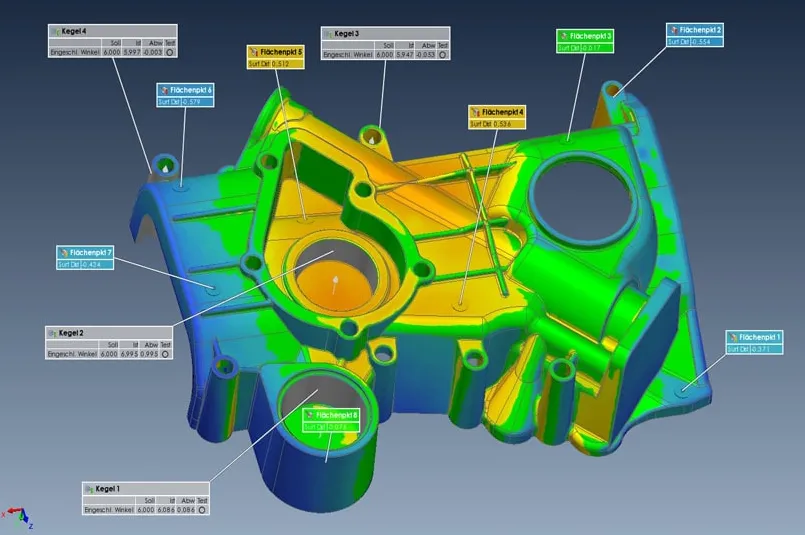
Reverse engineering enables engineers to compare manufactured components against digital reference models.
This detailed comparison helps identify deviations before they become costly production problems.
Challenge 6: Supporting Legacy Equipment Modernization
Many industrial organizations continue relying on legacy equipment because replacing entire production lines is financially impractical.
However, integrating older machinery with modern manufacturing systems presents unique engineering challenges.
Reverse engineering provides accurate digital models that simplify equipment upgrades, automation projects, and mechanical redesigns.
These digital assets support modernization without requiring complete equipment replacement.
Challenge 7: Recovering Complex Freeform Geometry
Traditional measurement tools struggle to capture organic surfaces, intricate contours, and complex geometries.
Industries such as aerospace, automotive, medical devices, and consumer products frequently manufacture components with highly sophisticated shapes.
Advanced scanning technologies capture millions of measurement points, accurately reproducing even the most complicated surfaces.
This precision allows engineers to recreate complex products with exceptional confidence.
Challenge 8: Supporting Competitive Product Benchmarking
Organizations often evaluate competing products to understand performance characteristics, manufacturing methods, and design strategies.
Professional reverse engineering provides precise geometric analysis that supports objective engineering comparisons.
Rather than copying products, businesses use this information to identify opportunities for innovation and product differentiation.
Benchmarking becomes significantly more effective when supported by accurate engineering data.
Challenge 9: Reducing Downtime During Equipment Failure
Unexpected equipment failures can halt production and generate substantial financial losses.
When replacement parts are unavailable, downtime may extend for weeks or even months.
Reverse engineering accelerates component reproduction by quickly generating accurate manufacturing files from damaged or existing parts.
This helps organizations restore operations faster while minimizing production disruptions.
Challenge 10: Enabling Digital Manufacturing
Industry 4.0 initiatives rely heavily on accurate digital product information.
Manufacturers implementing digital twins, simulation software, automated inspection, or smart manufacturing require reliable 3D models.
Reverse engineering transforms physical assets into digital engineering data that integrates seamlessly with modern CAD, CAM, and PLM platforms.
This creates a solid foundation for future digital transformation initiatives.
Why Professional Expertise Matters
Successful reverse engineering extends far beyond capturing surface geometry.
Professional engineers understand manufacturing processes, dimensional tolerances, material behavior, and functional design intent.
Their expertise ensures that reconstructed CAD models are suitable not only for visualization but also for production, inspection, simulation, and engineering analysis.
This comprehensive approach delivers significantly greater long-term value.
The Growing Demand for Reverse Engineering
Global manufacturing continues moving toward greater automation, customization, and digital integration.
Organizations increasingly recognize reverse engineering as a strategic capability rather than simply a repair solution.
Industries including automotive, aerospace, energy, heavy engineering, consumer products, industrial machinery, and healthcare are investing in digital engineering workflows supported by reverse engineering technologies.
Businesses seeking Reverse engineering services in Chennai are similarly adopting these advanced capabilities to improve operational efficiency, preserve valuable engineering knowledge, and accelerate innovation.
As manufacturing becomes increasingly data-driven, demand for Reverse engineering services in Chennai continues to grow among organizations looking to modernize legacy assets and strengthen their competitive advantage.
Best Practices for Successful Reverse Engineering Projects
Organizations should begin with clearly defined project objectives before initiating any reverse engineering activity.
Selecting appropriate scanning technology based on part complexity and required accuracy is equally important.
Digital models should undergo thorough validation to ensure they accurately represent the original component.
Maintaining comprehensive documentation throughout the project improves traceability and supports future engineering activities.
Finally, integrating reverse engineering data with broader product lifecycle management systems maximizes long-term business value.
Conclusion
Professional reverse engineering has become an indispensable engineering solution for solving a wide range of manufacturing and product development challenges. From replacing obsolete components and recovering missing documentation to improving product quality and supporting digital transformation, reverse engineering enables organizations to make better engineering decisions with confidence.
As industries continue embracing advanced manufacturing technologies, accurate digital engineering data will remain a critical competitive advantage. Investing in high-quality reverse engineering practices helps businesses reduce risk, improve operational efficiency, and extend the value of existing assets throughout their lifecycle.
R M Engineering Technologies is a specialist provider of on-site, mobile laser scanning services. We deliver a fast and cost-effective solution for the collection of physical data of an object in any desired environment.






















Sign in to leave a comment.