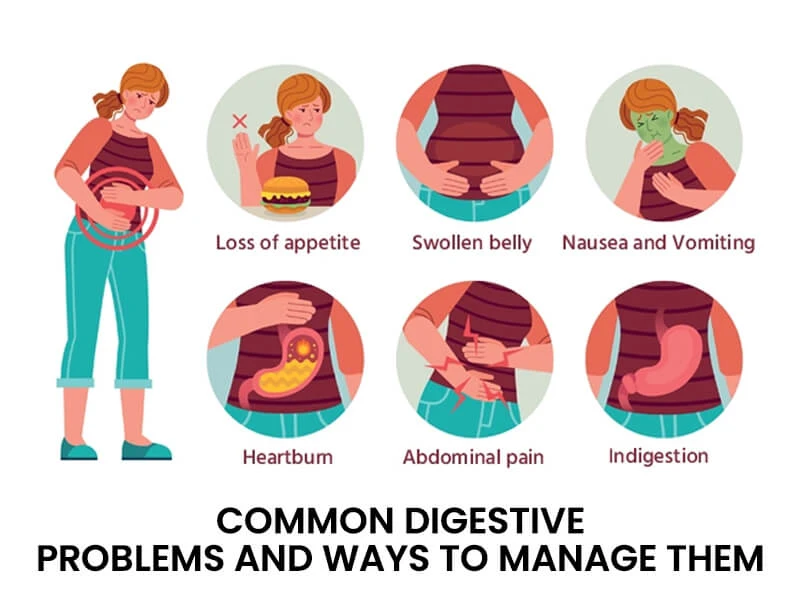

Navigating through common digestive problems can be tough, but with sufficient awareness and the right approach, you can maintain a healthy digestive system. In this guide, we will explore prevalent digestive issues and provide valuable insights on how to tackle them effectively. Whether you're dealing with occasional discomfort or seeking long-term solutions, this guide will empower you with the information you need to improve your digestive health.
Common digestive problems and ways to manage them:
Let's explore some of the most common digestive problems and discover effective ways to manage and alleviate their symptoms.
Gastro-oesophageal Reflux Disease (GERD)This condition occurs when stomach acid goes the wrong way and moves into the food pipe (oesophagus). Sometimes, this happens to everyone, but if it keeps happening a lot, it's called GERD. If GERD isn't controlled, it can hurt the lining of the food pipe and even cause bleeding. Luckily, you can manage GERD by changing your habits, like eating right, quitting smoking, and drinking less alcohol.
Irritable Bowel Syndrome (IBS)This condition affects the stomach and how you poop. It can cause ongoing tummy problems like constipation or diarrhoea. Doctors usually say it's IBS when you have belly pain at least three times every month for three months in a row. One can treat IBS by being mindful of what one eats and avoiding foods that can make it worse.
Inflammatory Bowel Disease (IBD)In this condition, your stomach and gut stay swollen for a long time. It happens because your immune system acts strangely and attacks your digestive system. There are two main kinds of IBD: Crohn's disease and ulcerative colitis. To treat IBD, gastroenterologist use medicines that stop your immune system from causing trouble. In really bad cases, you might need surgery.
GastroenteritisOften called stomach flu, gastroenteritis happens when your stomach and the upper part of your small intestine get infected by germs like bacteria or viruses. It makes you have diarrhoea, throw up, and sometimes get a fever. If you are suffering from this digestive disorder, you must drink lots of water and electrolytes to stay hydrated.
HaemorrhoidsThese are like little swollen blood vessels near your bottom that can make you hurt, swell up, itch, and see bright red blood after you poop. The best way to treat them is to eat foods with lots of fibre, drink enough water, and exercise regularly. If you don't treat them early, they can get worse, and in severe cases, you might need surgery to remove them.
By embracing a proper lifestyle, which includes a balanced diet, stress management, and regular exercise, we can significantly reduce the occurrence and severity of these issues. For more specialised guidance and support, consult an experienced gastrointestinal surgeon in Kolkata for proper guidance and treatment to ensure your digestive well-being.








Sign in to leave a comment.