

Thailand continues to attract entrepreneurs, startups, investors, and international companies seeking opportunities in Southeast Asia. Its established infrastructure, growing economy, skilled workforce, and access to regional markets make it an appealing location for businesses across many industries.
However, establishing a business requires more than choosing a name and opening an office. Entrepreneurs need to understand corporate structures, ownership requirements, documentation, taxation, banking, employment, and ongoing compliance.
Choosing the Right Business Structure
One of the first decisions is selecting an appropriate legal structure. A Thai limited company is a common option for businesses planning to conduct ongoing commercial activities.
The right structure depends on factors such as:
- Business activities
- Ownership
- Number of shareholders
- Investment plans
- Capital requirements
- Foreign participation
- Licensing requirements
- Long-term objectives
Foreign investors should pay particular attention to applicable ownership regulations, as certain industries may have specific restrictions.
Preparing Company Documents
After selecting a suitable structure, entrepreneurs need to prepare the information and documents required for incorporation.
These may include:
- Proposed company name
- Shareholder information
- Director details
- Registered office address
- Business objectives
- Share capital information
- Identification documents
- Corporate documentation
Foreign shareholders and directors may require additional documents depending on their circumstances.
Accurate preparation is important because incomplete or inconsistent information can cause unnecessary delays.
Understanding Foreign Ownership Rules
Thailand has regulations governing foreign participation in certain business activities. Requirements can vary significantly depending on the nature of the company.
For example, a technology business, restaurant, trading company, professional service firm, or manufacturing operation may face different considerations.
Entrepreneurs should determine whether their proposed activities are subject to foreign ownership restrictions or additional approvals before finalizing their structure.
The Registration Process
The incorporation process generally involves preparing corporate information, confirming shareholders and directors, establishing a registered address, and submitting the required documentation to the relevant authorities.
For businesses researching company registration in thailand, it is important to understand that incorporation is only one part of establishing a fully operational business.
After incorporation, a company may need to arrange tax registrations, accounting procedures, banking, licenses, payroll, and other administrative requirements.
The timeframe can vary depending on the business structure, documentation, ownership arrangements, and whether additional approvals are necessary.
Tax and Accounting Requirements
Once a company begins operating, maintaining accurate financial records becomes an important responsibility.
Depending on the business, tax and accounting obligations may include:
- Corporate income tax
- Value-added tax where applicable
- Withholding tax
- Bookkeeping
- Financial statements
- Tax filings
- Supporting financial records
Organized accounting from the beginning can help business owners understand financial performance while supporting ongoing compliance.
International companies may also benefit from local accounting expertise because Thai requirements can differ from those in their home countries.
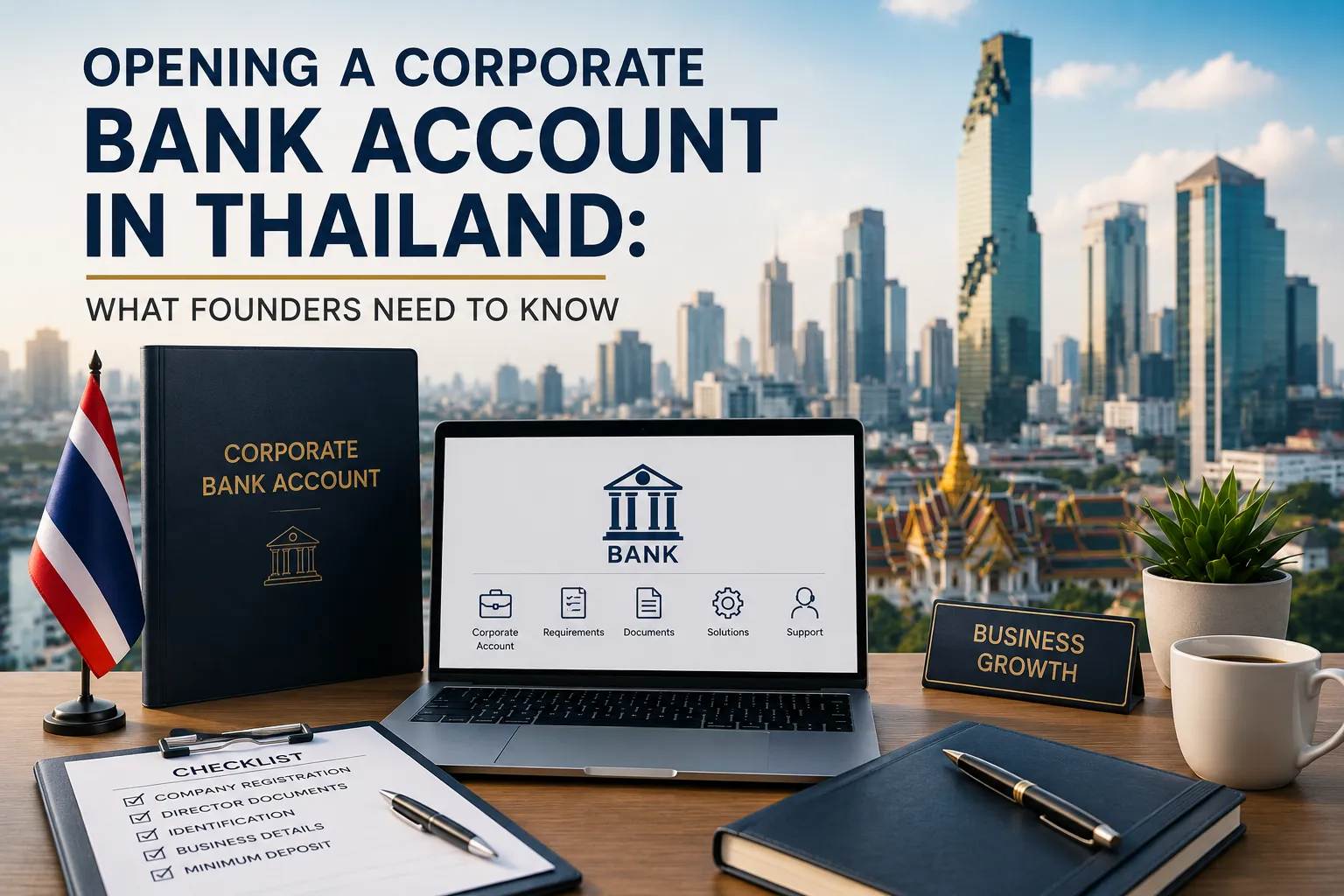
Opening a Corporate Bank Account
A corporate bank account is generally important for managing business finances.
It can be used for:
- Receiving customer payments
- Paying suppliers
- Processing salaries
- Paying taxes
- Managing operating expenses
Banks may request corporate documents, shareholder information, director identification, and details about the company's business activities.
Requirements can differ between financial institutions, particularly where foreign ownership is involved.
Licenses and Business Permits
Incorporating a company does not automatically authorize every type of commercial activity.
Certain industries may require additional licenses or approvals before operations can begin. These can include areas such as:
- Food and beverage
- Tourism
- Healthcare
- Education
- Manufacturing
- Import and export
- Financial services
- Certain professional activities
Entrepreneurs should identify applicable requirements before launching the business.
Hiring Employees
Businesses intending to employ staff should establish suitable HR and payroll processes.
These can include:
- Employment agreements
- Salary administration
- Personal income tax withholding
- Social Security contributions
- Employee records
- Payroll reporting
Foreign employees may also need appropriate visas and work authorization before starting employment.
Planning these requirements early can make recruitment and business operations more efficient.
Ongoing Corporate Compliance
Registration is only the beginning of a company's responsibilities. Businesses need to maintain appropriate corporate, accounting, tax, and employment records throughout their operations.
Ongoing responsibilities may include:
- Tax submissions
- Accounting
- Payroll
- Financial reporting
- Corporate records
- License renewals
- Employee administration
Many businesses use professional local support to manage these requirements and reduce the risk of missed deadlines.
Conclusion
Establishing a company in Thailand requires careful preparation and an understanding of local corporate and regulatory requirements. Entrepreneurs should consider the appropriate structure, ownership rules, documentation, taxation, banking, licensing, and employment obligations before beginning operations.
With proper planning, businesses can create a strong foundation for sustainable growth while avoiding unnecessary administrative complications. Professional local assistance can also help entrepreneurs navigate unfamiliar procedures and maintain compliance as the company develops.

























Sign in to leave a comment.