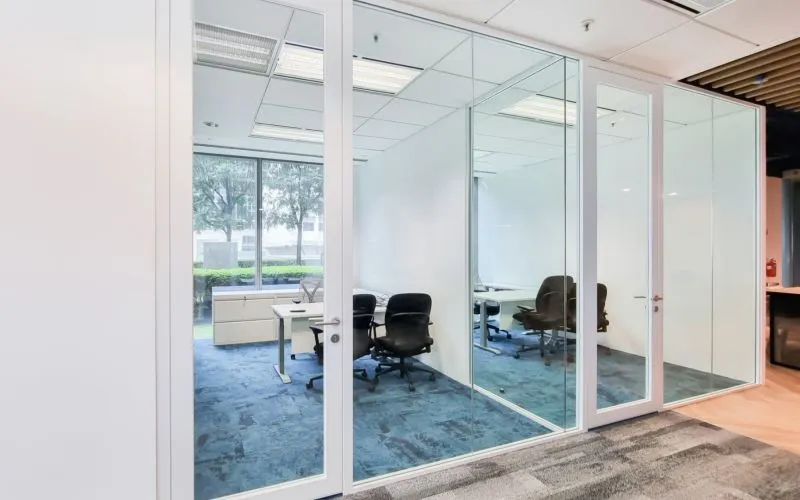

When we decided to upgrade the glazing on our commercial office fitout in Business Bay, I expected the contractor evaluation to be straightforward. Acoustic laminated glass is a specific product — the STC ratings are measurable, the interlayer specifications are documented, the installation requirements are well defined. I assumed the differences between contractors would be minor.
They were not minor. Three contractors, three completely different approaches to the same brief, and only one that could actually demonstrate certified performance for what they were proposing to install.
The contractor we ultimately chose was waseemtechnical. The reason we chose them over the other two comes down to one thing that should be basic but turned out not to be: certified STC documentation for the specific glass specification they were proposing, produced before the contract was signed.
Here is what the evaluation actually looked like.
What we were trying to achieve
The project was a floor of mixed-use commercial space: open-plan work areas, four enclosed meeting rooms, two private offices, and a reception zone that faces a corridor shared with other tenants. The main acoustic challenges were threefold — reducing traffic noise transmission through the external facade, controlling sound bleed between the meeting rooms and the open floor, and managing the corridor noise at reception.
Our consultant had specified a minimum STC rating of 38 for the internal partitions and STC 42 for the external facade glazing. Those numbers were not negotiable — they were part of the fitout approval documentation. Any contractor we used needed to demonstrate that their proposed glass specification would meet or exceed those ratings under real conditions, not just in a product datasheet.
Contractor one: confident presentation, thin documentation
The first contractor came well-recommended and presented a polished proposal. The specification they offered was a 6.4mm laminated glass with a standard PVB interlayer, quoted against our STC requirements with a confident verbal assurance that it would perform to specification.
When we asked for third-party certified STC test results for that specific configuration, the response was a manufacturer product brochure with a published STC range — not a certified test report for the actual assembly. Published ranges in brochures can span four to six STC points depending on installation conditions. For a project with fixed minimum requirements in approval documentation, a range is not an answer.
We asked twice. The documentation did not improve. We moved on.
Contractor two: right product, wrong installation approach
The second contractor was more technically rigorous in the product selection. They proposed a 8.8mm acoustic laminated glass with an EVA interlayer — a step up from the first proposal — and were able to provide certified test results for the glass unit itself.
The issue emerged when we reviewed the installation methodology. Acoustic laminated glass performs to its rated STC only when the installation eliminates the flanking paths that bypass the glass entirely — the perimeter sealing, the frame isolation, the gap treatment at sill and head. The second contractor’s method statement addressed the glass specification in detail and said almost nothing about flanking path control.
A well-specified glass unit installed without proper perimeter isolation will not achieve its rated STC in the field. The glass certificate becomes a number on paper rather than a real-world performance guarantee. When we raised this, the contractor acknowledged the point but could not provide a tested assembly specification that included the frame and seal details. That gap mattered.
Contractor three: what the full evaluation should look like
Waseem Technical’s approach was different from the opening conversation. Before proposing any specification, they asked for the acoustic consultant’s brief, reviewed the STC requirements by zone, and requested the existing drawings to understand the frame construction and perimeter conditions.
The specification they proposed came with:
- Certified STC test reports for the specific laminated glass assembly they were proposing — not a brochure range, not a similar product, the actual unit configuration with the interlayer type and thickness documented.
- A tested assembly specification that included frame isolation details and perimeter seal methodology, with documented field performance data from comparable installations.
- Zone-by-zone specification that differentiated between the external facade requirements and the internal partition requirements — because those are genuinely different acoustic problems and should not be treated with the same glass specification.
- A site measurement visit before finalizing the specification, to assess the actual frame conditions and identify any installation risks that the drawings alone would not reveal.
That last point — the site visit before specification finalization — caught a condition at the head of the external curtain wall that would have compromised performance regardless of which glass was installed. Catching it before contract rather than during installation is the difference between a design decision and an expensive remedial.
The result and what it confirmed
Post-installation acoustic testing by our consultant confirmed STC performance at or above specification across all zones. The external facade met the STC 42 requirement. The internal meeting room partitions met the STC 38 requirement. No remedial work was required.
What that outcome required:
- Certified STC laminated glass service — not a product brochure, not a verbal assurance, but documented certification for the specific assembly installed in the specific conditions of this project.
- Installation methodology that treated the frame and perimeter as part of the acoustic system, not just a structural requirement.
- A pre-contract site assessment that identified real conditions rather than assuming the drawings were complete.
If you are specifying acoustic glazing for a commercial fitout or residential project in Dubai and the STC performance is tied to approval documentation or a consultant brief, the certification question is the one to lead with. Their PREMIER ACOUSTIC LAMINATED GLASS SERVICES IN DUBAI page covers the specification and certification approach in detail — worth reviewing before you compare proposals.
Three questions worth asking any contractor before you proceed
Based on what this evaluation taught us, the three questions that separate a technically rigorous contractor from one selling a product with a performance claim:
- Can you provide a third-party certified STC test report for the specific assembly you are proposing — the glass unit, interlayer, and thickness — not a published product range?
- Does your installation method statement address flanking path control at the frame perimeter and sill, and can you show field performance data from a comparable installation?
- Will you conduct a site assessment before finalizing the specification, or are you working from drawings only?
A contractor who can answer all three with documentation rather than assurances is the one worth proceeding with. In Dubai’s commercial fitout market, that narrows the field considerably.
























Sign in to leave a comment.