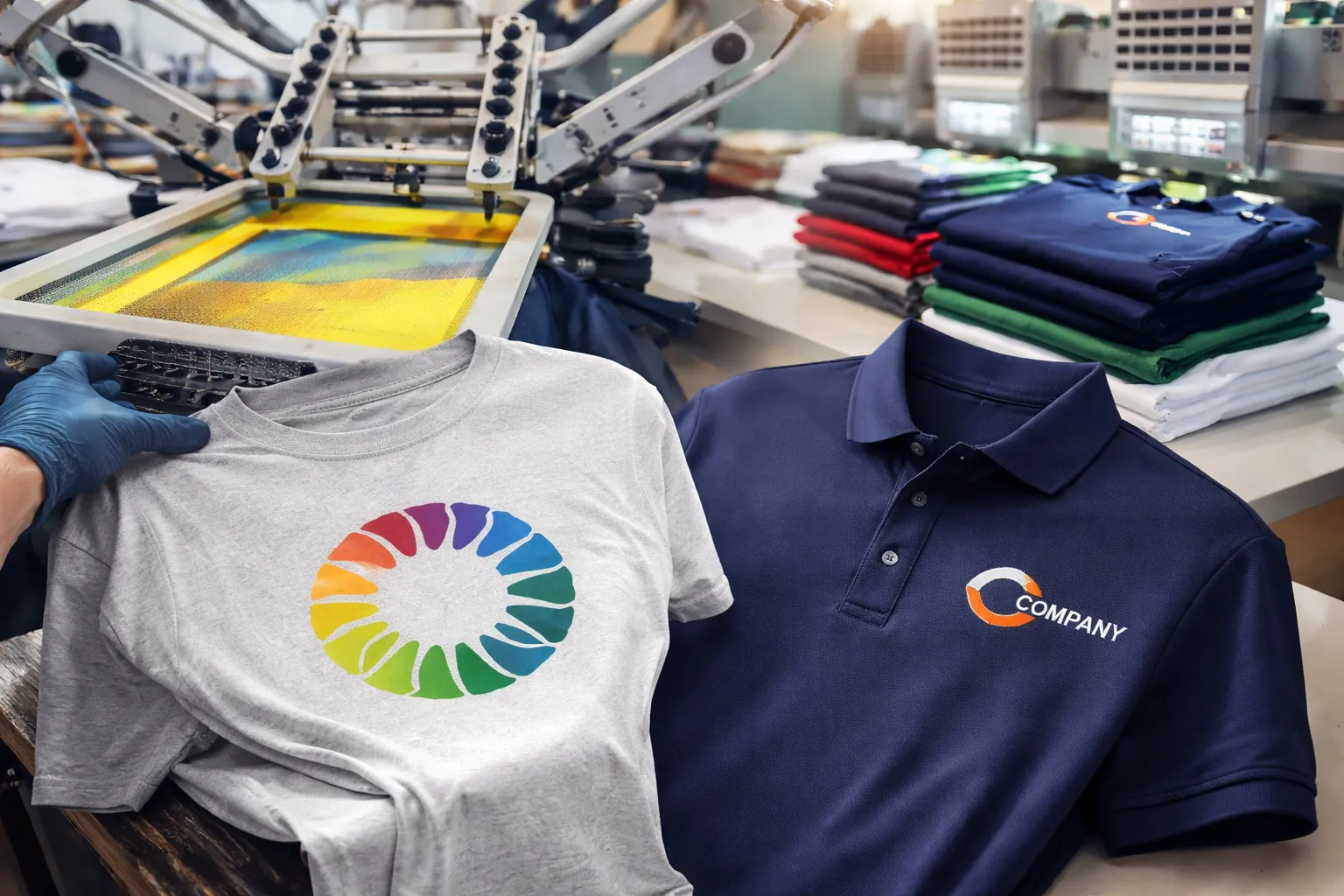

A bulk order went wrong at 1,200 units because the second batch didn’t match the first—same artwork, different fabric lot, and suddenly your Polo T-Shirt Printing looks like two suppliers handled it. That’s how most procurement issues start. Not with design. With inconsistency.
Most buyers assume logo placement and print type are the only decisions that matter. They’re not. Fabric GSM shifts, dye lots, curing temperatures—those are the silent variables that ruin repeat orders. And if you're sourcing Polo T-Shirt Printing Services in Pune, you’re dealing with a market that has both high-capability manufacturers and short-term operators working out of rented setups.
Specification That Actually Affects Your Repeat Orders
Fabric Composition and GSM Range
Cotton-poly blends (typically 60:40 or 65:35) dominate polo production because they balance durability and cost. Pure cotton feels better but shrinks unpredictably if pre-treatment isn’t handled right. Most export-grade polos sit between 180–240 GSM, but here’s what gets missed: a 10 GSM deviation between batches is visible in bulk dispatches.
Printing Methods Used
Screen printing still handles nearly 68% of bulk T-Shirt Logo Printing orders in India due to cost efficiency above 300 units. DTF (Direct-to-Film) is gaining ground for multi-color logos but struggles with breathability on heavier polos.
Collar and Placket Construction
That’s where quality quietly breaks down. A fused collar holds shape after 25+ washes. Non-fused collars start curling within 6–8 cycles, especially in humid regions like Maharashtra.
Color Fastness Standards
Export buyers usually demand grade 4 or above on the ISO scale. Local suppliers may not test this unless asked. Which means your “same navy blue” order next quarter might look faded under sunlight exposure.
Logo Placement Accuracy
Tolerance levels matter. A ±0.5 cm shift is acceptable in bulk production. Anything beyond that shows poor jig setup during printing.
The Supplier Answers That Should Make You Walk Away
- Fabric Sourcing Transparency
Good: Fixed mills with batch tracking since at least 2019
Bad: “We source based on availability”
That answer guarantees mismatch in repeat orders. - Print Failure Policy
Good: Written reprint clause within 10–12 working days
Bad: “We’ll review after delivery”
That’s not a policy. That’s a delay tactic. - Color Consistency Control
Good: Pantone matching with documented batch records
Bad: “We match visually”
Visual matching fails under different lighting conditions. - Production Capacity Clarity
Good: Daily output numbers with machine count
Bad: “We can handle large orders”
That’s vague because capacity isn’t consistent. - Quality Check Process
Good: 3-stage QC (pre-print, mid-line, final audit)
Bad: “We check before dispatch”
That means defects are caught too late to fix.
Why Proper Polo T-Shirt Printing Protects Your Margins
Bulk apparel isn’t about aesthetics. It’s about loss prevention.
- Fewer reprints mean stable margins. A 2% defect rate vs 7% changes your landed cost significantly.
- Consistent fabric reduces return complaints. Especially critical for B2B resellers.
- Proper curing avoids logo cracking within 5–7 washes. That’s where most low-cost vendors fail.
- Batch consistency ensures your brand doesn’t look different across regions.
- Better collar construction reduces replacement requests—something buyers underestimate until returns spike.
- Reliable suppliers cut lead time variance by 18–22%, based on internal tracking across mid-sized Indian manufacturers.
And yet, many buyers still negotiate ₹8–₹12 per piece instead of checking process control.
Availability of Polo T-Shirt Printing Services in Pune
Pune isn’t just a printing hub—it’s a logistics advantage. Located within 150 km of Mumbai port, it reduces export dispatch time by 1–2 days compared to inland cities. That matters when shipment schedules are tight.
Most Polo T-Shirt Printing Services in Pune operate in clusters around Bhosari, Pimpri-Chinchwad, and Hadapsar. Which means faster raw material access but also intense price competition. That’s why you’ll find quotes varying by 22–30% for the same specification.
If you're searching for Logo T-Shirt Printing in Pune, proximity to dyeing units and fabric mills plays a role. Suppliers closer to these clusters usually maintain better consistency because they control sourcing, not just printing.
About Us — Systemagic
We’ve been handling bulk Logo T-Shirt Print orders since 2013, and we learned early that outsourcing core processes creates more problems than it solves.
We don’t outsource printing. That decision came after a failed 2,000-unit order in 2018 where outsourced prints cracked within three washes. We absorbed the loss and brought the entire process in-house.
We also stopped working with a low-cost dye supplier in 2022 after three separate batches showed inconsistent color retention under sunlight exposure tests. That change increased raw material cost by 6%, but it cut complaint rates by more than half within two quarters.
That’s the trade-off most suppliers won’t make.
If you're planning bulk Polo T-Shirt Printing, send us your artwork, quantity, fabric preference, and delivery timeline.
We typically respond within 24 hours.
Minimum order quantity starts at 100 pieces.
At Systemagic, we’ll tell you upfront if your design won’t hold up in production—and what to change before you spend money on the wrong print method.
Conclusion
Polo T-Shirt Printing isn’t complicated on paper. It becomes complicated when repeat orders don’t match. The difference always comes down to process control, not pricing. Get that right early, and your future orders stop being a risk.
FAQs
1. What should I check before finalizing Polo T-Shirt Printing Services in Pune?
Start with fabric sourcing and batch control. Most issues don’t come from printing—they come from inconsistent raw materials.
2. Which method is best for T-Shirt Logo Printing on polos?
Screen printing works best for bulk orders above 300 units. DTF is useful for complex designs, but it may feel heavier on thicker polo fabrics.
3. How do I ensure consistency in Logo T-Shirt Printing in Pune?
Ask for batch tracking records and previous order references. Without that, you’re relying on assumptions.
4. What is the typical lead time for Polo T-Shirt Printing?
Usually 7–15 working days depending on order size. But delays often happen due to fabric availability, not printing capacity.
5. Is cheaper Logo T-Shirt Print always risky?
Not always—but if the price gap is more than 20%, something is being compromised. Usually fabric quality or curing process.
6. Can small orders get the same quality as bulk in Polo T-Shirt Printing Services in Pune?
Not always. Smaller runs may use different machines or processes. Ask directly—most suppliers won’t volunteer this.
7. How long does T-Shirt Logo Printing last on polo?
With proper curing, prints should last 25–30 washes. If they crack within 10, the process was rushed or poorly executed.


























Sign in to leave a comment.