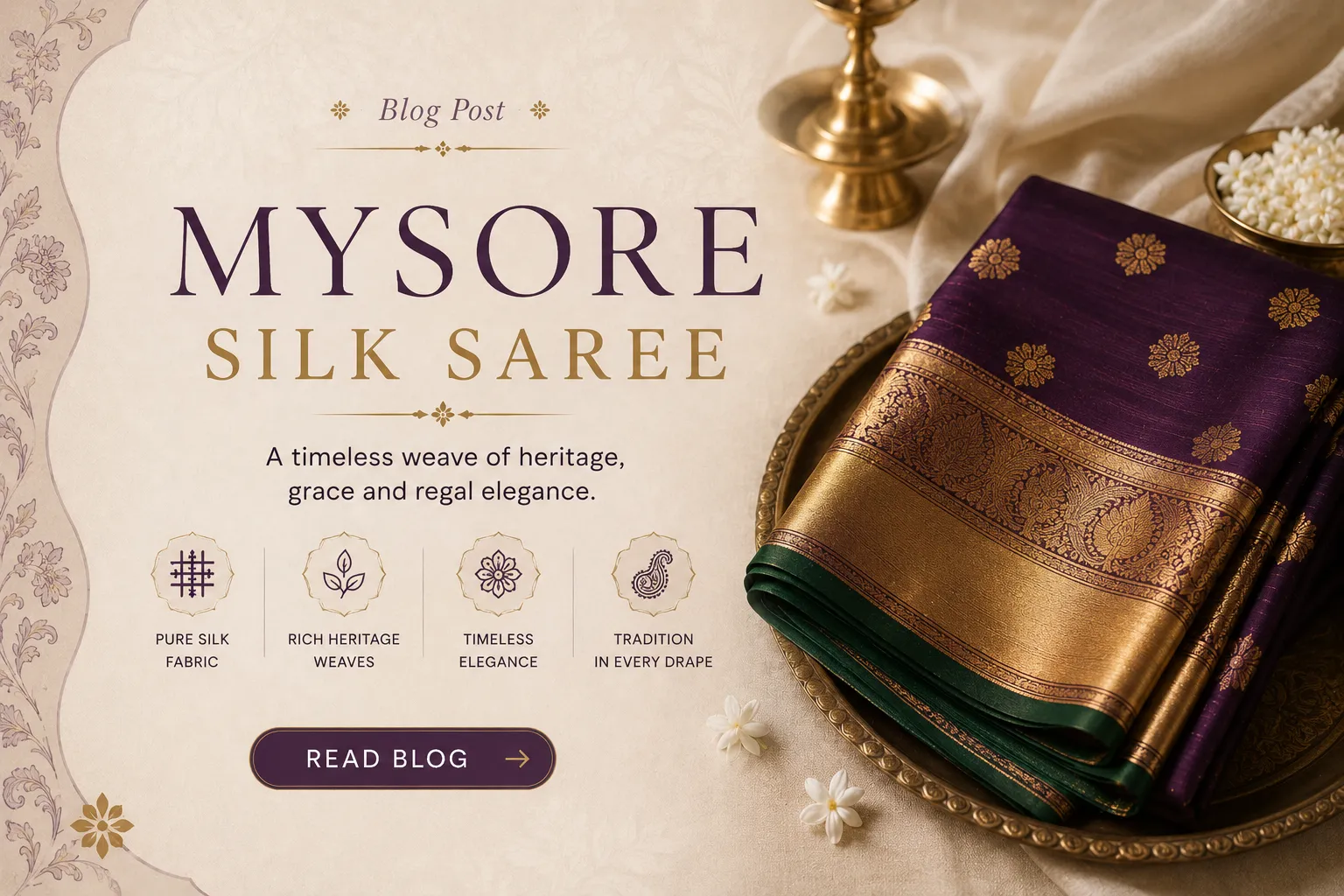

Stepping out to purchase your very first Mysore Silk Saree is an emotional milestone for many Indian women. It is not just about acquiring five and a half meters of cloth; it is about owning a piece of living royal history that drapes like liquid butter. However, because a genuine heirloom-quality piece demands a significant financial commitment, the modern market has unfortunately become flooded with cheap synthetic lookalikes, powerloom "crepe silks," and counterfeit zari blends.
For a first-time buyer, walking into a store or browsing online can feel incredibly overwhelming. How do you distinguish a genuine masterstroke of craftsmanship from a brilliant fake? This definitive, research-backed checklist will guide you through the process, ensuring your hard-earned investment goes toward a legally certified, authentic treasure.
What Makes an Authentic Mysore Silk Saree Unique?
To understand what you are paying for, you must first understand its royal origins. Mysore silk is inherently minimalist. Unlike its heavier, densely patterned cousin—the Kanjeevaram—or the heavily brocaded Banarasi, a classic Pure Mysore Silk Saree relies entirely on the understated luxury of its raw materials: fluid fabric drape and pristine, metallic borders.
The Material Composition
According to historical and industrial data from the Karnataka Silk Industries Corporation (KSIC), genuine Mysore silk is woven exclusively from 100% pure mulberry silk yarn sourced within Karnataka. The silk threads are twisted together to create a characteristically lightweight, supple crepe texture. Authentic pieces typically weigh between 400 to 500 grams, distributed uniformly in 90 GSM (Grams per Square Meter) or 120 GSM weights, giving them an exceptionally fluid, non-stiff drape that moves effortlessly with your body.
The Real Zari Secret
The most critical factor behind the prestige (and cost) of an Authentic Mysore Silk Saree lies hidden within its glittering border and pallu. As outlined by the Silk Mark Organization of India (SMOI), true traditional Mysore silk zari is composed of:
- A pure silk thread core at its center.
- 65% pure silver wrapped meticulously around that silk core.
- An outer electroplated layer of 0.65% pure gold.
This precise chemical composition prevents the zari from tarnishing or blackening over time. Instead, it maintains a rich, soft, semi-matte luster that catches candlelight beautifully and can endure across multiple generations.
Is My Saree Genuine? The 5-Step Authenticity Checklist
Before you hand over your credit card or click "buy," verify the piece against these five strict pillars of industrial and legal authenticity.
1. Does It Have the Exclusive KSIC Legal Markings?
Under India’s Geographical Indications of Goods (Registration and Protection) Act of 1999, "Mysore Silk" is protected by a strict Geographical Indication (GI) status (Registration No. 11, with logo protection under No. 532). The Karnataka Silk Industries Corporation (KSIC) is designated as the exclusive legal proprietor of this heritage craft.
- The Claim-Evidence Pair: An original Mysore Silk saree must bear an official KSIC hologram tag and a unique identification code embroidered directly into the corner of the saree pallu. This code is unique to the individual loom and weaver, ensuring full, non-tamperable traceability.
2. Can You Verify the Silk Mark Certified Label?
If you are purchasing a modern version or a variant from an authorized private artisan loom outside of direct KSIC retail counters, check for the Silk Mark Certification label. Administered by the Silk Mark Organisation of India (a body under the Ministry of Textiles), this tag features a distinctive butterfly logo. This mark explicitly guarantees that the textile consists of 100% natural silk fiber rather than polyester, rayon, or art-silk blends.
3. Have You Requested the Legal HSN Code?
A secret, highly reliable tool for any shopper buying high-end textiles in India is checking the official Goods and Services Tax (GST) invoice.
- The Claim-Evidence Pair: If a store claims they are selling you a pure silk garment, the accompanying invoice must carry HSN Code 5007 (the global Harmonized System of Nomenclature classification reserved solely for woven fabrics of pure silk). If the invoice displays a different HSN code, the fabric legally contains synthetic or mixed fibers, regardless of what the salesperson claims verbally.
4. How Does the Fabric Behave Under a "Luster" and "Touch" Test?
Genuine mulberry silk displays a multi-tonal, soft sheen. When you angle the folded saree under a natural light source, the color tones should appear to shift subtly across its surface. Synthetic fibers like lurex or nylon display a flat, highly reflective, one-dimensional glossy shine. Touch the fabric: it should feel naturally cool and buttery-smooth against your skin, lacking any static cling or plastic slipperiness.
5. The Definitive Thread Burn Test
If you are buying from a vendor that permits yarn testing, or evaluating a vintage piece at home, request to pull a tiny, single loose thread from the unexposed inner edge of the fabric.
- The Test: Hold the thread over a match or lighter flame. Pure silk burns slowly and emits the distinct odor of burning hair. It will leave behind a brittle, dark bead of ash that easily crushes into a fine powder between your fingertips. Fake synthetic silk will melt rapidly, forming a hard, uncrushable plastic lump while emitting a harsh chemical smell.
Mysore Silk vs. Other Fine Silks: A First-Time Buyer's Matrix
To help visualize how Mysore silk stacks up against other legendary Indian handlooms, refer to the comparative analysis table below.
| Feature / Criteria | Authentic Mysore Silk Saree | Pure Kanjivaram Silk Saree | Pure Banarasi Silk Saree |
|---|---|---|---|
| Geographic Origin | Karnataka | Tamil Nadu | Uttar Pradesh |
| Fabric Weight & Feel | Ultra-lightweight (400-500g); fluid crepe texture; highly fluid drape. | Heavy, thick, and sturdy; structured body with distinct stiffness. | Dense, substantial fabric; rich brocade texture with deep folds. |
| Design Aesthetic | Minimalist; plain fields with crisp solid borders and horizontal stripes. | Grand, elaborate temple borders, large checks, and traditional motifs. | Highly intricate Mughal-inspired floral jaalwork and interlocking vines. |
| Zari Composition | 65% Pure Silver wrapped on silk, electroplated with 0.65% Gold. | High-grade Pure Silver thread core heavily washed with Pure Gold. | Fine Silver wires or metallic electroplated variations depending on type. |
| Weaving Technique | Smooth plain weave; body and border woven seamlessly on specialized looms. | Body and border are frequently woven separately and joined via an interlocking joint. | Intricate supplementary weft brocading featuring floating reverse threads. |
3 Critical Mistakes First-Time Buyers Make
Avoid these three common pitfalls frequently reported by textile purists and consumer forums across India:
Falling for the "Binny Silk" or "Mysore Crepe" Naming Trap
Many vendors use misleading marketing terms like "Mysore Crepe Silk" or "Binny Silk" to bypass legal GI tag regulations. While these alternative sarees can be pretty, they are typically machine-loomed synthetic polyesters or low-grade art-silk blends featuring cheap copper-coated lurex zari. They lack the real gold-and-silver content of a true heritage piece and will lose their shine within months.
Accepting Generic Paper Authenticity Tags
Never trust a decorative, stylized paper card attached with plastic string that simply reads "100% Pure Silk Assurance." Anyone can print a generic tag. Real protection lies exclusively in verifying official government security features: a tamper-proof KSIC hologram, a unique tracking serial number, or a scratchable Silk Mark QR code.
Believing a Price That Is Too Good to Be True
Because authentic Mysore silk requires rare precious metals (pure silver and gold) alongside high-grade mulberry silk yarn, crafting one demands substantial raw material costs. If an online vendor offers a "pure Mysore silk saree with real zari" for an impossibly low price like ₹3,000 or ₹5,000, it is virtually guaranteed to be an imitation. True heirloom variants generally begin closer to five figures and scale upward based on the intricate detail of their work.
Frequently Asked Questions
Q1: What is the main difference between KSIC Mysore Silk and Private Artisan Mysore Silk?
Ans: KSIC (Karnataka Silk Industries Corporation) is the state-owned body and the official legal custodian of the Mysore Silk GI tag, ensuring completely standardized quality control. Private artisans also weave authentic mulberry silk sarees in the region using traditional methods; however, because they lack direct state auditing, their materials require careful, manual verification using the Silk Mark tag and invoice checks.
Q2: Does real gold and silver zari tarnish or turn black over time?
Ans: No. Because genuine Mysore silk uses high-purity silver (65%) and an outer coating of real gold (0.65%), it resists atmospheric oxidation. While it may take on a deeply elegant, antique look after decades, it will never tarnish into a stark black color like cheap copper or base-metal imitations do.
Q3: How do I store my Mysore Silk saree to preserve its natural shine?
Ans: To safeguard the natural fibers and precious metals, wrap your saree gently inside a breathable white muslin or cotton cloth. Store it in a cool, dark, dry wardrobe away from direct sunlight. Avoid plastic storage bags, which trap ambient moisture and cause delicate natural fibers to degrade over time.
Q4: Can I iron my Mysore silk saree safely at home?
Ans: Yes, but you must practice extreme caution. Always iron the saree on its reverse side using the lowest possible "Silk" heat setting. For safety, place a clean, dry cotton cloth over the fabric to act as a protective barrier between the iron’s hot metal plate and the delicate crepe silk fibers.
Q5: Are authentic Mysore silk sarees suitable for heavy bridal wear?
Ans: Absolutely. While they feature cleaner, more minimalistic patterns than heavily brocaded Kanjivarams, their regal history, glowing pure gold zari, vibrant dye uniformity, and comfortable fluid drape make them an exquisite choice for modern brides seeking understated, classical luxury.
Conclusion: Ready to Claim Your Piece of Indian Heritage?
A genuine Mysore Silk Saree is far more than a fashion choice—it is a stunning investment in Indian textile art, a supporter of rural sericulture ecosystems, and a beautiful heirloom to pass down to future generations. By using this checklist, checking for authentic KSIC tracking codes or Silk Mark labels, and looking out for HSN code 5007 on your receipt, you can shop with absolute peace of mind.
If you are ready to explore curated collections of verified, completely authentic Indian handlooms, discover the exquisite legacy pieces at indeloom today.



























Sign in to leave a comment.