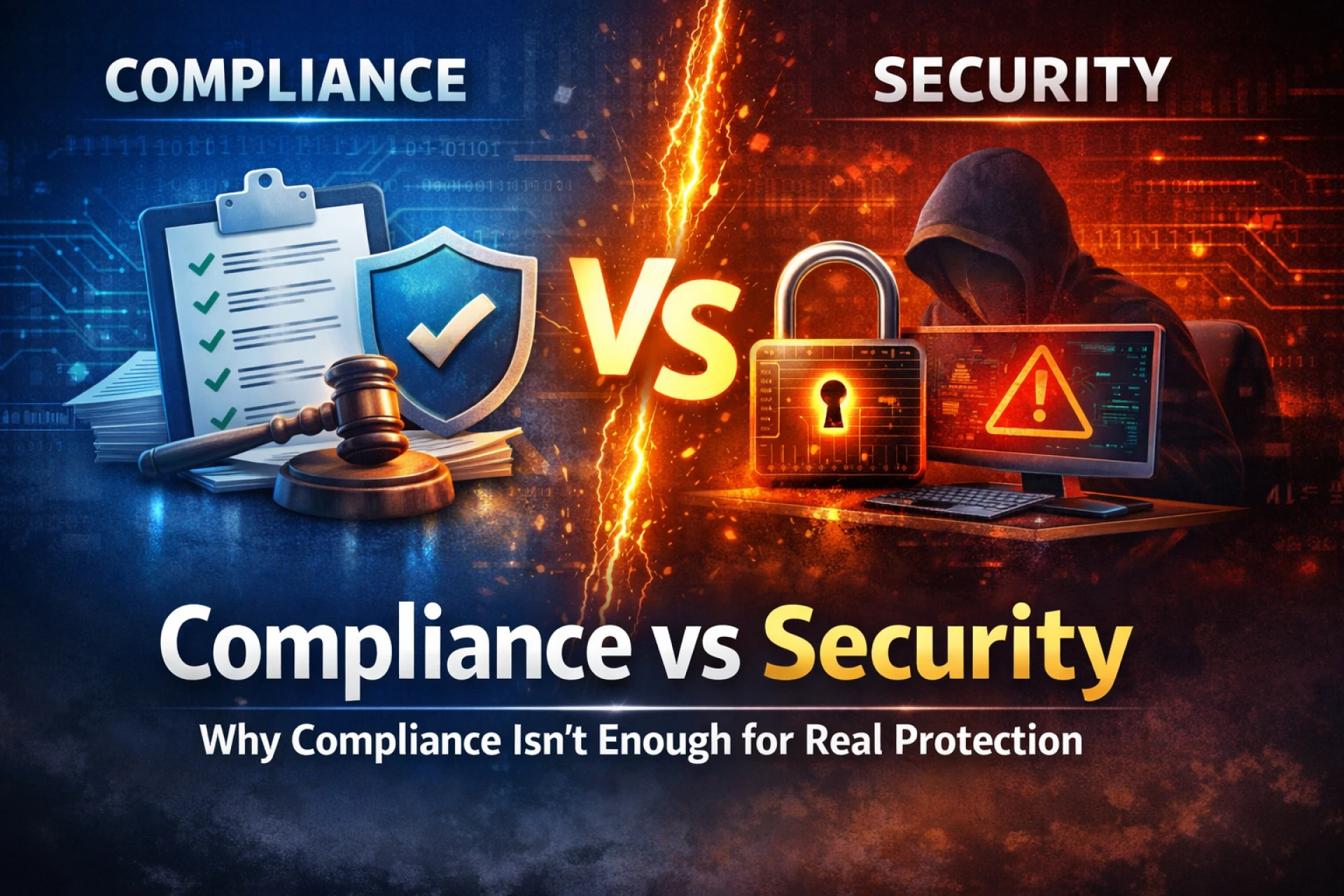

In today’s digital world, many businesses believe that meeting compliance requirements automatically means their systems are secure. This is one of the most common and dangerous misunderstandings in cybersecurity. Compliance vs security are related, but they are not the same. Relying only on compliance can leave serious security gaps that attackers are quick to exploit.
This article explains why compliance alone is not enough and why real security needs a broader, risk-based approach.
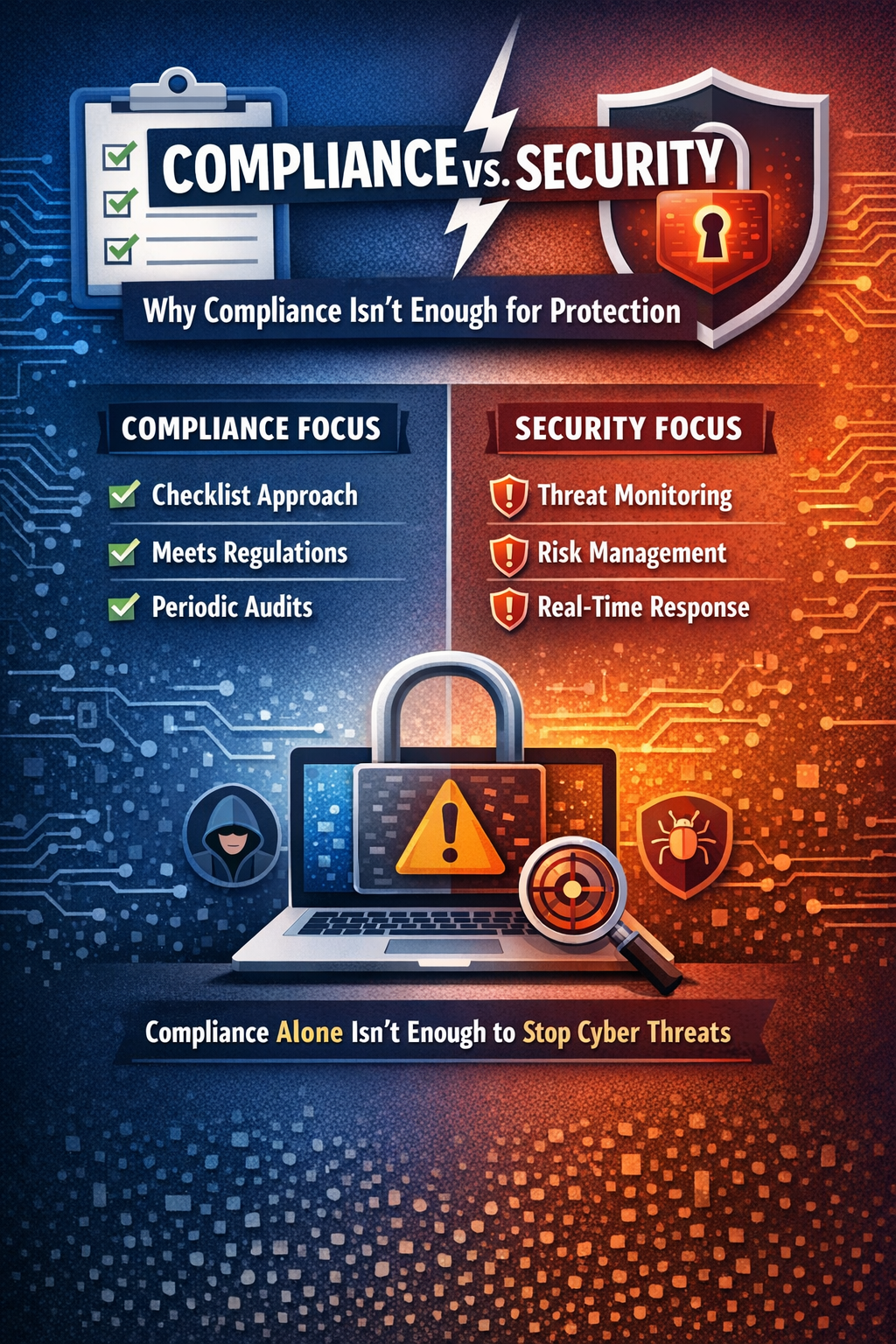
What Does Compliance Actually Mean?
Compliance refers to following specific rules, standards, or regulations set by authorities or industry bodies. These rules are designed to ensure a basic level of protection for data and systems.
Some common compliance frameworks include:
- PCI DSS for payment card data
- ISO 27001 for information security management
- HIPAA for healthcare data
- GDPR for data privacy
Compliance usually involves checklists, audits, and documentation. If you pass an audit, you are considered compliant for that period.
However, compliance focuses on minimum requirements, not on full protection against real-world threats.
What Is Security in Practical Terms?
Security is about protecting systems, data, and users from actual attacks. It is ongoing, adaptive, and focused on real risks rather than fixed rules.
True security involves:
- Identifying vulnerabilities before attackers do
- Monitoring systems continuously
- Responding quickly to incidents
- Updating controls as threats evolve
Security does not end with an audit report. It is a daily process.
Why Compliance Alone Fails to Protect Businesses
Many organizations that suffered major data breaches were fully compliant at the time of the attack. This clearly shows that compliance does not equal security.
Here are the key reasons why compliance alone is not enough:
1. Compliance Is Point-in-Time
Audits happen once or twice a year. Cyberattacks happen every day. A system that was compliant six months ago may already be vulnerable today.
2. Attackers Don’t Follow Compliance Rules
Hackers do not care whether you passed an audit. They look for misconfigurations, outdated software, weak passwords, and human errors.
3. Compliance Has a Fixed Scope
Most standards focus only on specific systems or data. Anything outside that scope may remain unprotected, even though attackers can still access it.
4. Checkbox Mentality
Some organizations focus on “ticking boxes” just to pass audits. This approach ignores real risks and creates a false sense of safety.
The Real Difference Between Compliance and Security
| Compliance | Security |
|---|---|
| Rule-based | Risk-based |
| Audit-focused | Threat-focused |
| Minimum standards | Strong protection |
| Static | Continuous |
| Documentation heavy | Action oriented |
Compliance tells you what is required. Security asks what could go wrong.
Why Security Must Go Beyond Compliance
Cyber threats are constantly changing. New attack techniques appear every month. Compliance standards cannot update fast enough to cover every new risk.
A security-first approach helps businesses:
- Reduce the chances of data breaches
- Protect brand reputation
- Avoid financial losses
- Build customer trust
- Stay prepared for future threats
When security is strong, compliance becomes easier. The opposite is not always true.
How Businesses Can Balance Compliance and Security
Compliance should be treated as a foundation, not the final goal. Here’s how organizations can move beyond basic compliance:
1. Adopt a Risk-Based Security Strategy
Identify critical assets, assess risks, and prioritize controls based on real threats, not just audit requirements.
2. Continuous Monitoring
Use monitoring tools to detect suspicious activity in real time, not just during audit periods.
3. Regular Security Testing
Conduct vulnerability assessments and penetration testing even if compliance does not strictly demand it.
4. Employee Awareness
Many breaches happen due to human error. Regular security training is as important as technical controls.
5. Incident Response Planning
Have a clear plan to respond quickly if something goes wrong. Compliance alone will not save you during an active attack.
Compliance Should Support Security, Not Replace It
Compliance frameworks are valuable. They provide structure and help organizations meet legal and regulatory obligations. But treating compliance as the ultimate security goal is a mistake.
Real security requires:
- Continuous improvement
- Proactive threat management
- Strong leadership involvement
- A culture of security awareness
When security is prioritized first, compliance naturally follows.
Final Thoughts
Compliance and security serve different purposes. Compliance ensures that rules are followed. Security ensures that systems are protected.
In a world where cyber threats are becoming more advanced and frequent, compliance alone is not enough. Businesses must look beyond audits and checklists and focus on real-world security practices.
Strong security protects your data, your customers, and your future. Compliance should be part of the journey, not the destination.





Sign in to leave a comment.