
Nowadays online presence is vital for any business or individual looking to establish credibility and reach a wider audience. Central to this online presence is a well-designed and developed website. Whether you're a business owner, a budding entrepreneur, or simply looking to share your passion with the world, understanding the fundamentals of website design and development is crucial. This comprehensive guide will delve into the key aspects of creating an effective website, from the basics of design principles to the technicalities of development and maintenance.
The Importance of a Good Website
A website serves as the digital face of a business or individual. It’s often the first point of contact for potential customers or visitors, making it essential to create a positive and lasting impression. A well-designed website can:
Enhance Credibility: A professional-looking website builds trust and establishes credibility.Increase Visibility: With proper SEO practices, a website can improve search engine rankings, increasing visibility.Boost Engagement: User-friendly design and intuitive navigation enhance user engagement and retention.Drive Conversions: Effective design elements and clear calls-to-action can drive conversions, whether it's sales, sign-ups, or inquiries.Website Design: Principles and Best Practices
Website design is about more than just aesthetics; it's about creating an intuitive and enjoyable user experience. Here are some key principles and best practices to consider:
1. Simplicity and Clarity
A simple, clean design helps visitors focus on the content and the purpose of the site. Avoid clutter and unnecessary elements that can distract users. Clear, concise text and well-organized layouts enhance readability and user experience.
2. Consistency
Consistency in design elements, such as fonts, colors, and buttons, creates a cohesive and professional look. It also helps users navigate the site more easily, as they become familiar with the visual cues and patterns.
3. Mobile Responsiveness
With the increasing use of mobile devices, ensuring that your website is mobile-friendly is crucial. A responsive design adapts to different screen sizes and devices, providing a seamless user experience across all platforms.
4. Fast Loading Times
Website speed is a critical factor in user experience and search engine ranking. Optimize images, leverage browser caching, and minimize code to ensure fast loading times. Users are likely to abandon a site that takes too long to load.
5. Accessibility
An accessible website is usable by everyone, including people with disabilities. Follow Web Content Accessibility Guidelines (WCAG) to ensure your site is inclusive. This includes providing alt text for images, ensuring sufficient color contrast, and enabling keyboard navigation.
6. Visual Hierarchy
Use visual hierarchy to guide users' attention to the most important elements on the page. This can be achieved through size, color, contrast, and spacing. Effective use of visual hierarchy makes it easier for users to scan and understand the content.
7. Navigation
Intuitive navigation helps users find the information they need quickly and easily. Use clear labels, logical menu structures, and consistent placement of navigation elements. A well-designed navigation system improves user experience and retention.
Website Development: The Technical Backbone
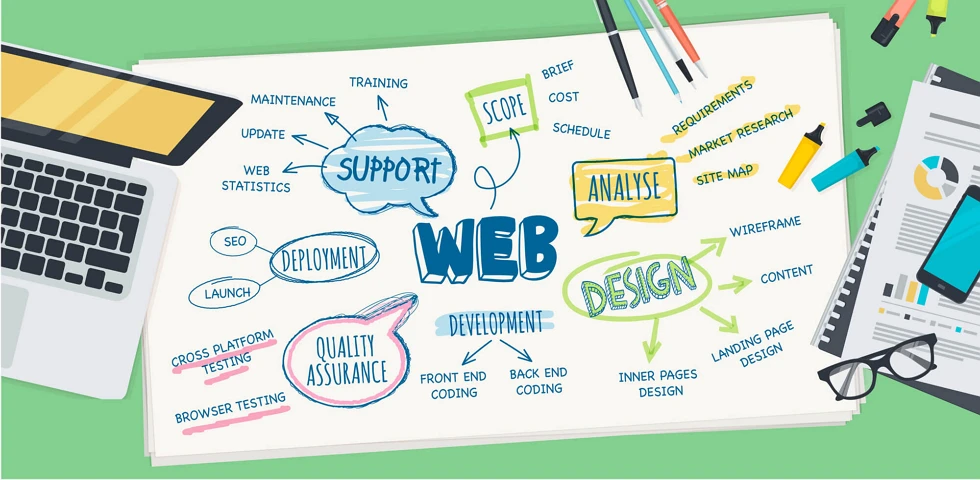
Website development involves turning the design into a functional website using various coding languages and technologies. Here are the main components of website development:
1. Front-End Development
Front-end development focuses on the user-facing side of the website. It involves creating the visual elements and user interactions using HTML, CSS, and JavaScript.
HTML (HyperText Markup Language): The standard language for creating web pages. It provides the structure and content of the site.CSS (Cascading Style Sheets): Used to style and layout web pages. It controls the presentation, including colors, fonts, and spacing.JavaScript: A scripting language that enables dynamic content and interactivity on web pages. It can be used for animations, form validations, and more.2. Back-End Development
Back-end development involves the server-side logic and database interactions that power the website. Common languages and technologies used in back-end development include:
Server-Side Languages: Such as PHP, Python, Ruby, and Node.js. These languages process user requests, manage data, and generate dynamic content.Databases: Used to store and retrieve data. Common databases include MySQL, PostgreSQL, MongoDB, and SQLite.Server Configuration: Setting up and managing the server environment where the website is hosted. This includes web servers like Apache and Nginx.3. Content Management Systems (CMS)
A CMS is a software application that allows users to create, manage, and modify content on a website without needing extensive technical knowledge. Popular CMS platforms include WordPress, Joomla, and Drupal. They provide pre-built templates and plugins that simplify the development process and enable easy content updates.
4. E-Commerce Development
For businesses looking to sell products or services online, e-commerce development is essential. This involves integrating shopping cart systems, payment gateways, and secure transaction processes. Platforms like Shopify, WooCommerce, and Magento offer comprehensive e-commerce solutions.
5. Web Hosting and Domain Registration
Web hosting is the service that allows your website to be accessible on the internet. There are various types of hosting, including shared hosting, VPS hosting, and dedicated hosting. Choose a hosting plan that meets your website’s needs in terms of performance, security, and scalability. Domain registration involves purchasing a domain name that represents your website.
SEO and Website Performance
Search Engine Optimization (SEO) is the practice of optimizing your website to rank higher in search engine results. Key SEO practices include:
1. Keyword Research
Identify relevant keywords that your target audience is searching for. Use tools like Google Keyword Planner, SEMrush, or Ahrefs to find keywords with high search volume and low competition.
2. On-Page SEO
Optimize individual pages on your website for specific keywords. This includes:
Title Tags and Meta Descriptions: Create compelling and keyword-rich titles and descriptions for each page.Header Tags: Use H1, H2, and H3 tags to structure your content and highlight important sections.URL Structure: Use clean, descriptive URLs that include relevant keywords.Content Quality: Create valuable, informative, and engaging content that addresses the needs of your audience.3. Technical SEO
Ensure your website is technically optimized for search engines. This includes:
XML Sitemaps: Create and submit an XML sitemap to search engines to help them index your site.Robots.txt: Use the robots.txt file to control which pages search engines should crawl and index.Mobile-Friendliness: Ensure your website is responsive and works well on mobile devices.Page Speed: Optimize your website’s loading times to improve user experience and search engine ranking.4. Off-Page SEO
Build your website’s authority and credibility through off-page SEO techniques, such as:
Backlink Building: Acquire high-quality backlinks from reputable websites in your industry.Social Media Marketing: Promote your content and engage with your audience on social media platforms.Content Marketing: Create and distribute valuable content to attract and retain a target audience.Website Maintenance and Security
Maintaining and securing your website is crucial to ensure its ongoing performance and protect it from potential threats. Key aspects of website maintenance and security include:
1. Regular Updates
Keep your website’s software, including the CMS, themes, and plugins, up to date. Regular updates often include security patches and performance improvements.
2. Backups
Regularly back up your website’s files and databases to prevent data loss in case of a security breach or technical failure. Use automated backup solutions to ensure consistent backups.
3. Security Measures
Implement security measures to protect your website from threats such as malware, hacking, and data breaches. This includes:
SSL Certificates: Use SSL certificates to encrypt data transmitted between your website and users.Firewalls: Set up web application firewalls to block malicious traffic and protect your site from attacks.Security Plugins: Use security plugins to monitor your website for vulnerabilities and implement additional security measures.4. Performance Monitoring
Regularly monitor your website’s performance to identify and address any issues that may affect user experience or search engine ranking. Use tools like Google Analytics, Google Search Console, and performance monitoring tools to track key metrics.
Conclusion
Website design and development is a multifaceted process that involves creativity, technical expertise, and strategic planning. By understanding and implementing the principles and best practices outlined in this guide, you can create a website that not only looks great but also performs well and meets the needs of your audience. Whether you’re building a personal blog, an e-commerce store, or a corporate website, a well-designed and developed site is a powerful tool that can help you achieve your goals and succeed in the digital landscape. If you want a website development company in noida, consider partnering with a reputable firm to ensure your site is optimized for success.






Sign in to leave a comment.