
The evolution of construction technologies over the past decades has led to the development of innovative structural systems aimed at optimizing material use, improving performance, and enhancing architectural flexibility. Among these innovations, the U-Boot slab system stands out as a voided biaxial slab solution designed to reduce concrete volume and overall structural weight while maintaining high load-bearing capacity and durability.
What is the U-Boot Slab System?
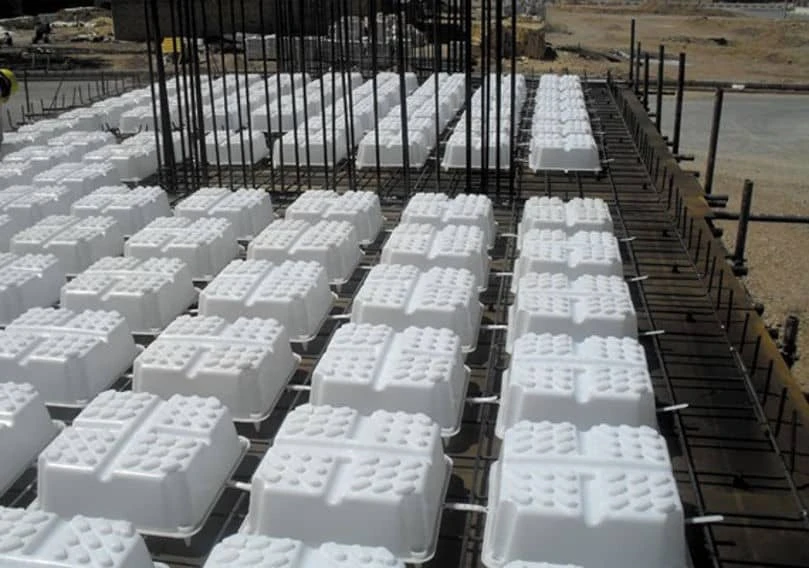
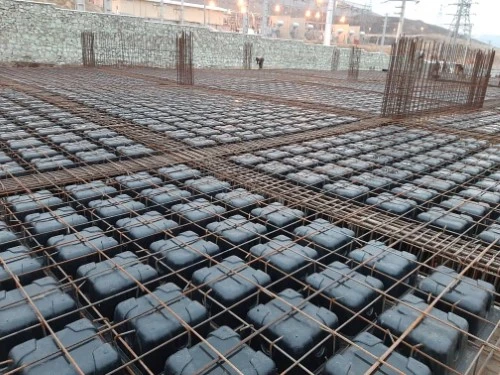
The U-Boot slab system is a type of reinforced concrete slab that incorporates hollow plastic forms—typically made of recycled polypropylene—placed in a grid pattern within the slab. These forms create voids that displace concrete in the neutral axis of the slab, where it contributes least to structural performance. As a result, the system achieves a significant reduction in dead load without compromising strength or stiffness.
The name “U-Boot” (German for “submarine”) refers to the shape of the void formers, which resemble mini submarines. This system is sometimes referred to in Persian as سقف یوبوت, widely used in Iran and other Middle Eastern countries where construction efficiency and cost optimization are major concerns.
Key Advantages
1. Material Savings and Cost Efficiency
By using U-Boot void formers, the volume of concrete and steel required is reduced, resulting in lower construction costs. The lighter slab also means that foundation and column sizes can be minimized.
2. Longer Spans and Fewer Columns
The system allows for larger spans—up to 18 meters in some cases—making it ideal for open-plan spaces such as offices, shopping malls, and car parks. This reduces the number of columns and enhances architectural freedom.
3. Improved Structural Behavior
The biaxial slab design allows for uniform distribution of loads in two directions, reducing bending moments and increasing overall structural performance.
4. Sustainability
The void formers are made of 100% recycled plastic, and the reduced volume of concrete directly leads to lower CO₂ emissions. This makes U-Boot slabs a smart choice for green building projects seeking LEED or similar certifications.
5. Enhanced Thermal and Acoustic Insulation
The air-filled voids within the slab offer better insulation properties than solid slabs, contributing to the energy efficiency and acoustic comfort of buildings.
Applications
U-Boot slabs are widely used in:
Residential buildings: For maximizing usable space and reducing construction costs.
Commercial complexes: Where open spaces and long spans are crucial.
Parking structures: To accommodate wider areas with fewer supports.
Public buildings: Including hospitals, schools, and government facilities requiring flexibility and durability.
Structural Design and Implementation
The structural design of U-Boot slabs follows the same fundamental principles as traditional reinforced concrete slabs but requires additional attention in the placement of void formers and reinforcement. The height and arrangement of the void modules are determined based on span length, load requirements, and slab thickness.
Construction involves the following key steps:
Formwork installation
Placing the lower reinforcement layer
Positioning U-Boot modules
Placing the upper reinforcement layer
Pouring concrete in two stages – one to anchor the modules, the other to complete the slab
Close coordination between structural engineers and contractors is crucial to ensure the voids are accurately placed and the slab performs as designed.
Challenges and Considerations
While the system offers numerous benefits, it also comes with challenges:
Initial design complexity: Requires precise structural modeling and planning.
Skilled labor: Proper training is necessary for accurate placement and concrete pouring.
Cost of void formers: Though offset by material savings, the initial price of modules can be higher than traditional methods in some markets.
Conclusion
The U-Boot slab system is a transformative solution for modern construction needs. It combines engineering innovation with sustainability, cost-efficiency, and architectural versatility. As urban construction becomes denser and more demanding, such systems provide practical answers to space, weight, and environmental constraints.
Whether referred to as a voided biaxial slab or locally known as سقف یوبوت, this technology has earned its place in both conventional and cutting-edge construction projects worldwide. Its increasing popularity signals a move toward smarter, greener, and more adaptive structural systems.






























Sign in to leave a comment.