

For a small business, contracts are more than documents that need to be signed and stored. They define relationships with customers, suppliers, employees, partners, vendors, and service providers. As the business grows, managing these agreements through spreadsheets, email threads, shared folders, and paper files can quickly become difficult.
This is where contract management software for small business can make a significant difference.
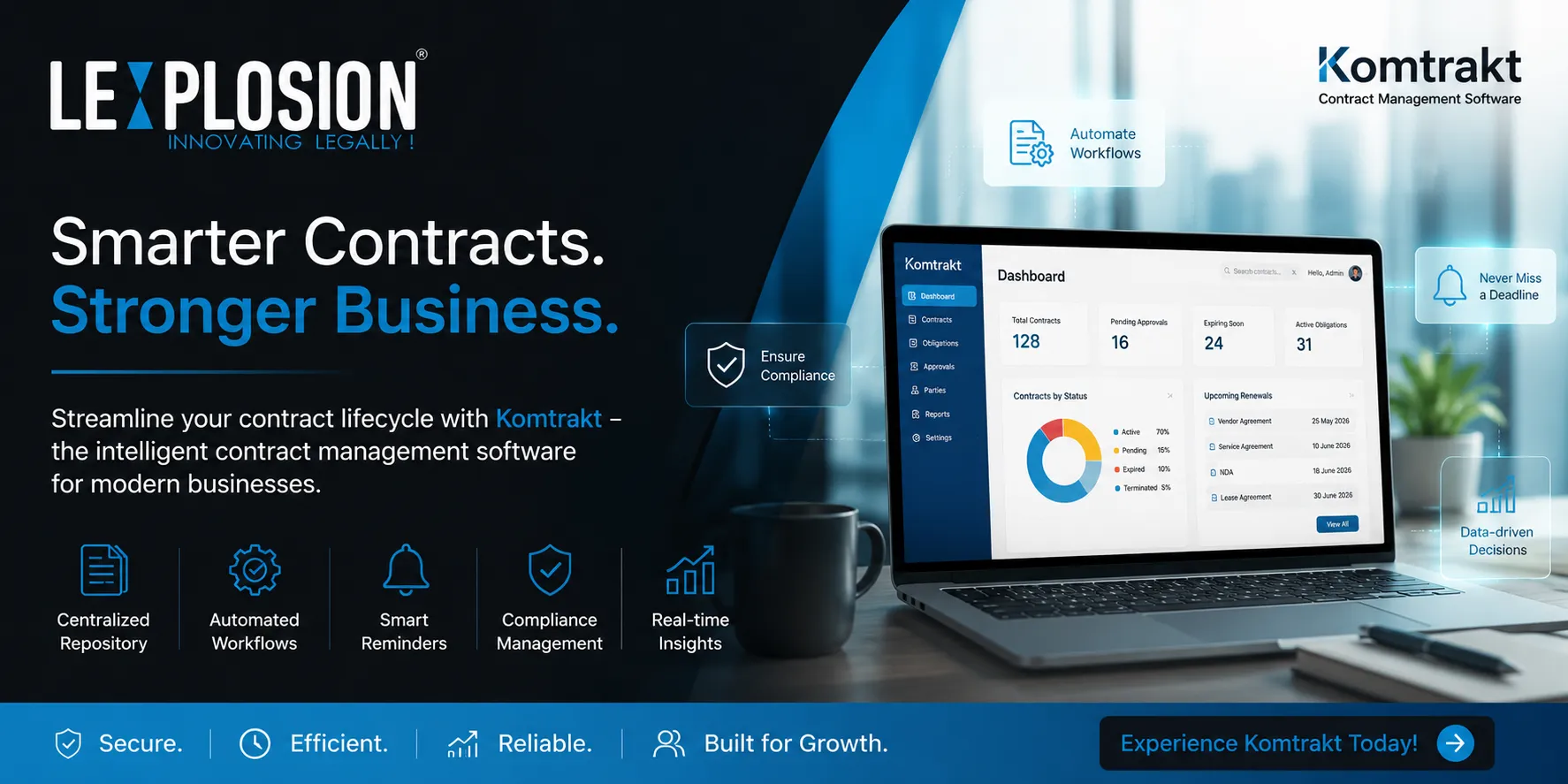
A modern contract management platform can centralize agreements, automate repetitive processes, track important dates, improve visibility, and help businesses reduce the risks associated with missed obligations or renewals. Solutions such as Komtrakt by Lexplosion Solutions are designed to help organizations manage contracts throughout their lifecycle from a centralized platform.
What Is Contract Management Software for Small Business?
Contract management software for small business is a digital solution that helps organizations create, organize, review, approve, execute, monitor, and renew contracts from one centralized system.
Instead of maintaining separate spreadsheets and folders for different agreements, businesses can use a centralized contract repository to maintain contract records and associated information.
Depending on the platform, businesses may use contract management software to:
- Store contracts in a centralized repository
- Track contract owners and counterparties
- Manage drafting and review processes
- Automate contract approval workflows
- Monitor contractual obligations
- Set reminders for renewals and expirations
- Track important contract milestones
- Improve contract search and retrieval
- Maintain an audit trail of contract activities
- Generate reports for management and legal teams
For small businesses, these capabilities can be particularly valuable because contracts are often managed by a small team that has to handle multiple operational responsibilities.
Why Small Businesses Need Better Contract Management
Small businesses may initially manage contracts using email, spreadsheets, cloud storage, or physical files. These methods can work when the number of agreements is limited.
However, as the business expands, the number and complexity of contracts can increase.
A business may have:
- Customer agreements
- Vendor contracts
- Service agreements
- Employment contracts
- Non-disclosure agreements
- Lease agreements
- Partnership agreements
- Procurement contracts
- Software subscription agreements
- Professional service agreements
Managing these agreements manually can create several challenges.
1. Contracts Can Become Difficult to Find
When agreements are distributed across email inboxes, folders, and individual employee systems, finding the latest version of a contract can take time.
A centralized contract management system provides a structured location for storing and retrieving contracts.
2. Important Dates Can Be Missed
Contracts frequently contain renewal dates, termination notice periods, payment milestones, compliance requirements, and other deadlines.
Missing a notice period could result in an unwanted renewal or operational disruption.
Automated reminders can help contract owners stay aware of important dates.
3. Approval Processes Can Become Slow
Contract approvals may involve sales, finance, procurement, legal, management, or other stakeholders.
When approvals are handled manually through long email chains, it can be difficult to determine who has reviewed a contract and what action is still pending.
4. Contract Obligations May Be Overlooked
Signing a contract is not the end of the contract lifecycle.
Businesses may have continuing obligations relating to payments, service levels, reporting, insurance, confidentiality, renewals, or termination.
This makes post-signature contract management just as important as contract creation and execution.
Key Features to Look for in Contract Management Software
Not every small business needs an enterprise-level platform with complex functionality. The right solution should match the organization's contract volume, processes, risk profile, and growth plans.
Here are some important capabilities to consider.
Centralized Contract Repository
A centralized repository allows businesses to organize contracts and access them from a single platform.
Instead of searching through multiple locations, users can quickly locate agreements and relevant contract information.
A good repository should support structured metadata such as:
- Contract type
- Counterparty
- Contract owner
- Effective date
- Expiry date
- Renewal date
- Contract value
- Business unit
- Status
Contract Automation Software
Contract automation software helps reduce repetitive manual activities involved in contract management.
Automation can support processes such as:
- Approval routing
- Notifications
- Renewal reminders
- Task assignments
- Document tracking
- Workflow escalation
- Contract status updates
For small businesses with limited administrative resources, automation can help employees spend less time on repetitive contract-related tasks.
Contract Lifecycle Management System
A contract lifecycle management system provides a structured approach to managing contracts from initiation through completion.
The contract lifecycle commonly includes:
Request → Draft → Review → Approval → Negotiation → Execution → Obligation Management → Renewal/Expiry → Archival
Managing these stages through a connected workflow provides greater visibility than treating each stage as a separate activity.
Contract Management Automation
Contract management automation can help businesses establish consistent processes around contracts.
For example, when a contract is approaching its renewal date, the system can notify the responsible person. Similarly, an approval workflow can automatically route a contract to the appropriate stakeholders.
This reduces dependence on manual reminders and individual employees' memory.
Contract Compliance Software
Contracts can contain obligations that businesses must monitor after signing.
Contract compliance software can help organizations track relevant obligations, deadlines, milestones, and responsibilities.
This can be particularly useful when a business manages multiple customer, vendor, or service agreements simultaneously.
Reporting and Dashboards
Management teams need visibility into their contractual commitments.
Useful reporting capabilities may include:
- Contracts expiring soon
- Contracts pending approval
- Contracts by business unit
- Contracts by counterparty
- Renewal pipeline
- Contract values
- Outstanding obligations
- Contract status
These insights can help decision-makers identify potential risks and prioritize actions.
How Contract Management Software Benefits Small Businesses
Saves Administrative Time
Employees can spend considerable time searching for contracts, checking spreadsheets, following up on approvals, and manually tracking deadlines.
Automation and centralized information can reduce this administrative burden.
Reduces Contract-Related Risk
Missed renewals, overlooked obligations, outdated contract versions, and incomplete approval records can create business risks.
A structured contract management process can improve visibility and accountability.
Improves Collaboration
Contracts often involve multiple departments.
A centralized platform gives authorized stakeholders access to the information they need while providing greater visibility into the status of contracts.
Supports Business Growth
A process that works for 20 contracts may become difficult to maintain when a business has hundreds.
Implementing a scalable contract management solution early can help establish more consistent processes as contract volumes increase.
Improves Visibility Into Contract Performance
Contracts contain valuable business information, including financial commitments, renewal dates, responsibilities, and commercial terms.
Organizing this information makes it easier for management to understand contractual exposure and upcoming actions.
Manual Contract Management vs. Automated Contract Management
| Manual Contract Management | Automated Contract Management |
| Contracts stored across multiple locations | Centralized contract repository |
| Manual deadline tracking | Automated reminders |
| Email-based approvals | Structured approval workflows |
| Spreadsheet-based tracking | Real-time contract dashboards |
| Difficult contract retrieval | Searchable contract information |
| High dependency on individuals | Defined ownership and workflows |
| Limited reporting | Automated reporting and analytics |
| Greater risk of missed deadlines | Proactive alerts and notifications |
Automation does not eliminate the need for human review. Instead, it helps organizations establish repeatable processes while allowing employees to focus on decisions that require human judgment.
How to Choose Contract Management Software for a Small Business
Before selecting a solution, businesses should evaluate their existing contract processes and identify where the greatest problems occur.
1. Assess Your Contract Volume
Consider how many contracts your business currently manages and how that number is expected to change.
A solution should be capable of handling current requirements while remaining suitable for future growth.
2. Identify Your Most Important Workflows
Determine whether you primarily need help with:
- Contract storage
- Approvals
- Renewals
- Compliance
- Obligation tracking
- Search and reporting
- Contract creation
- Cross-functional collaboration
This will help you prioritize the features that actually matter.
3. Evaluate Automation Capabilities
Look beyond simple document storage.
Ask whether the platform can automate notifications, approvals, task assignments, reminders, and other repetitive processes.
4. Consider Security and Access Controls
Contracts can contain confidential commercial, financial, and operational information.
Businesses should evaluate user permissions, access controls, audit trails, data protection measures, and other security features before selecting a platform.
5. Look for Usability
Small businesses may not have dedicated contract administrators or large legal operations teams.
The software should therefore be intuitive enough for business users to adopt without creating unnecessary complexity.
How Komtrakt Helps Small Businesses Manage Contracts
Komtrakt by Lexplosion Solutions provides a centralized approach to contract management, helping businesses manage contracts and associated processes throughout their lifecycle.
The platform can support activities including contract storage, workflow management, approvals, obligation tracking, reminders, and reporting.
By bringing contract information and workflows together, Komtrakt can help businesses move away from fragmented contract management processes and establish greater visibility over their agreements.
For organizations evaluating a contract lifecycle management software solution, the key consideration should be whether the platform can support the entire lifecycle rather than simply storing signed documents.
Best Practices for Small Business Contract Management
Technology is most effective when combined with clear internal processes.
Small businesses can strengthen contract management by following a few practical principles:
Establish Contract Ownership
Every important contract should have a clearly identified owner responsible for monitoring its status, obligations, and important dates.
Standardize Workflows
Define who reviews, approves, signs, and manages different types of contracts.
Maintain a Single Source of Truth
Avoid keeping multiple unofficial versions of contracts across personal computers, email accounts, and disconnected folders.
Track Obligations After Signing
A signed contract should not disappear into an archive. Relevant obligations and deadlines should continue to be monitored.
Review Contracts Before Renewal
Renewal reminders should provide sufficient time to assess pricing, performance, business requirements, and termination provisions before a contract automatically renews.
Regularly Review Contract Data
Periodic reviews can help identify incomplete records, outdated contracts, upcoming renewals, and outstanding obligations.
Frequently Asked Questions
What is contract management software for small business?
Contract management software for small business is a digital platform used to organize, manage, monitor, and automate contract-related activities throughout the contract lifecycle.
Is contract management software useful for a small business?
Yes. Even businesses with relatively small contract volumes can benefit from centralized contract storage, automated reminders, approval workflows, obligation tracking, and better visibility into agreements.
What is contract automation software?
Contract automation software uses digital workflows and automation to streamline repetitive contract activities such as approvals, notifications, task assignments, and renewal reminders.
What is a contract lifecycle management system?
A contract lifecycle management system manages contracts across their different stages, from request and drafting through review, approval, execution, obligation management, renewal, expiry, and archival.
How does contract management automation help businesses?
Contract management automation reduces repetitive manual work by automating predefined processes such as approval routing, reminders, notifications, and task assignments.
What is contract compliance software?
Contract compliance software helps organizations monitor contractual obligations, deadlines, milestones, and other requirements to support ongoing compliance with agreements.
What should small businesses consider before buying contract management software?
Businesses should consider functionality, ease of use, workflow automation, contract repository capabilities, security, reporting, scalability, integrations, user permissions, and the organization's specific contract management requirements.
Conclusion
Effective contract management is not only an enterprise requirement. Small businesses also need reliable processes for storing agreements, managing approvals, tracking obligations, monitoring renewals, and maintaining visibility into contractual commitments.
The right contract management software for small business can replace fragmented spreadsheets and email-based processes with a centralized, structured, and more automated approach.
With capabilities such as contract automation software, a contract lifecycle management system, contract management automation, and contract compliance software, businesses can create a more consistent way to manage agreements while reducing administrative effort and improving visibility.
Komtrakt by Lexplosion Solutions is designed to support organizations in managing contracts throughout their lifecycle, helping businesses build a more organized and efficient contract management process as they grow.
























Sign in to leave a comment.