
Introduction
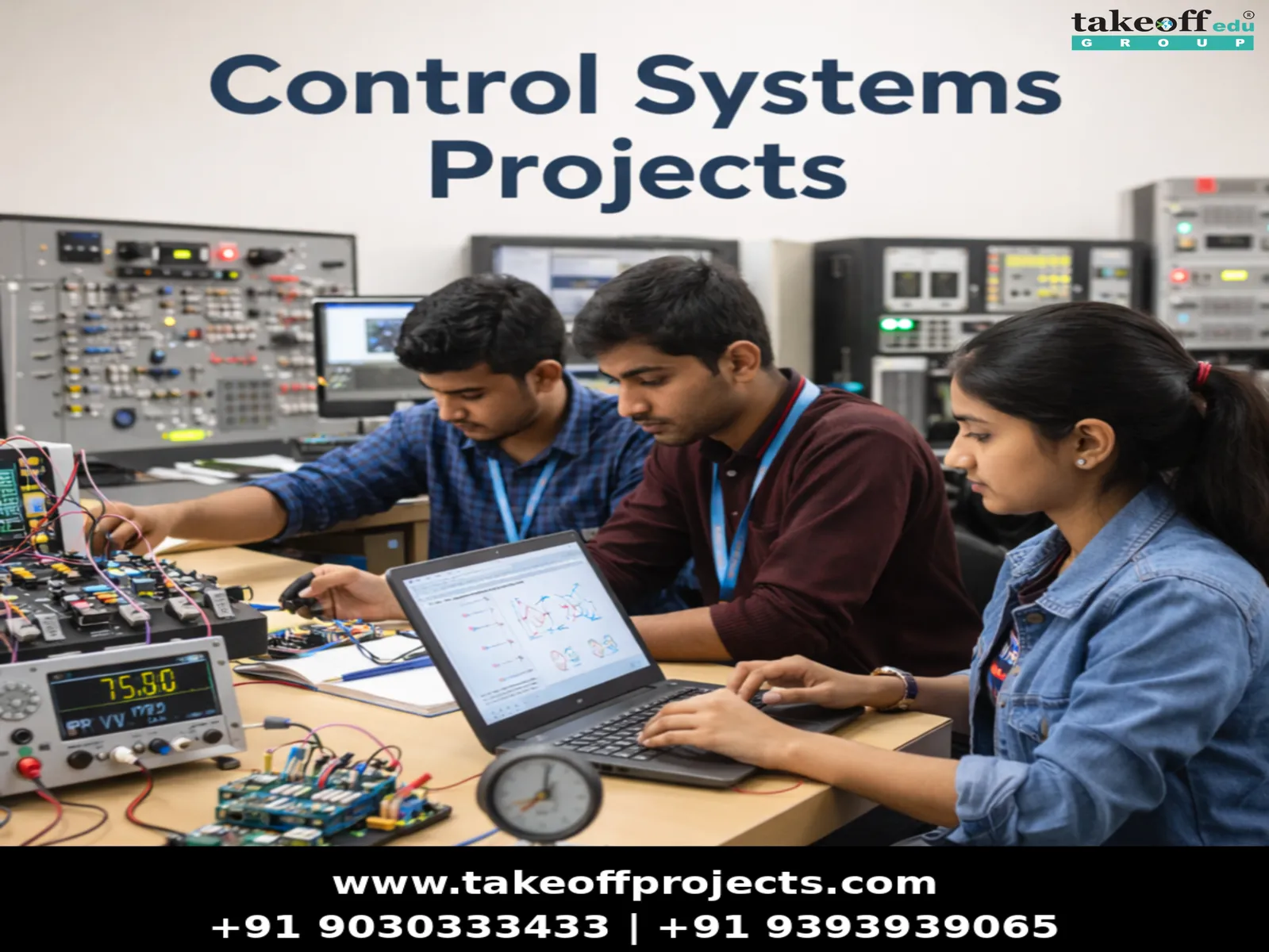
Control systems projects are an essential part of engineering education, especially for students in electrical, electronics, and mechanical fields. These projects help in understanding how systems are controlled, monitored, and optimized in real time environments. With the increasing demand for automation and intelligent systems, control systems have become a core area in modern technology. Working on these projects allows students to gain both theoretical knowledge and practical exposure.
Understanding Control Systems
- Control systems are designed to regulate the behaviour of systems using input-output relationships and feedback mechanisms. They play a major role in ensuring stability and accuracy in operations.
- Control systems work by taking input, processing it, and producing the desired output based on predefined conditions.
- There are two main types: open-loop systems (without feedback) and closed-loop systems (with feedback).
- Closed loop systems are more efficient because they continuously monitor output and correct errors automatically.
These systems are widely used in engineering applications where precision and reliability are important.
Project Ideas and Implementation
Control systems projects provide a wide range of opportunities for students to build practical skills and apply concepts effectively.
Basic Projects: Temperature control systems, water level controllers, and automatic street light systems help students understand sensors, switching, and simple automation logic.
Intermediate Projects: DC motor speed control and home automation systems introduce concepts like PWM, microcontroller programming, and real time control.
Advanced Projects: PID controller based systems and robotic control projects focus on accuracy, feedback mechanisms, and system optimization.
These projects involve designing, testing, and improving systems, which enhances hands on experience.
Technologies Used in Control Systems Projects
Control systems projects involve a combination of hardware and software technologies, providing students with practical and real time learning experience.
- Microcontrollers: Arduino and PIC are used to control system operations and process inputs.
- Sensors: Temperature, light, and motion sensors are used to collect real time data.
- Actuators: Motors and relays are used to perform physical actions based on system output.
- Programming Languages: Embedded C and Python are used to develop control logic and system functionality.
- Simulation Tools: MATLAB and Simulink are used for modeling and analyzing system performance before implementation.
Applications of Control Systems
Control systems are widely used in various industries and real-world applications, making them highly important for students.
- Industrial Automation: Improves efficiency by controlling machines and production processes.
- Robotics: Enables precise movement, positioning, and task execution.
- Power Systems: Maintains voltage and frequency for stable operation.
- Traffic Management: Optimizes signal timing and reduces congestion.
- Aerospace & Defense: Supports navigation, stability, and system control.
- Smart Homes: Automates lighting, temperature, and security systems.
Benefits for Engineering Students
Working on control systems projects offers important academic and career advantages.
- Improves Problem-Solving Skills: Develops analytical thinking through real time system design.
- Provides Practical Experience: Hands on exposure to modern industry technologies.
- Builds Strong Foundation: Strengthens core concepts like feedback, stability, and automation.
- Enhances Programming Skills: Improves coding and system design abilities.
- Supports Academic Projects: Useful for mini and final year submissions.
- Increases Career Opportunities: Opens paths in automation, robotics, embedded systems, and manufacturing.
Conclusion
Control systems projects are highly valuable for engineering students as they combine theoretical concepts with practical implementation. By working on these projects, students can gain in depth knowledge of automation and system control. This not only helps in academic success but also prepares them for future careers in advanced engineering domains.




























Sign in to leave a comment.