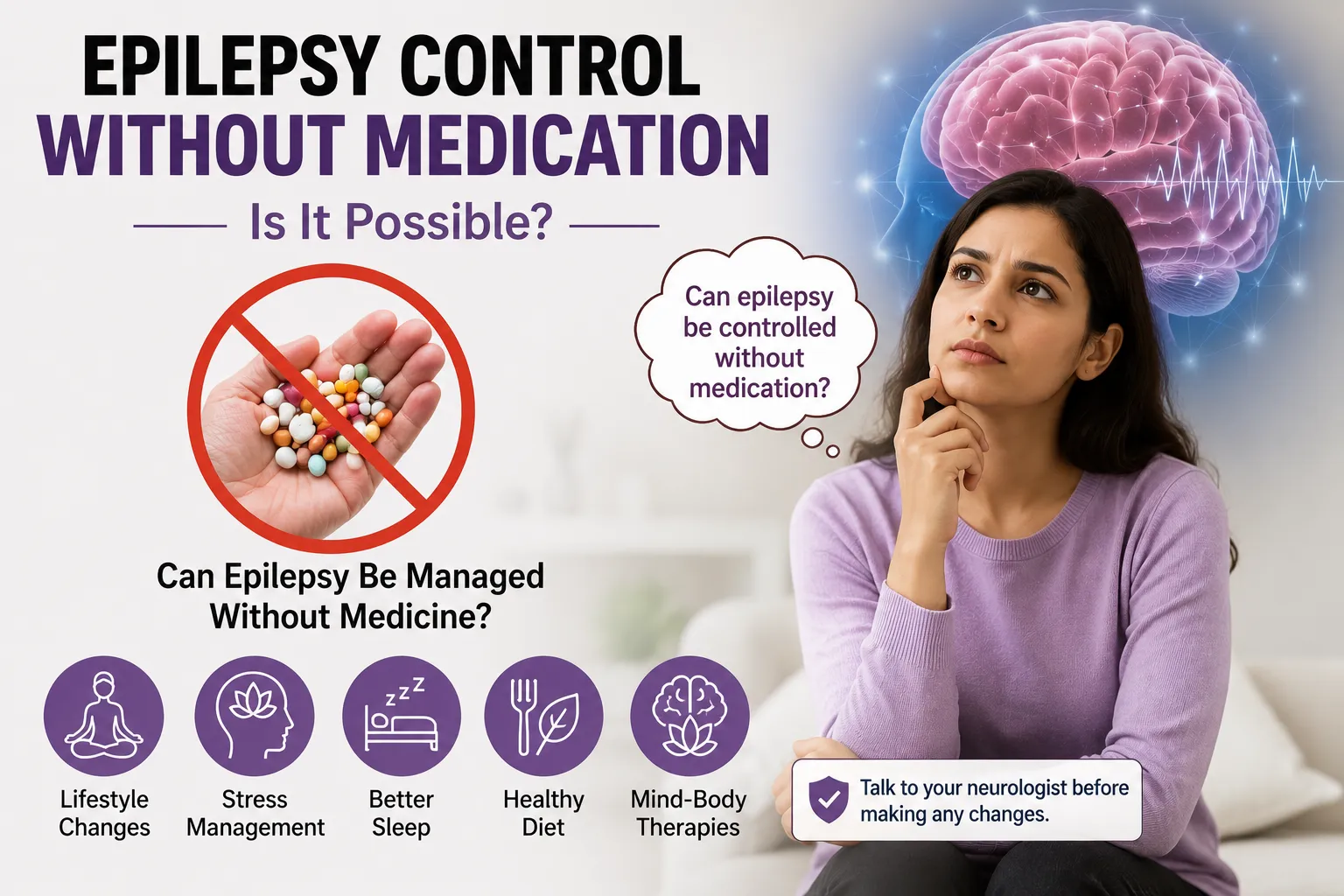

Many patients often think of the possibility of treating their epilepsy without taking medicines every day, especially those who have been seizure-free for some time. It is a legitimate question, but it deserves a legitimate answer. There are chances for the reduction or even stopping of antiepileptic medicines, and this may be safe for some patients. At the same time, there are several other patients who will experience seizures or complications while stopping their medications on their own.
Key Takeaways
|
Can Epilepsy Be Controlled Without Medication
Sometimes, medication can be beneficial, but mostly it is not. It is very important to get the right answer to this question because attempting to do so without thorough preparation can be extremely dangerous. The major aspects are the type of epilepsy, the number of seizures that occurred prior to starting treatment, and the EEG and MRI results.
About 60-70 % of patients who initially have epilepsy will become seizure-free with anticonvulsant medications. And if a patient has not had seizures for a period of at least two years, some specialists advise thinking about the possibility of stopping medications. Research has shown that up to 60 % of patients stop taking medication on a long-term basis.
Who Might Be a Suitable Candidate for Medication Withdrawal
Factors that favour attempting medication withdrawal include:
- A seizure-free period of two or more years on current medication
- A single seizure type that responded well to the first medication tried
- A normal MRI with no structural brain abnormality
- A normal or improved EEG compared to the time of diagnosis
- An epilepsy syndrome known to remit in adulthood, such as childhood absence epilepsy or juvenile absence epilepsy
The factors that strongly argue against withdrawal are, for example, an extensive history of severe seizures prior to becoming controlled, morphological brain abnormalities on imaging, EEG abnormalities that do not resolve despite seizure control, and a diagnosis of lifelong epilepsy syndrome, such as juvenile myoclonic epilepsy characterized by consistently high rates of relapse after seizure withdrawal.
Non-Pharmacological Options That Have Clinical Evidence
For patients with medicine-resistant epilepsy, those whose seizures have not been controlled by two or more appropriate antiseizure medications, non-pharmacological approaches offer meaningful alternatives:
Epilepsy surgery. Epilepsy surgery is the most successful treatment for focal epilepsy that resists other treatments. If the location of the seizures is known and comes from the part of the brain that can be surgically removed without damage, the surgery can cure between 60 and 70 per cent of patients. Temporal lobe surgery has the best results in the treatment of mesial temporal sclerosis.
Ketogenic diet therapy. The ketogenic diet is a diet that is high in fat and low in carbohydrates, which leads to alterations in brain metabolism and reduces the frequency of seizures in some patients. This dietary approach requires strict adherence and ongoing medical supervision; the upside is that its efficacy in reducing seizures exceeds 50%.
Vagus nerve stimulation is a procedure that involves implanting a device under the skin that delivers regular, mild electrical impulses to the vagus nerve. As a result, the number of seizures drops over time. In most cases, seizures do not completely cease, but their frequency and severity are significantly decreased, especially in patients who do not benefit from medications.
Responsive neurostimulation. The new technique identifies unusual electrical changes and provides a momentary counter-stimulus that prevents seizures.
Why Stopping Medication Independently Is Dangerous
The Risks of Seizure Disorder Treatment in the Workplace report points out that sudden interruption of treatment has consequences that are not limited to mere seizure occurrence–it can also cause status epilepticus, a condition that entails prolonged seizure activity without recovery and constitutes a medical emergency, bringing about serious complications and death. The first 6 months of the withdrawal process are known to be the most dangerous in terms of seizure recurrence.
The Specialist's Role in These Decisions
Every one of these decisions is firmly rooted in Neurology. Neurologists run through the entire process of diagnosis and management of seizure disorders, of which the epileptic syndromic classification, imaging and EEG interpretation, seizure history, implications of the condition for the patient’s way of life and values are part.
Self-medication by means of stopping medications on one’s own or on someone’s recommendations, even if well-meaning, is among the most frequently encountered reasons for seizure recurrences, which could have been avoided.
When Medication Remains the Right Choice
For those patients who have achieved control of their convulsions with existing treatment and are diagnosed with conditions that call for indefinite management, it is most obvious that the best way of continuing to take such medicine is to continue using medications from groups that target such medical conditions.
One example of such medications is Pregabalin, an antiepileptic agent that acts by modulating the function of calcium channels in hyperactive nerve cells, reducing the release of neurotransmitters responsible for convulsions.
The discussed medicine is marketed as Pbren 75 capsules containing pregabalin 75 mg, which are used by patients as part of their prescribed therapy, regulated by the doctor and requiring dosage adjustments based on seizure frequency, treatment tolerance, and kidney function.
Lifestyle Factors That Support Seizure Control
Regardless of whether a patient is on medication, certain lifestyle factors consistently influence seizure threshold:
- Adequate and regular sleep, as sleep deprivation is one of the most reliable seizure triggers
- Avoiding excessive alcohol, which lowers the seizure threshold acutely
- Consistent medication timing when antiseizure medicines are prescribed
- Stress management, as emotional and physical stress can precipitate seizures in susceptible individuals
- Regular exercise, which does not increase seizure risk and is associated with improved seizure control and overall well-being
Importance of Follow-Up Care
Whether a patient is on medication, withdrawing from it, or pursuing a non-pharmacological alternative, regular specialist review remains essential. EEG monitoring, clinical assessment of seizure diary data, and timely medication adjustment when needed all depend on an ongoing relationship with a neurologist rather than annual check-ups alone.
What Is Worth Remembering
Controlling epilepsy without medication is achievable for a select group of patients under carefully managed circumstances, and meaningful non-pharmacological alternatives exist for those with medicine-resistant disease. For the majority of people with epilepsy, however, consistent antiseizure medication remains the most reliable route to seizure freedom and the quality of life that accompanies it.
Disclaimer: This article is for general informational purposes only and should not be considered medical advice. Always consult a qualified neurologist or healthcare professional before making any changes to your epilepsy treatment.






















Sign in to leave a comment.