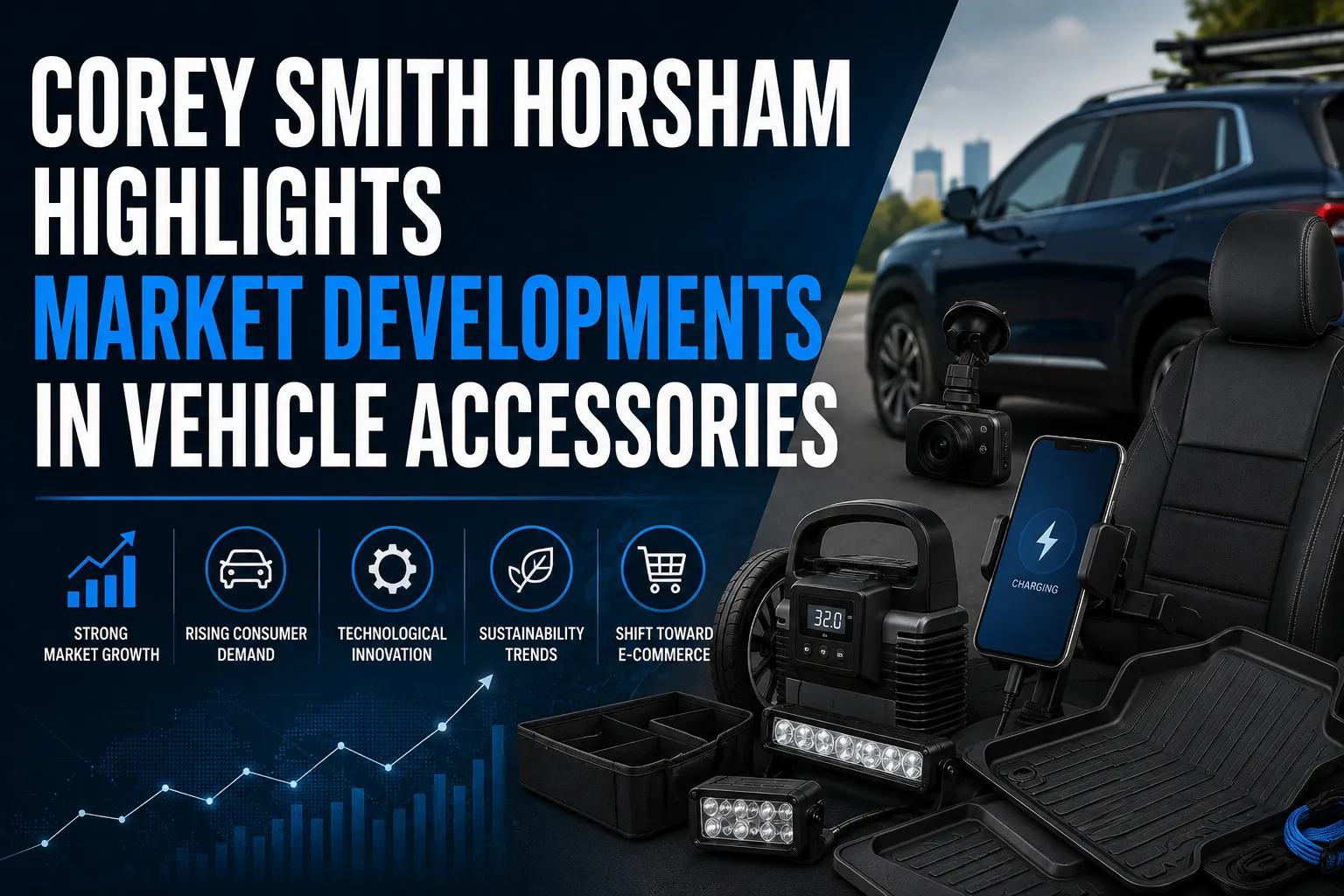

The vehicle accessories industry has quietly become one of the most dynamic segments of the automotive market. While much of the public attention remains focused on vehicle manufacturing, electric mobility, and autonomous technology, the accessories sector is undergoing a transformation of its own. Consumer preferences are changing, technology is reshaping product categories, and businesses are adapting to meet new expectations.
According to industry observer Corey Smith Horsham, the most significant developments in the vehicle accessories market are being driven by a combination of personalization, technological integration, and shifting consumer lifestyles. These trends are creating new opportunities for manufacturers, retailers, and aftermarket suppliers while changing how drivers interact with their vehicles.
A Growing Demand for Personalization
One of the clearest developments in the market is the increasing desire for customization. Modern consumers no longer view their vehicles solely as transportation tools. For many drivers, a vehicle serves as an extension of personal identity.
As a result, demand has expanded beyond traditional accessories such as floor mats and seat covers. Consumers are seeking products that help create a unique driving experience, including custom lighting systems, premium interior upgrades, specialized storage solutions, and exterior styling enhancements.
Why Personalization Matters
The popularity of customization reflects a broader consumer trend seen across multiple industries. Buyers increasingly want products that align with their individual preferences rather than standardized options.
Vehicle owners are investing in accessories that:
- Improve comfort during daily commutes
- Enhance visual appeal
- Support recreational activities
- Reflect personal style and interests
Corey Smith Horsham notes that businesses capable of offering flexible and customizable product lines are often better positioned to attract today's consumers.
Technology Is Redefining Vehicle Accessories
Technology has become one of the most influential forces shaping the market. Accessories are no longer limited to physical enhancements; many products now incorporate advanced digital features.
Smartphone connectivity, wireless charging stations, dashboard cameras, GPS tracking systems, and smart security solutions have become increasingly popular among drivers seeking greater convenience and control.
The Rise of Connected Products
The connected vehicle trend has created demand for accessories that integrate seamlessly with digital ecosystems. Consumers expect products to work alongside their mobile devices and in-vehicle technology.
Examples include:
- Wireless charging mounts
- Smart tire pressure monitoring systems
- Bluetooth-enabled diagnostic tools
- Remote vehicle monitoring devices
These products provide practical value while helping drivers stay connected and informed. As vehicles become more technologically sophisticated, accessory manufacturers are investing heavily in products that complement these advancements.
Sustainability Influences Purchasing Decisions
Environmental awareness is having a noticeable impact on consumer behavior across industries, and vehicle accessories are no exception.
Many buyers are paying closer attention to the materials used in the products they purchase. Accessories made from recycled materials, sustainable fabrics, and environmentally responsible manufacturing processes are gaining traction in the marketplace.
Businesses Respond to Consumer Expectations
Manufacturers are introducing eco-conscious alternatives that appeal to environmentally aware consumers without sacrificing durability or performance.
Examples include:
- Recycled rubber floor mats
- Sustainable seat cover materials
- Reusable vehicle storage products
- Packaging designed to reduce waste
Corey Smith Horsham points out that sustainability is increasingly viewed as a competitive advantage rather than simply a marketing initiative. Companies that successfully align environmental responsibility with product quality are often earning stronger consumer trust.
Outdoor Lifestyles Are Driving Product Innovation
Another important market development stems from changing lifestyle preferences. More consumers are embracing outdoor recreation, road travel, and adventure-based activities.
This shift has generated growing demand for accessories designed to support active lifestyles.
Popular Categories Seeing Growth
Products associated with travel and outdoor activities continue to attract attention, including:
- Roof racks
- Cargo carriers
- Bike transportation systems
- Portable vehicle storage solutions
- Camping-related vehicle accessories
The trend reflects a broader desire for flexibility and mobility. Consumers want vehicles that can adapt to work, family responsibilities, and recreational pursuits alike.
Manufacturers that recognize these changing lifestyle needs are developing products that enhance versatility while maintaining convenience and ease of use.
E-Commerce Continues to Shape Buying Habits
The way consumers purchase vehicle accessories has changed dramatically over the past decade. Online shopping has become a major channel for product discovery, comparison, and purchasing.
Customers now have access to extensive product catalogs, detailed reviews, installation guides, and demonstration videos before making a purchase decision.
The Importance of Digital Presence
For businesses operating within the accessories market, maintaining a strong online presence has become essential.
Successful companies are investing in:
- User-friendly websites
- Product visualization tools
- Customer review programs
- Educational content
- Mobile-friendly shopping experiences
Corey Smith Horsham highlights that consumers increasingly conduct extensive research before purchasing accessories. Businesses that provide clear information and transparent product details are often rewarded with higher levels of customer confidence.
The Electric Vehicle Effect
The rapid growth of electric vehicles is creating entirely new opportunities within the accessories segment.
EV owners often have different priorities compared to traditional vehicle owners. This has led manufacturers to develop products specifically designed for electric vehicle users.
Emerging categories include charging cable management systems, charging station accessories, battery protection products, and EV-specific storage solutions.
As electric vehicle adoption continues to expand, accessory providers are expected to introduce even more specialized products tailored to this growing market segment.
Looking Ahead
The vehicle accessories industry is entering a period of significant evolution. Consumer expectations are changing, technology is advancing, and new vehicle platforms are creating fresh opportunities for innovation.
From personalization and sustainability to connected technology and outdoor lifestyle products, the market is being shaped by trends that extend far beyond the automotive sector itself.
Corey Smith Horsham observations highlight an important reality for businesses operating in this space: success increasingly depends on understanding how consumer behavior is changing and responding with products that deliver meaningful value. Companies that remain attentive to these developments will be better prepared to compete in a market that continues to grow more sophisticated and customer-driven.
Conclusion
Market developments in vehicle accessories reveal an industry adapting to modern consumer priorities. Personalization, technology integration, sustainability, and lifestyle-focused solutions are influencing purchasing decisions across the market. As Corey Smith Horsham emphasizes, businesses that recognize these shifts and innovate accordingly will be best positioned to meet evolving customer expectations and capitalize on future growth opportunities.
























Sign in to leave a comment.