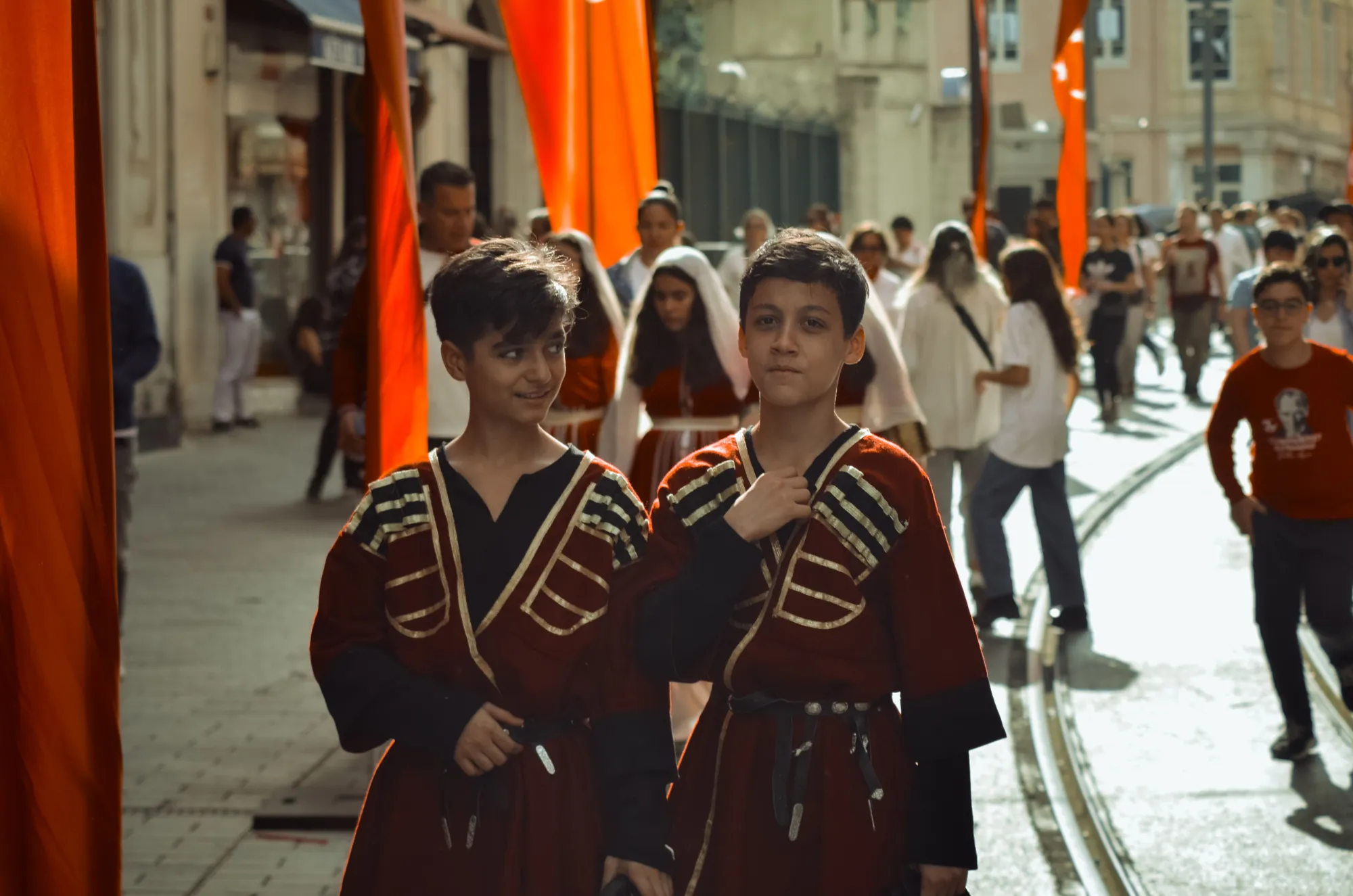

There are countries you can recognize from a building, a landscape or a plate of food, and then there are countries you can sometimes recognize from a single piece of clothing. Show someone a tartan kilt and Scotland probably comes to mind. A kimono immediately suggests Japan. A sari is so closely associated with India that even someone who has never been there will probably recognize it. Traditional clothing has become one of the strongest visual shortcuts we have for culture, although the reality behind these clothes is usually much more complicated than the postcard version.
Travelling made me notice this more than I expected. Before visiting different parts of the world, I thought of traditional clothes mainly as something people wore for weddings, festivals or tourist photographs. In some countries that is largely true today, but in others traditional or nationally distinctive clothing remains part of completely ordinary life. You can see someone dressed in a centuries-old style of garment while using an iPhone, taking the Metro or ordering coffee. That combination is much more interesting to me than traditional dress displayed behind glass in a museum.
It is also important to say that there is rarely one outfit representing an entire country. India alone has enormous regional differences, as do Mexico, Indonesia and many other places. Some clothes on this list are genuinely worn in daily life, while others have become ceremonial symbols. What they share is something different: they are among the clothes most strongly associated with a particular place.
1. Japan — The Kimono
Few garments have travelled around the world's imagination as successfully as the Japanese kimono. Even people who know almost nothing about Japanese fashion can usually recognize its straight silhouette, wide sleeves and obi belt.
The interesting thing is that seeing a kimono doesn't necessarily mean seeing how most Japanese people dress every day. Today, Western-style clothing dominates ordinary life, while kimono are much more associated with weddings, ceremonies, festivals and other significant occasions. Google Arts & Culture notes that kimono are still worn for important festivals and formal events, while historically the garment developed into a major form of Japanese dress.
What makes the kimono particularly recognizable is how much information can be contained within something that initially appears structurally simple. Fabric, pattern, season, occasion and the way the garment is worn can all matter. This is something outsiders often miss when traditional clothing gets reduced to a national stereotype.
Japan is a good example of how clothing can disappear from everyday office life without disappearing from cultural identity. You don't need millions of people commuting to work in kimono for the garment to remain unmistakably Japanese.
2. India — The Sari
India is probably one of the hardest countries on this list to reduce to a single traditional outfit because its clothing changes enormously between regions, religions and communities. Still, internationally, the sari remains one of the country's most recognizable garments.
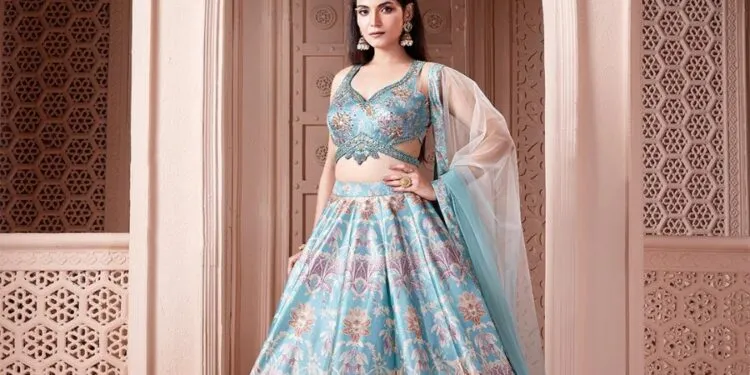
At its simplest, a sari is a long piece of fabric draped around the body, but calling it simply a piece of fabric doesn't come close to describing its variety. Draping methods, materials, colours and designs vary, and saris can range from practical everyday cotton garments to elaborate pieces worn at weddings and formal occasions. Google Arts & Culture also points out that the sari extends beyond India into neighbouring South Asian countries and can function as everything from an everyday garment to an heirloom passed through generations.
What has always struck me about Indian clothing is how visible it remains outside India as well. Because Indian communities exist in cities all over the world, traditional clothing travels with people. You don't necessarily have to be in Delhi or Mumbai to see a sari worn naturally rather than as a performance of national culture.
That distinction matters. Some recognizable national clothes survive mainly at festivals. The sari remains much closer to living fashion.
3. Scotland — The Kilt
If there were a competition for the most geographically recognizable piece of men's clothing, Scotland's kilt would have a very good chance of winning.
The knee-length pleated garment developed from Highland dress and became increasingly associated with Scotland more broadly during the nineteenth century. Today, kilts remain visible at weddings, Highland Games, formal occasions, musical performances and cultural events.
The tartan is probably what gives the kilt so much visual power internationally. You don't need to see Edinburgh Castle or hear bagpipes in the background. The pattern and silhouette are often enough.
At the same time, the tourist version of Scottish dress can distort reality. Scottish men obviously don't spend their normal working week walking around Glasgow in kilts. The garment's importance is cultural and ceremonial rather than a description of what everybody wears daily.
That doesn't make it less authentic. In some ways, it demonstrates how clothing can become more symbolically important after it stops being ordinary.
4. The UAE — The White Kandura
The UAE belongs in a slightly different category because traditional clothing isn't confined to cultural celebrations. It is still part of normal urban life.
I live in Dubai, and this was one of the cultural differences that surprised me most when I first arrived. You can walk into Dubai Mall on a completely ordinary afternoon and see Emirati men in spotless white kanduras shopping, drinking coffee, eating dinner or walking around with their families. They aren't dressing up for tourists and they aren't necessarily going to a ceremony. They are simply wearing normal clothes.
From a distance, the kandura looks extremely simple: a long, loose, usually white garment. Yet the more time you spend in the UAE, the more you start noticing differences in tailoring, headwear, fabric and presentation. White is dominant, particularly in warmer weather, although other colours appear too.
There is also a tendency among visitors to explain the garment entirely through desert heat. Climate certainly matters, but it isn't the complete explanation. I explored this in more detail when looking at why Gulf men traditionally wear white kanduras and thobes, because the clothing is connected not only to climate but also to modesty, history and modern Emirati identity.
What makes the UAE especially interesting is the setting. Dubai is one of the most internationally mixed cities I have lived in, so traditional Emirati clothing exists alongside almost every imaginable global fashion style. Instead of making the kandura disappear, that contrast makes it even more recognizable.
5. South Korea — The Hanbok
South Korea has become globally associated with extremely modern aesthetics through K-pop, television, beauty and fashion, which makes the survival of the hanbok as a cultural symbol particularly interesting.
Traditional hanbok is recognizable through its distinctive proportions and lines. Women's versions commonly combine the short jeogori jacket with the voluminous chima skirt, while men's clothing traditionally includes trousers known as baji. The silhouette looks radically different from contemporary Western clothing, which is part of why it is so immediately memorable.
Like the Japanese kimono, hanbok isn't what most Koreans wear to work every morning. Its modern role is more strongly connected with celebrations, weddings, holidays, cultural sites and significant family occasions.
Yet traditional clothing doesn't have to be everyday clothing to remain culturally powerful. In Seoul, tourists can even rent hanbok when visiting historic palaces, creating an interesting situation in which traditional dress simultaneously functions as heritage, formal clothing and part of the modern tourism experience.
6. Mexico — The Charro Suit
Ask people to imagine traditional Mexican clothing and many will picture an embroidered jacket, fitted trousers and a huge sombrero. What they are often picturing is charro clothing.
The charro tradition developed around Mexican horsemanship, particularly in regions such as Jalisco, and became increasingly formalized through charrería, Mexico's equestrian tradition. The distinctive suit, with its decorative embroidery and accompanying wide-brimmed hat, eventually became one of Mexico's most recognizable visual symbols.
Mariachi musicians helped make that image even more internationally familiar. As a result, people thousands of kilometres from Mexico may recognize charro-style clothing without knowing anything about its equestrian origins.
But Mexico is another country where the famous international image represents only a fraction of the real clothing landscape. Indigenous communities have their own textile traditions, and garments such as the huipil carry histories entirely separate from the charro suit.
This is the recurring problem with the idea of "national costume": the outfit that becomes famous abroad is rarely the whole story at home.
7. Vietnam — The Áo Dài
Vietnam's áo dài is unusual because it manages to look traditional and surprisingly contemporary at the same time. Its long fitted tunic, usually worn over trousers, creates a silhouette that is immediately associated with Vietnam.
Unlike bulky ceremonial clothing, the áo dài has an elegance that translates easily into modern settings. You may see it connected with weddings, celebrations, formal occasions and other parts of public life rather than only historical performances.
Another Vietnamese item has arguably become even more instantly recognizable internationally: the conical nón lá hat. Rough Guides includes the Vietnamese conical hat among the world's distinctive forms of traditional dress. Put an áo dài and nón lá together and the geographic association becomes almost immediate.
What makes Vietnamese clothing particularly interesting is that its visual identity doesn't depend on elaborate decoration. The silhouette itself does most of the work.
8. Mongolia — The Deel
Mongolia's deel deserves far more international recognition than it receives. It is a long robe-like garment traditionally fastened and secured around the waist with a sash or belt, with variations in material, colour and design.
Unlike some European national costumes that now appear primarily at festivals, the deel remains connected to contemporary Mongolian identity as well as ceremonies and traditional celebrations. There isn't just one universal version either. Regional and ethnic differences produce numerous styles, and even hats can communicate specific identities. Monocle notes the extraordinary variety found within Mongolian national dress.
The design also makes sense when you think about Mongolia's environment and historical nomadic lifestyle. Clothing needed to function in a place of enormous temperature changes, horseback travel and exposed landscapes.
This is where traditional clothing becomes much more interesting than fashion. Before synthetic outdoor jackets and centrally heated buildings existed, what people wore had to solve practical problems. Over time, those solutions became culture.
9. Bhutan — The Gho and Kira
Bhutan stands out because traditional clothing has remained unusually visible in contemporary national life.
The gho is associated with men and the kira with women. Both have distinctive silhouettes that make Bhutanese clothing immediately different from neighbouring South Asian styles. Rough Guides and other international references regularly include the gho among particularly distinctive traditional garments.
Bhutan is fascinating more generally because national identity has been preserved very deliberately while the country has modernized. Clothing becomes part of that story rather than merely an attractive thing for visitors to photograph.
That is an important difference. There are countries where traditional clothing survives because tourists expect to see it, and countries where clothing remains meaningful primarily to the people wearing it. Those two things can overlap, but they aren't the same.
10. Austria and Southern Germany — Dirndl and Lederhosen
The dirndl and lederhosen have become so strongly associated with Oktoberfest imagery that it is easy to forget they originated within much broader Alpine clothing traditions rather than as beer-festival costumes.
Traditional Tracht encompasses regional forms of clothing in Austria and southern Germany. The dirndl became the particularly recognizable women's style, while lederhosen became internationally associated with men's Alpine clothing. Rough Guides identifies both as traditional dress across southern Germany and Austria.
Today, their visibility increases dramatically around festivals, weddings and regional celebrations. You aren't going to find everyone in Munich dressed in lederhosen on an ordinary February morning, but during Oktoberfest the clothes return to public life on a huge scale.
That revival tells us something interesting about traditional dress in general. Clothes don't have to remain unchanged or be worn every day to maintain cultural meaning. Sometimes traditions disappear from daily life and then return in particular settings precisely because people want to express where they come from.
11. Kenya and Tanzania — Maasai Shuka and Beadwork
The red shuka associated with Maasai communities has become one of East Africa's most recognizable forms of clothing, but this is also a good example of why using countries as labels for traditional dress can become inaccurate.
The Maasai are an ethnic group whose communities extend across Kenya and Tanzania, so describing their clothing simply as “Kenyan national dress” would erase that distinction. Google Arts & Culture describes the shuka as a wrapped garment associated with Maasai people in southern Kenya and northern Tanzania, often seen in red and combined with other colours and patterns.
Intricate beadwork adds another layer to Maasai visual identity. Colours, jewellery and arrangements can carry cultural meanings that are invisible to outsiders who simply see a striking outfit.
This is an important reminder when travelling: recognizable clothing doesn't necessarily belong to a country. Borders and cultural identities are not always the same thing.
12. Peru — Andean Ponchos and Textiles
Peru is another country where clothing can immediately evoke landscape. Thick woven ponchos, brightly patterned textiles and distinctive hats make visual sense when placed against the high Andes, where altitude creates very different practical demands from tropical coastal regions.
But calling one outfit “Peruvian traditional clothing” again oversimplifies an enormously diverse country. Indigenous textile traditions vary between communities, and patterns, weaving techniques and colours can have regional significance.
The poncho nevertheless became internationally recognizable because its basic design is both practical and visually distinctive. Warm wool and a loose shape work naturally in mountain environments, while patterns transform a practical garment into something that can also communicate cultural identity.
This connection between geography and clothing appears repeatedly around the world. Scotland has wool and tartan; Mongolia has the deel; the Gulf developed long loose robes; Andean communities developed clothing appropriate for cold high-altitude environments. Fashion was never created in a vacuum.
Why Do Some Traditional Clothes Become Famous While Others Don't?
This might be the most interesting question of all. Almost every country has regional or traditional clothing, yet only a small number of garments become internationally recognizable.
Part of it is visual distinctiveness. A kimono has a silhouette that is difficult to confuse with a Scottish kilt, just as a white Emirati kandura looks completely different from a Korean hanbok. But international exposure matters too. Cinema, tourism, migration, sporting events, music, colonial history and national branding repeatedly show certain images to the rest of the world until a garment effectively becomes shorthand for a country.
That can be useful, but it can also flatten complicated cultures into costumes.
Mexico is not a nation of people walking around in sombreros. Scottish men don't all wear kilts. Japanese women aren't normally commuting to work in kimono. Not every Arab man wears a thobe, and even within the Gulf there are significant differences between national styles.
The clothes become most interesting once you move beyond that stereotype and ask why they survived.
Some survived because they remained practical. Others became formal clothing. Some were deliberately preserved as symbols of national identity, while others were revived after nearly disappearing from everyday life. A few, like the Emirati kandura or Indian sari, remain visible enough that visitors can encounter them without attending a cultural festival at all.
After travelling, that is the part I find much more fascinating than simply collecting photographs of “national costumes.” Clothes tell you something about climate, history, religion, class, work and identity, but they also show how a society decides what parts of its past it wants to carry into modern life.
A skyline can change in twenty years. A city can fill with international brands, skyscrapers and smartphones. Yet sometimes the most recognizable thing on the street is still a piece of clothing whose history began long before any of them existed.


























Sign in to leave a comment.