
Craft Beer Market Overview Analysis By Fortune Business Insights
Market Summary
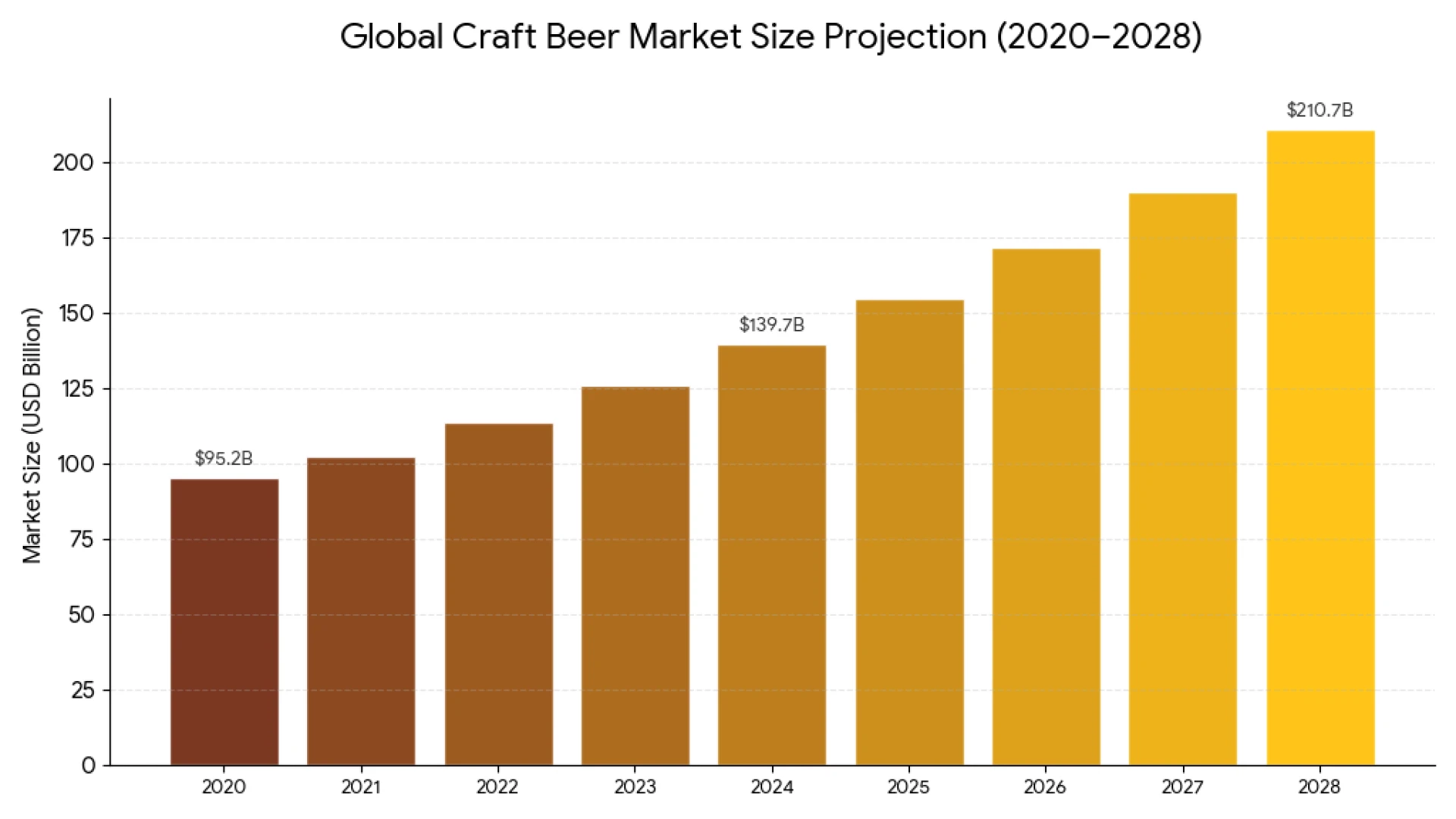
According to Fortune Business Insights: The global craft beer market was valued at USD 95.23 billion in 2020 and is projected to grow from USD 102.59 billion in 2021 to USD 210.78 billion by 2028, exhibiting a compound annual growth rate (CAGR) of 10.83% during the forecast period. Beer holds the distinction of being one of the oldest and most widely consumed alcoholic beverages in the world, and the craft segment has gained significant momentum in recent years as consumers increasingly seek distinctive, flavorful, and artisanal drinking experiences. Advancements in brewing technologies have further expanded the range of craft beer varieties available, fueling broader consumer adoption across global markets.
Key Market Drivers
Emergence of Flavorful and Innovative Beers: One of the primary forces driving market growth is the proliferation of creative and bold craft beer flavors. Offerings such as fruit and spice, honey-flavored, sour, malty and sweet, and tart and funky varieties have captured consumer attention globally. Floral ingredients like chamomile, elderflower, and lavender are also being incorporated, adding unique sensory dimensions. This continuous flavor innovation has broadened the appeal of craft beer beyond traditional beer drinkers and is expected to sustain robust demand over the forecast period.
Rising Number of Craft and Microbreweries: Growing socializing trends, particularly among millennials, have accelerated visits to brewpubs and taprooms, encouraging the establishment of new independent breweries. According to the Brewers Association, U.S.-based small and independent brewers produced approximately 26.3 million barrels in 2019, a volume increase of 4% compared to the prior year. Craft beer also accounted for 25.2% of the total U.S. beer retail market in 2019, underscoring its expanding footprint within the broader industry.
Get a Sample Research PDF: https://www.fortunebusinessinsights.com/enquiry/request-sample-pdf/100736
Market Restraints
The primary challenge to market growth is the availability and rising popularity of other alcoholic craft beverages, including gin, rum, whiskey, and wine. Consumers' growing willingness to explore diverse craft spirits — many of which offer an even wider variety of flavors and undergo sophisticated distillation techniques — presents direct competition to craft beer. The availability of fruit-infused spirits in flavors such as grapefruit, raspberry, lemon, and plum is drawing consumer attention away from craft beer, moderating the latter's growth trajectory.
Key Market Trends
CBD-Infused Craft Beer: A notable and emerging trend shaping the industry is the growing consumer interest in cannabidiol (CBD)-infused beverages. Breweries are experimenting with non-psychoactive hemp-derived CBD as an ingredient, with establishments such as The Long Trail Brewing Company in Vermont launching limited-edition IPAs and APAs brewed with hemp oil. CBD-infused beers appeal to health-conscious consumers partly because of their relatively low calorie count, while the CBD component also helps reduce the bitter taste of hops, creating a smoother drinking experience complemented by the citrus notes of terpenes.
Impact of COVID-19
The global COVID-19 pandemic had a pronounced negative impact on the craft beer market. Government-mandated closures of pubs, restaurants, taprooms, and bars disrupted the primary consumption channels for craft beer. According to the Brewers Association, total brewery sales in the U.S. declined by 30.5% in May 2020 compared to the prior year, with nearly 89% of brewing companies either halting or significantly slowing production. Furthermore, 87% of U.S. brew pubs were temporarily shut down due to lockdown enforcement. Overall, the global market recorded a lower growth rate of 6.70% in 2020 compared to the average year-on-year growth achieved between 2017 and 2019. However, the market was expected to recover as taprooms reopened and production resumed.
Segmentation Highlights
By Type: The craft lager segment is experiencing significant growth, with brewers actively adding styles such as light lager and pale lager to their portfolios to attract consumers away from mainstream brands. Lager's lighter, malty taste profile combined with longer shelf life and less expensive ingredients has made it a preferred production choice. According to the Brewers Association, lagers accounted for 15.8% of all entries at the Great American Beer Festival (GABF) 2019, spanning 18 different styles. Ale holds the second-largest market share, maintaining strong consumer loyalty.
By Distribution Channel: Off-trade channels — including supermarkets, convenience stores, and retail outlets — dominate craft beer distribution. Consumers increasingly prefer the convenience of pre-chilled, take-home bottles and cans. A shift in consumer behavior toward home drinking, driven by its comfort and cost-effectiveness, has further reinforced this trend. A 2018 survey by Stoneage Pub Company and Molson Coors found that 87% of consumers preferred drinking at home over visiting pubs.
Regional Outlook
Asia Pacific leads the global market and is projected to maintain a CAGR of 10.50% over the forecast period. Rapid urbanization, rising disposable incomes, and increasing demand for unique and premium flavors are key growth catalysts. China is particularly notable, with the craft beer industry in the country having grown by 250%, supported by over a thousand active craft breweries.
North America holds the second-largest market share, driven by the rapid expansion of microbreweries in the U.S. and the region's large-scale volumetric production. The constant refinement of flavors and a deeply entrenched culture of craft beer appreciation underpin consistent regional demand.
Europe benefits from strong consumer demand for premium products, particularly craft ale, with growing market sophistication across major economies.
Middle East & Africa is expected to experience strong growth during the forecast period, fueled by rising demand within expanding urban centers across the region.
Connect with Our Expert for any Queries: https://www.fortunebusinessinsights.com/enquiry/speak-to-analyst/100736
Competitive Landscape
The global craft beer market is consolidated, with prominent players including The Boston Beer Company, Heineken N.V., Constellation Brands, Anheuser-Busch InBev, New Belgium Brewing Co., Sierra Nevada Brewing Co., Duvel Moortgat NV, and Dogfish Head Craft Brewery. Key competitive strategies include new product launches, ingredient innovation, process improvement, and strategic mergers. In June 2020, Anheuser-Busch InBev acquired the remaining 68.8% stake in Craft Brew Alliance to diversify its product portfolio and strengthen its craft beer presence globally.
























Sign in to leave a comment.