

There is a quiet magic in sinking into a detailed creative project. Whether you are counting threads across a fine grid, guiding delicate fabric through a machine, or reviewing dense documents at your desk, hours can slip away in what feels like minutes. But if you have ever stepped away from your workspace with dry eyes, a dull tension headache, or shoulder fatigue, you already know the hidden cost of inadequate lighting.
Most of us spend years tweaking our chairs, organizing our supplies, and perfecting our tools, yet we treat lighting as an afterthought. We rely on ambient ceiling fixtures or decorative living room lamps, expecting them to illuminate intricate, precision tasks. In reality, bad lighting forces your eyes to work twice as hard as they need to. Upgrading your studio setup with a modern led adjustable desk lamp can completely reshape how you experience your daily workspace, turning frustrating visual hurdles into smooth, effortless progress.
The Invisible Strain of Poor Studio Light
When you work on fine-detail projects, your eyes perform thousands of micro-adjustments every minute. Standard household bulbs make this process much harder than it needs to be because they suffer from three major flaws:
- Severe Hand and Frame Shadows: Single-point ceiling lights cast dark shadows directly beneath your hands, embroidery hoop, or presser foot—right where you need clarity the most.
- Color Distortion: Traditional yellow-tinted bulbs shift natural hues, making subtle thread gradients or dark fabric shades look completely different from how they appear in daylight.
- Micro-Flicker Fatigue: Many standard LED lights pulse at invisible high frequencies. While you cannot consciously see this flashing, your optical muscles constantly react to it, leading to eye fatigue after short sessions.
When your eyes fight against dim spots and harsh contrasts, your posture suffers too. You lean forward, hunch your shoulders, and squint just to see where your needle or pen meets the surface. Over time, what should be a relaxing creative outlet becomes physically draining.
What Makes a Task Light Truly Exceptional?
To protect your eyes and reveal fine details, a studio light must do more than simply throw illumination onto a desk. It needs to give you full control over how that light behaves.
High Color Fidelity (CRI 90+)
Color Rendering Index (CRI) measures how accurately artificial light reveals true colors compared to natural midday sun. Standard bulbs hover around 70 to 80 CRI, which washes out subtle shades. A premium craft light offers 90+ CRI, ensuring every thread, fabric print, or paint pigment displays with absolute color fidelity.
Flexible 360-Degree Positioning
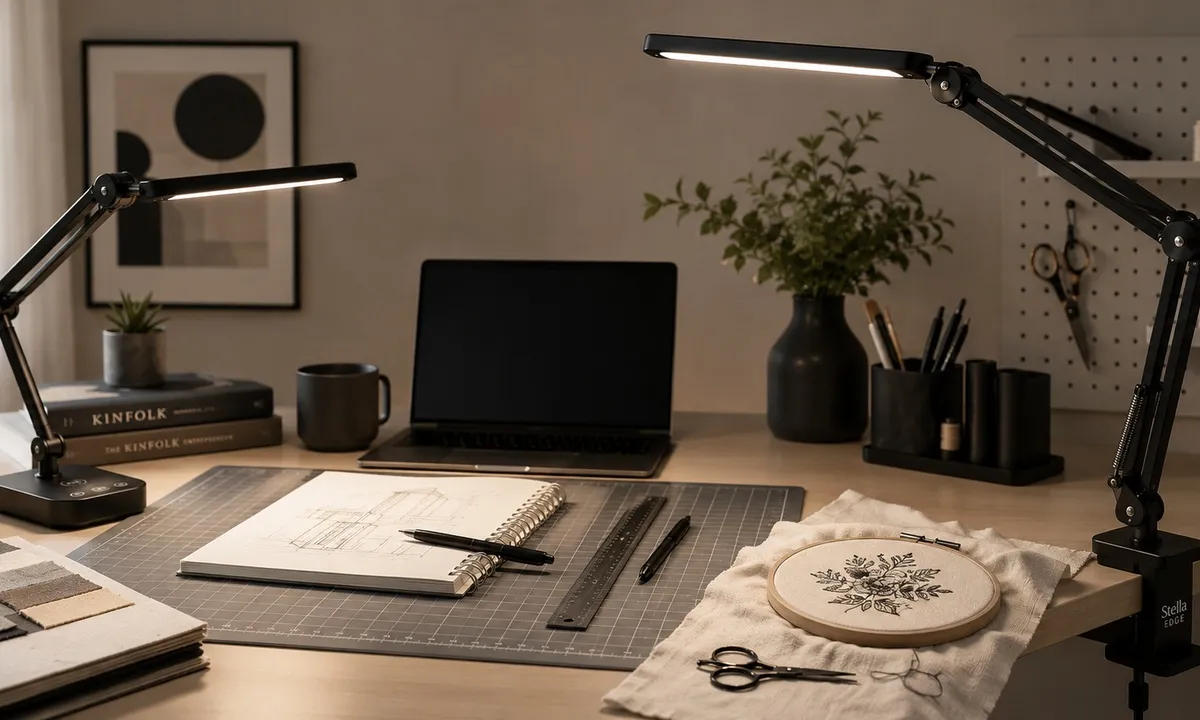
Static lamps force you to move your work to fit the light. True task lighting does the opposite. With a smooth, durable gooseneck arm, you can angle the light head underneath a sewing machine housing, tilt it directly over an embroidery frame, or lower it close to your desk surface without the head drooping over time.
Spectrum Flexibility
Different times of day—and different materials—call for different light temperatures:
- Cool Daylight (5000K–6000K): Delivers maximum visual contrast, making it indispensable when working on dark navy or black fabrics where grid lines usually vanish.
- Pure Neutral White (4000K): Ideal for general reading, writing, and daytime studio work.
- Warm Amber (2800K–3000K): Softens glare on bright white paper or Aida cloth during relaxing late-night sessions.
Practical Positioning Strategies for Your Workspace
Having a high-performance lamp is only half the battle; how you position it makes all the difference in your daily comfort:
- Eliminate Shadow Dominance: Always place your light source on the side opposite your dominant hand (on your left if you are right-handed). This keeps your writing or stitching hand from casting a shadow across your working area.
- Keep the Fixture Below Eye Level: Angle the lamp head slightly downward toward your project. This directs full illumination onto your work surface while keeping bare LED lenses out of your direct line of sight.
- The Contrast Relief Trick: Never craft in a pitch-black room with only one bright light on. Keep soft background lighting active in the room so your eyes don't struggle against harsh visual contrast when looking up from your work.
Give Your Eyes the Clarity They Deserve
Your creative time is valuable. You invest hours of patience and care into every project you touch, and you shouldn't have to battle dim corners, misleading colors, or eye strain along the way.
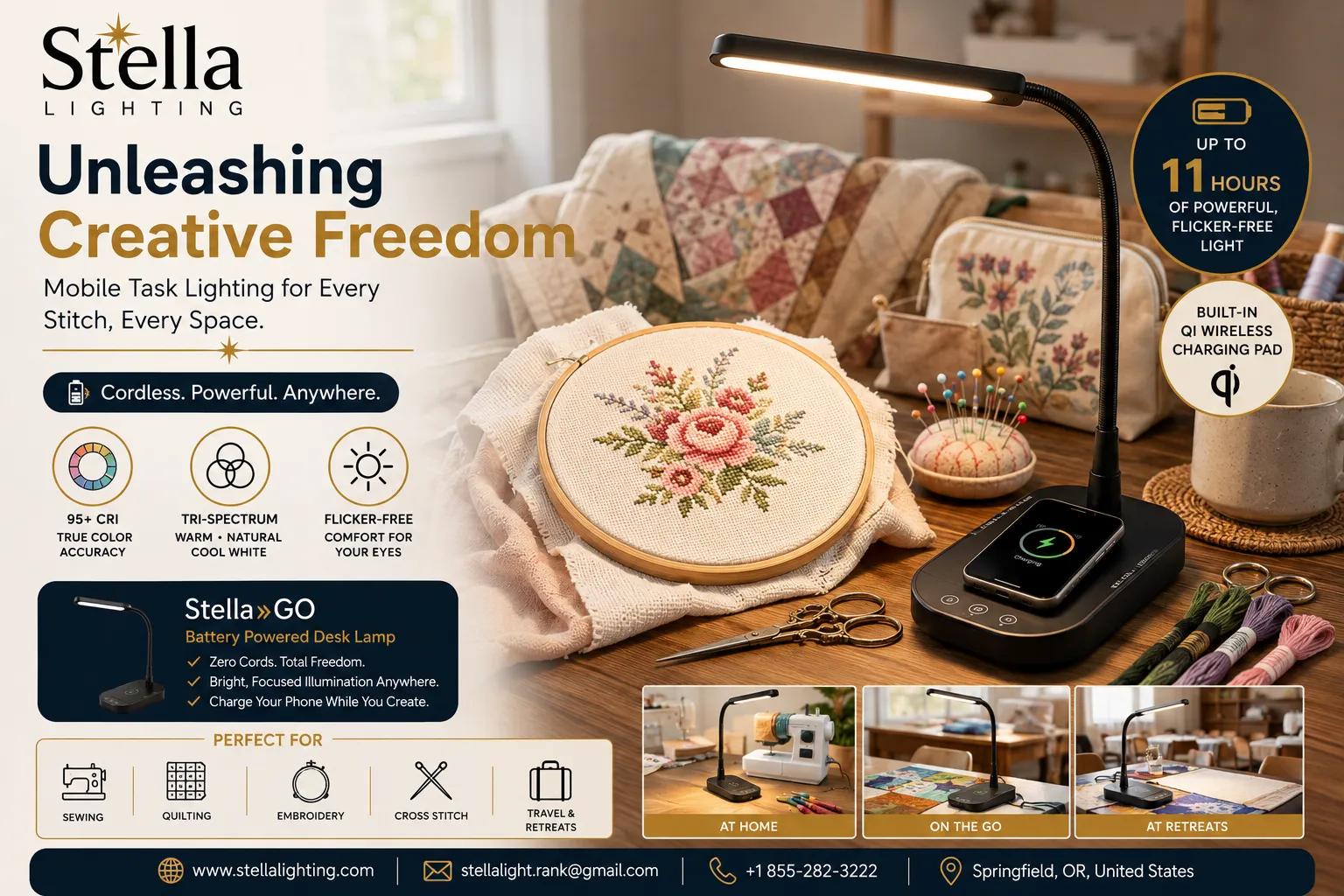
Designing an ergonomic studio isn't just about comfortable seating—it starts with how you illuminate your space. Whether you are managing complex daily tasks or looking for a dedicated cross stitch light, Stella Lighting delivers the flicker-free clarity, true-color accuracy, and flexible control you need to create comfortably for hours.

















Sign in to leave a comment.