
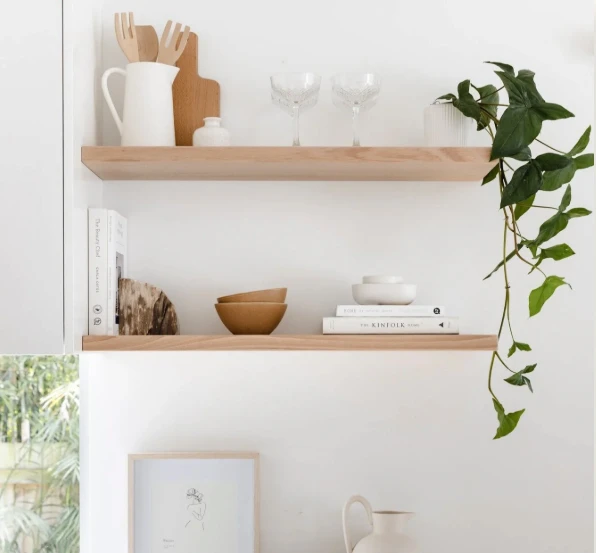
An empty wall can make a room feel unfinished, but filling it with too many decorations can make the space look crowded. A gallery wall offers a simple way to bring personality into your home while displaying artwork, photographs, books and decorative pieces.
Adding timber shelves to a gallery wall gives you more freedom with the layout. Instead of relying entirely on framed pictures, you can combine artwork with plants, small sculptures, ceramics and other decorative objects. It also makes it easier to change the arrangement whenever you want a different look.
Whether you are updating your living room, bedroom or home office, a well-planned gallery wall can become an attractive feature of your interior.
Here is how to plan and style one that looks balanced, personal and practical.
1. Choose the Right Wall for Your Gallery
Start by selecting a wall that naturally attracts attention. The space above a sofa, behind a dining table or opposite the entrance can work well.
Before choosing the location, consider the following:
- Available wall space: Make sure there is enough room for artwork, shelves and decorative pieces without making the arrangement feel cramped.
- Furniture placement: Consider how the gallery wall will look alongside nearby furniture.
- Natural lighting: Choose a location where artwork and decorative objects are easy to see. Avoid placing delicate items in direct sunlight.
- Wall condition: Check whether the wall can support the shelves and whether suitable fixing points are available.
For living rooms, the wall above a sofa is a popular choice. In a home office, a gallery wall behind or beside the desk can add character without taking up valuable floor space.
2. Plan Your Gallery Wall Layout Before Installing
One of the most common mistakes when creating a gallery wall is installing everything without planning the arrangement first.
Before drilling holes, decide where each shelf, frame and decorative item will go.
A few layout ideas worth considering include:
Symmetrical layout
Arrange shelves and framed artwork in a balanced pattern. This works particularly well in modern interiors where a clean and organised appearance is preferred.
Asymmetrical layout
Combine different shelf lengths, picture frames and decorative objects. This creates a relaxed appearance while allowing more freedom in styling.
Layered layout
Place framed artwork behind decorative objects on the shelves. Overlapping different elements creates depth and makes the display more interesting.
Horizontal layout
Arrange longer shelves and artwork along the same horizontal line. This works well above sofas, beds and dining furniture.
A useful tip is to cut paper templates matching the size of your shelves and frames. Attach them temporarily to the wall to test the arrangement before installation.
3. Select Shelves That Match Your Interior
The material, colour, thickness and length of your shelves can influence the overall appearance of your gallery wall.
Timber is a popular choice because it introduces natural texture and warmth. It also works with different interior styles, from contemporary and minimalist homes to rustic and Scandinavian-inspired spaces.
When choosing shelves, consider:
- Timber finish: Select a finish that complements your existing flooring, furniture or wall colours.
- Shelf length: Use different lengths for an informal arrangement or similar lengths for a more structured appearance.
- Shelf depth: Choose a depth that comfortably accommodates your intended display items.
- Thickness: Thicker shelves can create a strong visual feature, while slimmer designs offer a more understated look.
- Weight capacity: Check the shelf specifications and wall fixing requirements before displaying heavier objects.
If you are looking for natural timber options, explore these floating shelves to find a style that suits your home.
4. Mix Artwork, Photographs and Decorative Objects
A gallery wall does not need to contain framed pictures alone. Combining different objects helps create a more personal display.
Consider including:
- Framed family photographs
- Abstract artwork and illustrations
- Small indoor plants
- Decorative ceramic pieces
- Books with attractive covers
- Handmade ornaments
- Small sculptures and collected objects
Try to combine different shapes, textures and heights. For example, a framed artwork can sit behind a small ceramic vase, while a stack of books can add height to the opposite side.
Avoid filling every available space. Leaving some empty areas helps individual objects stand out and keeps the arrangement from looking cluttered.
5. Create Visual Balance with Different Heights and Sizes
A good gallery wall should feel connected rather than like a collection of unrelated items.
One simple approach is to combine larger statement pieces with smaller decorative objects.
For example:
- Use one large artwork as the main focal point.
- Place smaller photographs around it.
- Add a longer timber shelf beneath the artwork.
- Use smaller decorative objects to fill selected spaces.
- Introduce a plant or taller ornament to add height.
You can also repeat certain colours across different objects. If your artwork includes earthy tones, consider using similar shades in your ceramics, cushions or decorative accessories.
This creates a consistent appearance without requiring everything to match.
6. Pay Attention to Spacing and Proportions
Spacing plays an important role in how a gallery wall looks.
If frames and shelves are placed too close together, the arrangement can feel crowded. If they are too far apart, the individual elements may look disconnected.
Here are a few practical guidelines:
- Keep a consistent gap between nearby picture frames.
- Leave enough clearance between shelves for taller decorative items.
- Avoid placing shelves too close to doors, windows or light switches.
- Consider the height of people using the room when positioning frequently accessed items.
- Check the arrangement from different positions in the room before finalising it.
As a starting point, picture frames can be spaced approximately 5 to 8 cm apart, although the ideal distance depends on their size and the overall layout.
For a gallery wall above a sofa, make sure the arrangement is proportionate to the furniture rather than extending unnecessarily beyond its width.
7. Install Shelves Securely and Safely
Once you are happy with the arrangement, it is time to install the shelves.
Floating shelves rely on concealed brackets or mounting systems, so correct installation is essential.
Before starting:
- Check the shelf manufacturer's installation instructions.
- Identify the wall construction, such as plasterboard, brick or concrete.
- Locate suitable studs or masonry fixing points.
- Use a spirit level to mark the installation position.
- Select fixings appropriate for the wall type and expected load.
- Install the shelf according to the manufacturer's recommendations.
- Check that the shelf is secure before adding decorative objects.
Do not assume that all wall anchors can support the same weight. The shelf itself, mounting system, wall construction and quality of installation all affect its load capacity.
If you are unsure about the wall structure or fixing requirements, seek advice from a qualified installer.
8. Add Lighting to Highlight Your Gallery Wall
Lighting can make a noticeable difference to the appearance of your gallery wall, particularly in the evening.
A few options include:
- Picture lights positioned above framed artwork.
- Wall lights to create a soft glow around the display.
- Adjustable spotlights to highlight selected objects.
- Warm LED lighting to complement natural timber finishes.
Avoid harsh lighting that creates glare on framed photographs or artwork. A softer lighting arrangement usually works better for living spaces.
9. Refresh Your Gallery Wall from Time to Time
One advantage of using shelves is that you do not need to keep the same display throughout the year.
You can update the arrangement without reinstalling everything.
For example, replace seasonal decorations, introduce new photographs, change the artwork or rearrange your books and ornaments.
You can also rotate decorative objects between different rooms. This gives your interior a fresh appearance without requiring major changes or additional furniture.
Remember to check that newly added objects are suitable for the shelf depth and weight capacity.
Common Mistakes to Avoid When Creating a Gallery Wall
Even a simple gallery wall can look untidy if a few important details are overlooked.
Watch out for these common mistakes:
- Using too many objects: Overdecorating makes the display feel crowded.
- Ignoring proportions: Small shelves can look out of place on a very large wall.
- Mixing too many styles: Too many unrelated colours, finishes and frame designs can affect visual consistency.
- Poor shelf positioning: Uneven installation can make the entire arrangement look unbalanced.
- Ignoring weight limits: Overloading shelves can create safety risks.
- Choosing the wrong lighting: Direct glare can affect the visibility of artwork.
- Forgetting practicality: Avoid displaying frequently used items in hard-to-reach positions.
Taking time to plan the layout and select suitable materials can help prevent these issues.
Frequently Asked Questions
1. Can floating shelves be used for a gallery wall?
Yes. Floating shelves work well for gallery walls because they provide space for displaying framed photographs, artwork, books, plants and decorative objects. They also allow you to change the arrangement without creating additional holes in the wall for every new display.
2. How many shelves should I use for a gallery wall?
There is no fixed number. One or two shelves may be enough for a smaller wall, while larger spaces can accommodate three or more. Consider the available wall space, furniture dimensions and number of decorative items before deciding.
3. How do I arrange pictures and shelves on the same wall?
Start with a larger artwork or photograph as your main focal point. Position shelves around or beneath it, then add smaller frames and decorative objects to create balance. Test the arrangement using paper templates before installing anything.
4. What type of timber is best for floating shelves?
The right timber depends on your preferred appearance, budget and intended use. Oak offers a natural grain and versatile appearance, while walnut provides deeper, richer tones. Always consider the shelf construction, finish and load capacity alongside the timber type.
5. How high should a gallery wall be installed?
The ideal height depends on the room and furniture placement. Artwork is commonly positioned around eye level, while a gallery wall above a sofa should have enough clearance to avoid feeling cramped. Consider the complete arrangement rather than measuring each item separately.
6. Can I create a gallery wall in a small living room?
Absolutely. A carefully arranged gallery wall can make a small living room feel more personal without taking up floor space. Choose a limited number of decorative objects, use appropriately sized shelves and leave enough empty wall space to avoid visual clutter.
7. How do I keep a gallery wall from looking cluttered?
Use a consistent colour palette, limit the number of decorative objects and maintain suitable spacing between shelves and frames. Combining different textures and heights can add interest without making the arrangement look overcrowded.
Final Thoughts
A beautiful gallery wall is not about displaying as many decorative objects as possible. It is about bringing together artwork, photographs and personal belongings in a way that complements your home.
Floating shelves make this easier by offering flexibility, additional display space and a natural way to introduce timber into your interior.
Take time to plan your layout, choose suitable shelf designs and experiment with different arrangements. With the right balance of colour, texture and spacing, an empty wall can become one of the most attractive features of your home.















Sign in to leave a comment.