
AI agents are moving from experiments to actual business infrastructure.
Companies are no longer asking:
“Can AI automate tasks?”
They’re asking:
“Which AI agent framework can scale securely, reliably, and without becoming an operational nightmare?”
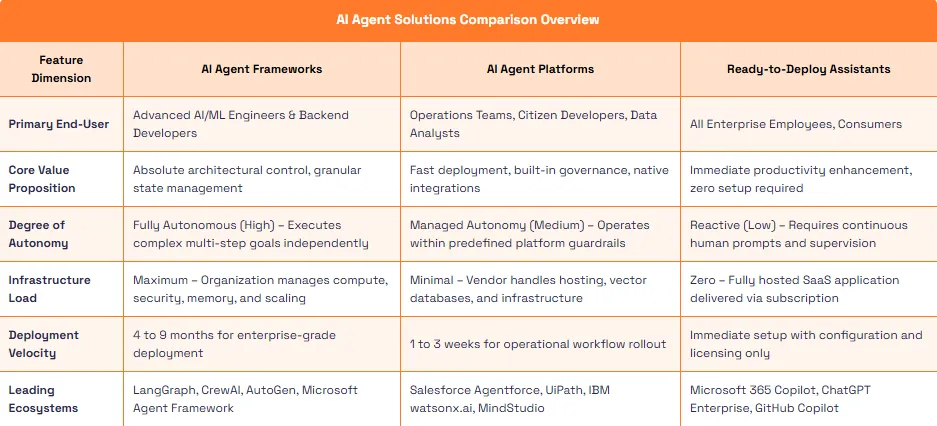
That’s where frameworks like OpenClaw, LangChain, and AutoGPT enter the picture.
All three are popular in the agentic AI ecosystem, but they solve very different problems.
Some are built for:
- enterprise orchestration
- autonomous AI workers
- AI experimentation
- browser automation
- multi-step reasoning
- developer tooling
Choosing the wrong framework can create:
- scaling issues
- security risks
- unpredictable agent behavior
- runaway infrastructure costs
- maintenance complexity
Let’s break down how these frameworks actually compare in real-world deployment.
What Are OpenClaw, LangChain, and AutoGPT?
OpenClaw
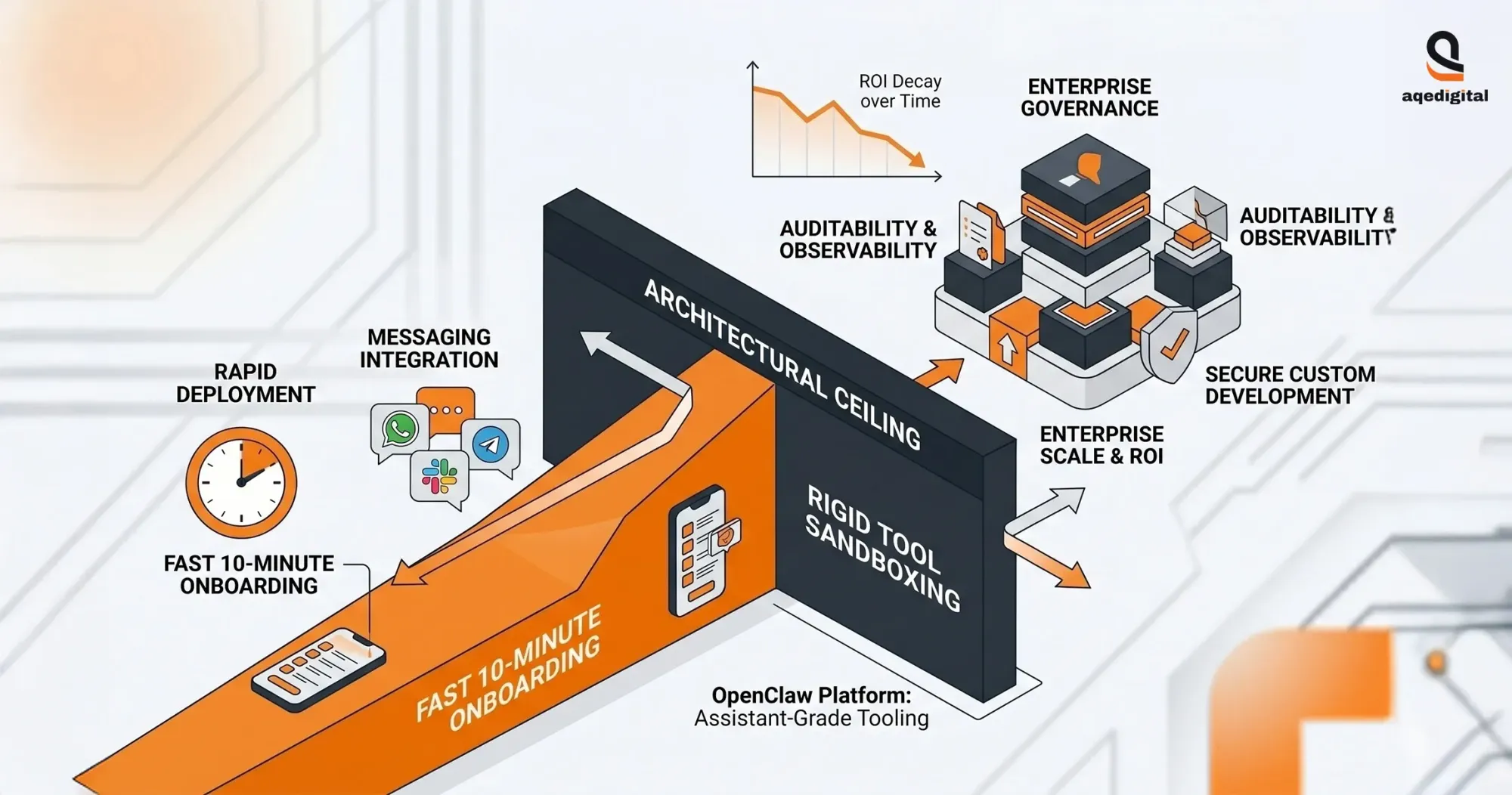
OpenClaw is an autonomous AI runtime focused on:
- desktop control
- browser automation
- persistent AI memory
- local-first execution
- AI worker environments
Instead of acting only as an orchestration framework, OpenClaw behaves more like:
an AI operating system for autonomous digital workers.
It can interact with:
- browsers
- files
- shell commands
- APIs
- messaging tools
- operating systems
This makes it attractive for operational automation.
LangChain
LangChain is one of the most widely adopted frameworks for building LLM-powered applications.
It focuses on:
- orchestration
- RAG pipelines
- memory handling
- tool calling
- workflow chaining
- multi-agent coordination
The ecosystem now includes:
- LangGraph
- LangSmith
- LangServe
LangChain is less about autonomous AI workers and more about:
giving developers maximum control over AI systems.
AutoGPT
AutoGPT became one of the first viral autonomous AI agent projects.
It introduced the idea that AI could:
- plan tasks independently
- recursively reason
- self-prompt
- execute multi-step workflows
For many developers, AutoGPT was the first glimpse into “fully autonomous AI.”
But production reality exposed challenges around:
- reliability
- hallucinations
- cost control
- execution stability
Even so, AutoGPT heavily influenced today’s agent ecosystem.
1. OpenClaw: Best for Autonomous AI Workers


6
OpenClaw focuses on execution.
Its goal is not simply orchestrating prompts.
It wants AI agents to actively operate systems.
That includes:
- navigating websites
- filling forms
- managing files
- running scripts
- automating workflows
- interacting with enterprise tools
The biggest differentiator is the local-first architecture, which gives businesses more control over:
- privacy
- latency
- infrastructure
- self-hosting
Where OpenClaw shines
- AI operations assistants
- Browser automation
- Internal workflow automation
- AI executive assistants
- DevOps automation
Biggest strengths
- Persistent AI environments
- Native operational capabilities
- Fast automation setup
- Local deployment flexibility
Biggest limitations
- Security concerns around permissions
- Smaller ecosystem
- Less mature observability
- Governance challenges
Security researchers have also raised concerns around unrestricted extensions and system-level permissions in autonomous runtimes.
2. LangChain: Best for Enterprise AI Orchestration


7
LangChain dominates when businesses need:
- flexibility
- orchestration
- integrations
- observability
- structured AI workflows
It’s essentially the infrastructure layer for enterprise AI systems.
Developers can combine:
- LLMs
- APIs
- databases
- retrieval systems
- vector stores
- agents
- tools
- memory systems
into highly customized workflows.
Where LangChain shines
- Enterprise AI products
- RAG applications
- Customer support copilots
- Workflow automation
- AI SaaS platforms
Biggest strengths
- Massive ecosystem
- Strong tooling support
- Enterprise integrations
- Observability with LangSmith
- Advanced orchestration through LangGraph
Biggest limitations
- High complexity
- Steep learning curve
- Debugging overhead
- Maintenance challenges in large chains
Here’s the thing:
LangChain gives enormous control, but that control comes with engineering complexity.
For enterprise teams, though, that tradeoff is often worth it.
3. AutoGPT: Best for Autonomous AI Experimentation


7
AutoGPT popularized the idea of autonomous AI loops.
You give it a goal like:
“Research competitors and create a market analysis.”
Then it attempts to:
- break the task into subtasks
- execute them autonomously
- recursively refine outputs
That concept helped launch the modern AI agent movement.
Where AutoGPT shines
- AI experimentation
- Research projects
- Autonomous reasoning demos
- Learning agent architecture
Biggest strengths
- Autonomous task decomposition
- Recursive planning
- Flexible experimentation
- Open-source ecosystem
Biggest limitations
- High token consumption
- Infinite loops
- Weak reliability
- Limited production governance
- Hallucination risks
Many enterprises discovered that fully autonomous agents are difficult to trust in production systems.
That’s why the industry is increasingly shifting toward:
- constrained autonomy
- human-in-the-loop systems
- governed orchestration
instead of unrestricted recursive execution.
Which Framework Is Best for Your Business?
Choose OpenClaw if:
You want AI agents that actively operate systems and automate workflows with minimal orchestration engineering.
Best for:
- operations teams
- AI assistants
- workflow automation
- browser-based tasks
Choose LangChain if:
You’re building enterprise-grade AI applications that require:
- scalability
- observability
- integrations
- governance
- structured orchestration
Best for:
- SaaS platforms
- enterprise AI products
- RAG systems
- AI copilots
Choose AutoGPT if:
You want to experiment with autonomous AI reasoning and agent behavior.
Best for:
- research teams
- AI labs
- prototyping
- proof-of-concept development
The Bigger Shift Happening in AI Agents
The AI industry is moving away from:
- fully autonomous black-box agents
And toward:
- observable systems
- controlled orchestration
- governed execution
- human-approved workflows
- enterprise-safe automation
That’s why:
- LangChain evolved toward LangGraph
- OpenClaw focuses on runtime execution
- AutoGPT inspired experimentation but lost enterprise momentum
The future of AI agents is not just autonomy.
It’s reliable autonomy.
Final Thoughts
OpenClaw, LangChain, and AutoGPT represent three very different visions of agentic AI.
- OpenClaw focuses on AI workers.
- LangChain focuses on AI infrastructure.
- AutoGPT focuses on autonomous experimentation.
The best choice depends on what your business actually needs:
- operational automation
- enterprise orchestration
- or autonomous AI research
The companies succeeding with AI agents in 2026 are not the ones chasing maximum autonomy.
They’re the ones building systems that balance:
- intelligence
- control
- scalability
- and trust.
Read more in detail: OpenClaw vs LangChain vs AutoGPT



























Sign in to leave a comment.