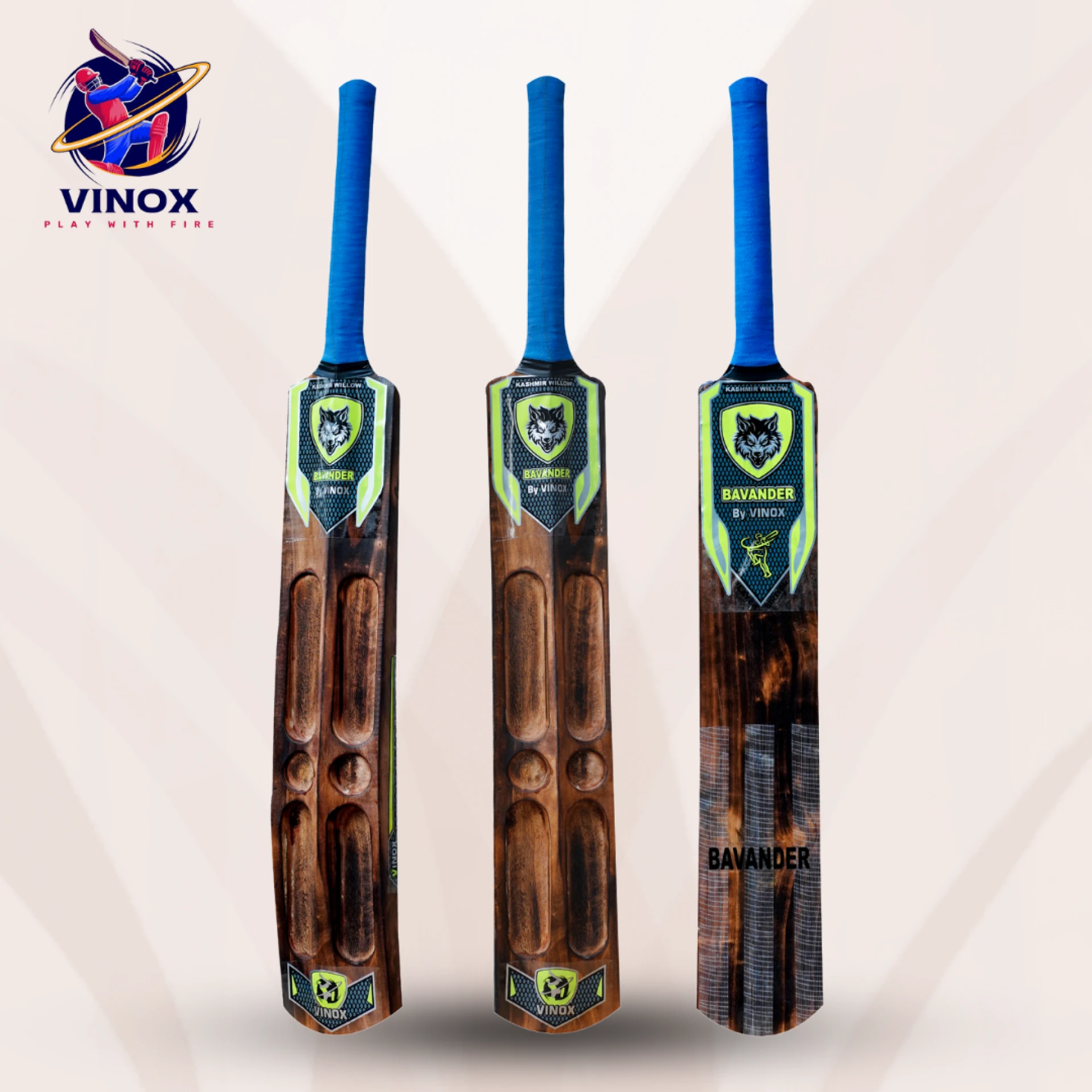

Cricket, one of the most popular sports globally, is governed by a strict set of rules and regulations that ensure fair play. Among these, the specifications for cricket bats are of particular importance, as they directly influence the performance of the game. A cricket bat may appear simple, but there are numerous regulations that players and manufacturers must adhere to when designing and using them. This blog delves into the crucial cricket bat rules that every player, coach, and enthusiast should know.
buy top quality cricket bats from vinox sports.
1. Basic Dimensions of a Cricket Bat
The first and most obvious rule regarding cricket bats pertains to its size and shape. The bat must be made of wood, typically English willow or Kashmir willow, and must meet the following specifications as set by the Marylebone Cricket Club (MCC), which governs the Laws of Cricket:
- Length: The length of the bat must not exceed 38 inches (96.5 cm).
- Width: The width of the bat cannot exceed 4.25 inches (10.8 cm).
- Thickness: The bat’s edge must not exceed 1.56 inches (4 cm). This ensures that the bat isn’t excessively large or heavy, maintaining a balance between defense and attack.
2. The Blade and the Handle
The bat is divided into two main parts: the blade and the handle.
- Blade: The blade of the bat is the flat, hitting surface. The width of the blade must remain within the regulation limits mentioned above. While players can choose the profile of the bat, such as a traditional or modern shape, it must adhere to the maximum width rule.
- Handle: The handle must be made of cane or a similar material and must not extend beyond the grip area. The handle is typically covered with rubber or twine to provide a firm grip for the player. The handle must be securely attached to the blade.
3. The Material of the Bat
As per the rules, cricket bats must be made from wood. The most common materials used are English willow and Kashmir willow, both of which are lightweight, durable, and provide an excellent balance of power and control. The wood must not have any foreign materials attached, and the surface of the bat cannot be artificially treated to improve its performance (e.g., using non-natural coatings or materials).
4. The Sweet Spot and Edge
A major aspect that differentiates cricket bats is the location of the "sweet spot." This is the area of the bat where the ball makes optimal contact, offering maximum power and minimal vibration. The sweet spot is typically located in the middle to lower part of the blade, although players can select bats with higher or lower sweet spots depending on their style of play.
The bat’s edges should not be overly thick. In the past, players sometimes tried to increase the thickness of the bat’s edges to gain more power. However, the MCC now enforces the rule of limiting edge thickness to 1.56 inches (4 cm) to maintain fairness between batsmen and bowlers.
5. No Metal Parts Allowed
Another important rule is that cricket bats cannot have any metal parts. The use of metal in bats can alter the balance and performance, potentially giving certain players an unfair advantage. The bat’s design must be entirely wooden, and any form of external reinforcement using metal is prohibited.
6. The Handle and Blade Connection
The way the handle and blade are connected is crucial for ensuring the bat’s durability and performance. The handle must be securely fastened to the blade, with a strong and firm joint. The use of screws or bolts is allowed, but they must not protrude from the bat, ensuring there is no sharp edge that could cause injury.
7. Prohibited Modifications
Cricket bat manufacturers are constantly developing new designs to enhance the performance of the bat, but there are restrictions on modifications. The bat cannot have any added materials or shapes that are designed to improve the power or control beyond the intended design. For example, a bat that has been modified with additional weights, metal reinforcements, or any other non-approved material will be deemed illegal for professional play.
8. Conclusion
In conclusion, while cricket bats may look straightforward, there are several crucial regulations that players and manufacturers must follow to ensure fairness in the game. From the length and width to the materials and handle design, every aspect of the cricket bat is carefully controlled by cricket’s governing bodies to ensure consistency and fairness. These regulations help preserve the balance between bat and ball, promoting skillful play and sportsmanship in the game of cricket. By understanding these rules, players can make informed choices when selecting their equipment, ensuring they’re ready to face the competition with the right tools for the job.

























Sign in to leave a comment.