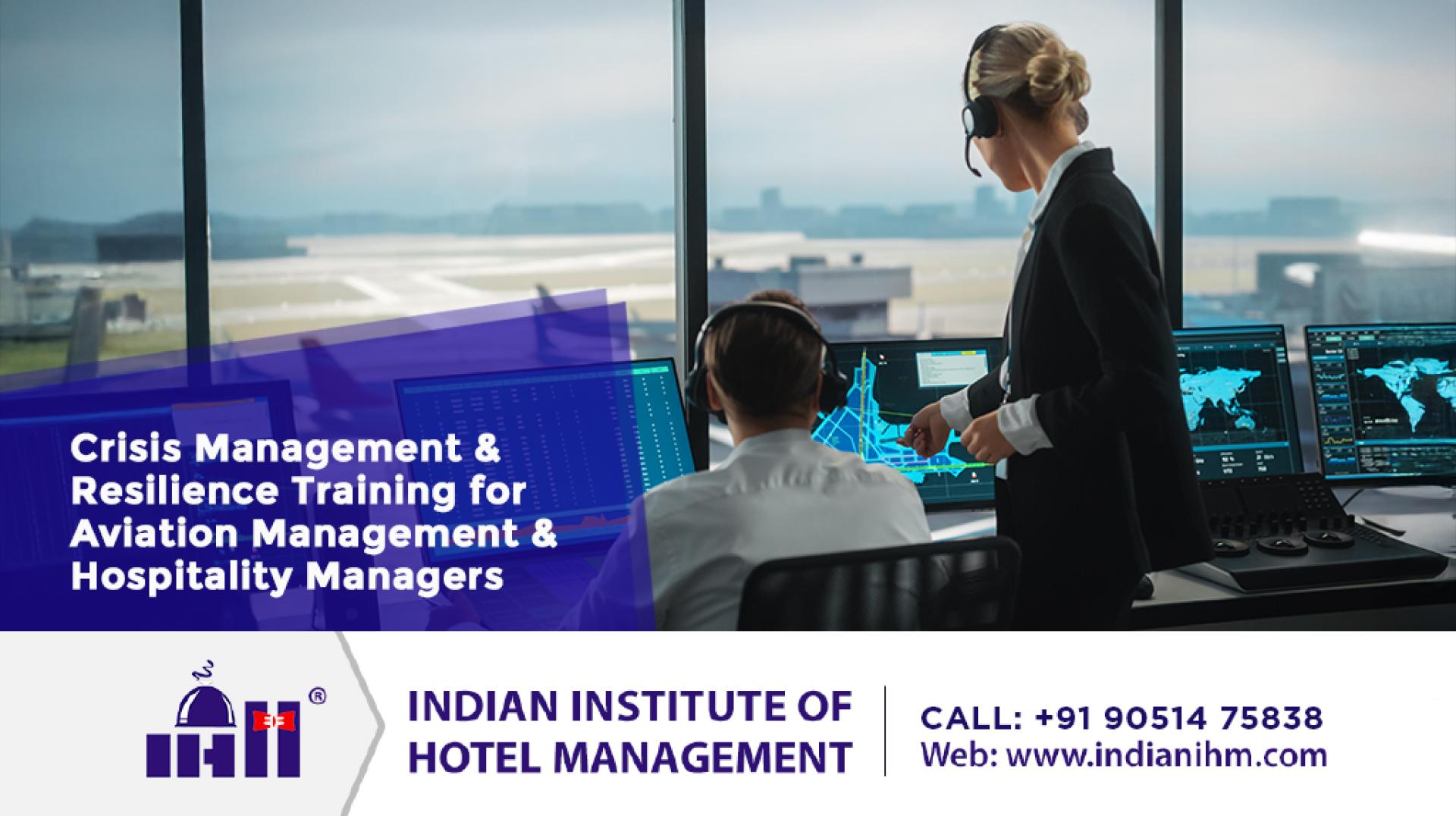

Crises in aviation and airport hospitality are not just inconvenient—they can spiral into major operational, financial, and reputational disasters if unprepared. Airlines and airports face constant risks: pandemics that halt global travel, weather disruptions that throw schedules into chaos, and system shocks like infrastructure failures or cyberattacks. The stakes are even higher for passenger-facing operations, where delays, cancellations, or safety issues can directly affect customer trust.
A well-designed aviation management curriculum aims to equip future managers with the skills to anticipate, respond, and recover from such shocks. By integrating aviation crisis management training, airport emergency preparedness, and pandemic protocols in airline hospitality, institutes ensure that graduates are not only operationally competent but also resilient under pressure. Students gain hands-on experience through simulations, scenario planning, and regulatory familiarisation.
Those trained in these frameworks emerge ready to maintain safety, continuity, and passenger satisfaction—even under the most challenging circumstances.
This article explores how aviation management programs are teaching resilience, operational flexibility, and strategic thinking, ensuring students can navigate disruptions with confidence and precision.
Pandemic Preparedness: Curriculum Adaptations and Health-Safety Protocols
The COVID-19 pandemic exposed gaps in traditional aviation and hospitality training. Institutes now embed pandemic protocols in airline hospitality into their curricula, covering infection control, health screening, quarantine logistics, and sanitation standards. Students learn to implement contactless boarding, passenger distancing, and hygiene management in airports and lounges.
Courses also include aviation regulatory compliance in India, ensuring students understand guidelines issued by aviation authorities and public health agencies. Mock drills, scenario-based simulations, and collaborations with public health experts equip students to respond proactively. Role-play exercises help them practice crisis communication in airline operations, addressing both internal staff coordination and external passenger messaging.
By focusing on health safety, operational continuity, and clear communication, these programs prepare managers to maintain both passenger confidence and operational integrity during a pandemic.
Weather Resilience: Training for Extreme Conditions & Operational Flexibility
Weather-related disruptions are a constant challenge. Students are trained in weather disruption risk management in aviation, learning to handle fog, storms, heatwaves, and monsoon-related challenges. Courses cover meteorology basics, runway limitations, and scheduling flexibility, enabling managers to anticipate delays and implement alternate plans.
Simulation exercises allow learners to experience route disruptions due to extreme weather, understand passenger experience during airline delays, and explore strategies for operational flexibility in airline scheduling. Training also integrates airport hospitality perspectives, teaching students how to manage lounge operations, food services, and customer engagement during unexpected weather delays.
By combining theoretical knowledge with hands-on scenarios, graduates develop resilience, decision-making under pressure, and the ability to maintain service standards during unpredictable conditions.
System Shocks & Infrastructure Failures: Building Redundancy & Recovery Skills
Airports and airlines must function even when systems fail. Institutes now focus on infrastructure redundancy in airports, training students to manage power outages, baggage handling disruptions, cyber threats, and security incidents. Students learn aviation safety drills and simulations, emergency power planning, and continuity strategies that ensure minimal disruption.
Courses emphasise business continuity in airlines and airports, including backup communication systems, alternate operational workflows, and recovery planning. Students also explore crisis communication in airline operations, ensuring timely coordination with staff and passengers. By simulating system shocks, learners gain experience in rapid problem-solving and resource allocation, essential for maintaining trust and operational reliability.
Crisis Communication & Stakeholder Management: Messaging Under Pressure
Effective communication is critical during crises. Aviation management students receive training in crisis communication in airline operations, focusing on clarity, transparency, and timely messaging. They practice internal communication with staff, as well as external updates to passengers, regulators, and media.
Programs emphasise culturally sensitive communication, essential in diverse environments. Role-play exercises simulate real-world scenarios, teaching students how to manage passenger anxiety during delays, respond to misinformation, and provide consistent updates. Integrating DGCA compliance and health authority coordination, students develop professional skills to maintain trust and operational control under pressure.
Technological Tools & Simulation Labs: Real-World Scenario Training
Modern training programs use simulation labs and technological tools to teach crisis readiness. Students work with mock control rooms, digital twin airport models, crowd management simulations, and scenario software for pandemic or weather crises. Tools include aviation crisis management training platforms and analytics dashboards for predictive decision-making.
By practising with these technologies, students learn to monitor real-time flight operations, manage resource allocation, and plan for operational flexibility in airline scheduling. These hands-on experiences bridge the gap between theory and real-world application, ensuring graduates are ready to respond quickly and efficiently.
Regulatory Framework, Standards & Best Practices: Indian & Global Norms
Understanding regulations is non-negotiable. Programs cover aviation regulatory compliance in India, including DGCA guidelines, ICAO standards, and IATA best practices. Students explore airport emergency preparedness, legal responsibilities, safety audits, and inspection procedures.
Training includes adherence to health protocols during pandemics, environmental regulations, and operational audits. Case studies demonstrate successes and failures, teaching students how compliance impacts resilience, safety, and passenger trust. Global comparisons expose learners to international aviation crisis management norms, giving them insights into multi-jurisdictional best practices.
Business Continuity & Financial Resilience: Recovering from Shocks
Crisis training extends to financial preparedness. Students learn business continuity in airlines and airports, focusing on revenue loss mitigation, flexible staffing, cost control, and insurance planning. Programs teach financial resilience under operational shocks, emphasising how to maintain critical services while minimising disruption.
Modules integrate pandemic protocols in airline hospitality and operational flexibility, training students to forecast revenue impacts, manage supply chains, and optimise resource allocation. By combining strategic and financial decision-making, graduates gain the skills to sustain operations during crises while maintaining passenger satisfaction.
Psychological Preparedness & Soft Skills: Managing Stress, Safety Culture & Empathy
Human factors define crisis outcomes. Students receive training in resilience training for aviation managers, soft skills under pressure in the aviation industry, and empathetic passenger handling. Programs cover stress management, leadership under pressure, team coordination, and cultural sensitivity.
Hospitality modules emphasise passenger experience during disruptions, teaching graduates to manage anxiety, provide clear guidance, and maintain morale. Staff wellness, burnout prevention, and safety culture form integral parts of the curriculum, ensuring that future managers can lead effectively in high-stress environments.
In Conclusion
Crisis management and resilience training in aviation management is no longer optional—it’s essential. Institutes now offer integrated curricula covering pandemic preparedness, weather resilience, system shocks, regulatory compliance, financial continuity, and psychological readiness. By combining theory, simulations, and practical exercises, these programs equip students to anticipate disruptions, respond efficiently, and recover effectively.
Graduates emerge as competent professionals who understand how to maintain safety, operational continuity, and passenger trust under pressure. They leave with skills in crisis communication, emergency preparedness, operational flexibility, and regulatory adherence, ready to tackle the dynamic challenges of the aviation and hospitality sectors globally.
Frequently Asked Questions
1. What is aviation crisis management training?
It is a structured instruction that prepares students to respond to operational, health, and environmental emergencies in airports and airlines.
2. How do aviation management courses teach weather disruption handling?
Through meteorology basics, simulation exercises, and planning alternate routes and schedules to ensure operational flexibility.
3. Are pandemic protocols included in aviation management education?
Yes, courses teach infection control, health screening, quarantine logistics, and contactless passenger handling.
4. How do institutes train students in crisis communication?
Through role-plays, scenario-based exercises, and workshops emphasising clear, timely, and culturally sensitive messaging.
5. What tools are used for real-world crisis simulations?
Simulation labs, digital twin models, dashboards, VR drills, and scenario software enable hands-on practice in emergency management.




























Sign in to leave a comment.