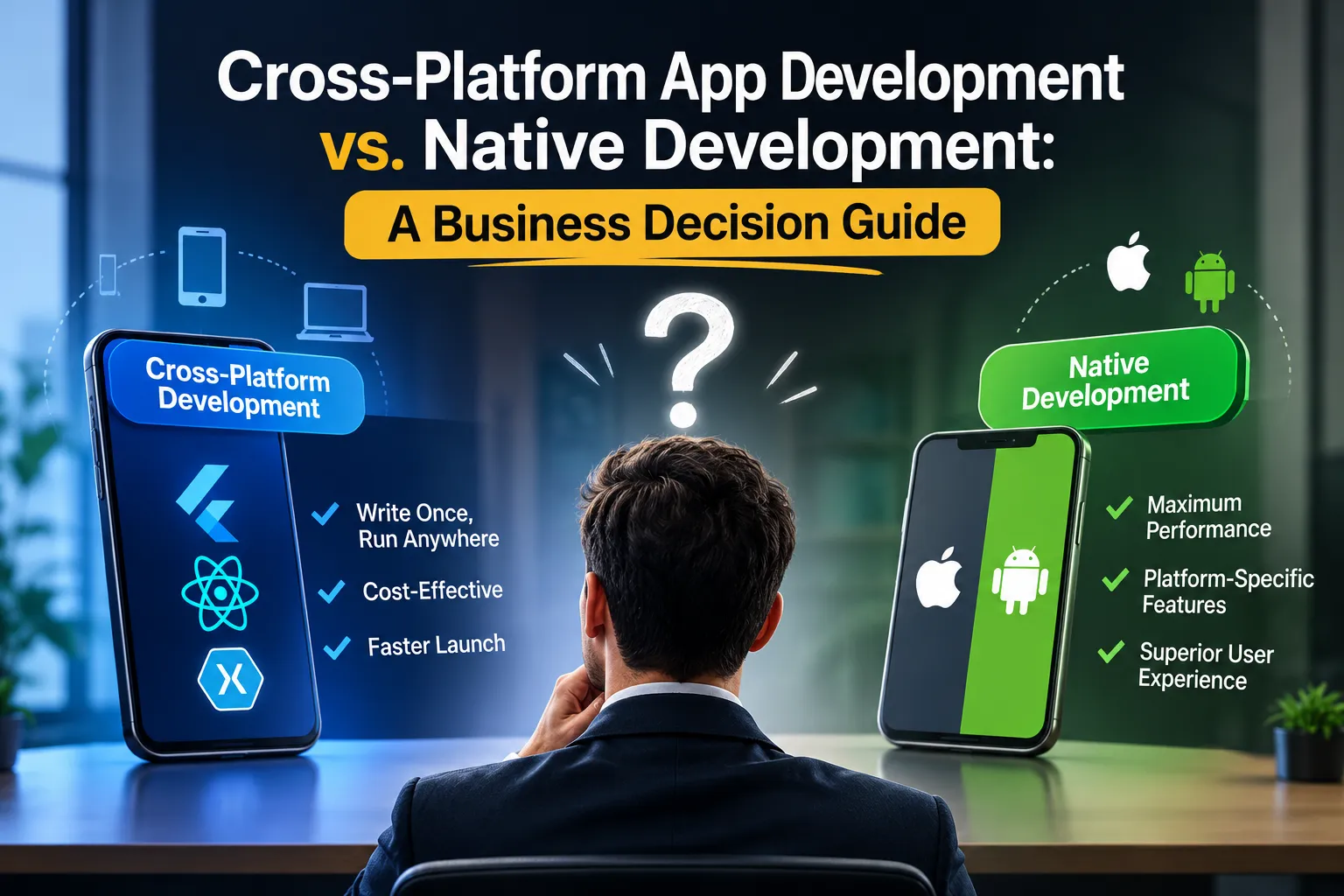

Choosing the right technology for a mobile application is an important decision that can influence development costs, performance, user experience, and long-term business growth. Companies planning to launch an app often face a common question: should they choose native development or cross-platform development? Both approaches offer advantages, but the right choice depends on the application's purpose, target audience, technical requirements, and available budget. While native development provides platform-specific capabilities and control, cross-platform development allows businesses to build applications for multiple operating systems using a shared codebase. Understanding these differences can help businesses make informed decisions and invest in a mobile application that meets their objectives.
What Is Native App Development?
Native app development involves building an application specifically for a particular operating system, such as Android or iOS. Developers use the programming languages, frameworks, and tools designed for the selected platform.
For Android applications, developers commonly use Kotlin and Java alongside Android development tools. For iOS applications, Swift is a popular choice, supported by Apple's development ecosystem.
Because native applications are designed for a specific platform, developers can take advantage of its APIs, interface conventions, and device capabilities.
Businesses can consider native mobile app development services when their applications require advanced platform integration, specialized performance optimization, or a highly tailored user experience.
Native development can be particularly useful for applications involving intensive graphics, sophisticated device interactions, or complex platform-specific functionality.
What Is Cross-Platform App Development?
Cross-platform app development allows businesses to build applications for multiple operating systems using a shared codebase for much of the application logic and interface.
Frameworks such as Flutter and React Native help developers reuse code across Android and iOS while providing access to platform-specific features when needed.
This approach can reduce duplicated development work and simplify maintenance, although some native code and platform-specific adjustments may still be necessary.
Businesses exploring cross-platform app development services can use this approach to reach users on multiple platforms while managing development resources efficiently.
Cross-platform development is often suitable for startups, e-commerce businesses, service applications, and organizations that want to launch on Android and iOS without maintaining two entirely separate codebases.
Native vs. Cross-Platform App Development: Key Differences
Understanding the main differences between these approaches helps businesses select a technology that aligns with their priorities.
1. Development Cost
Cost is one of the most important considerations when planning a mobile application.
Native development may require separate implementations for Android and iOS. Depending on the application's complexity, this can increase the amount of development, testing, and maintenance work.
Cross-platform development can reduce duplicated effort because much of the code can be shared across platforms.
However, actual costs depend on the application's features, integrations, design requirements, and the expertise of the development team. Cross-platform projects may still require native modules or specialized platform-specific work.
Businesses should compare complete project estimates rather than assuming one approach will always be cheaper.
2. Application Performance
Native applications can provide excellent performance because they are built specifically for their target operating systems and can use platform-specific capabilities directly.
This can be particularly beneficial for applications that require intensive graphics processing, complex animations, or specialized hardware integration.
Modern cross-platform frameworks can also deliver strong performance for many business applications, including online shopping platforms, booking systems, and productivity tools.
The difference depends on the workload, framework, implementation quality, and device capabilities.
For applications with demanding performance requirements, technical prototypes and performance testing can help determine the most suitable approach.
3. User Experience and Interface Design
A mobile application's interface influences how easily users can navigate its features and complete important tasks.
Native development makes it easier to follow the established interface conventions of each operating system. Developers can tailor navigation, gestures, animations, and controls to the target platform.
Cross-platform frameworks support attractive interfaces across multiple devices, but developers must carefully account for differences between Android and iOS.
A shared design does not always mean that every element should look or behave identically on both platforms.
The best approach depends on whether the product requires highly platform-specific interactions or a consistent experience across devices.
4. Development Time
Native development may involve building and maintaining separate implementations for Android and iOS. This can increase the time required to develop, test, and release a feature across both platforms.
Cross-platform development can shorten the development process by allowing teams to reuse a substantial portion of the codebase.
However, shared code does not eliminate the need for platform-specific testing, app store preparation, or native integrations.
Businesses planning a launch within a limited timeframe should evaluate the expected scope, team experience, and release requirements before choosing a framework.
5. Maintenance and Updates
Maintaining a mobile application involves fixing bugs, improving performance, updating dependencies, and introducing new features.
Native applications may require changes to separate platform codebases, which can increase maintenance effort when features need to be implemented independently.
Cross-platform applications can simplify maintenance when changes affect shared functionality. A single update to shared code may address the needs of both platforms.
Nevertheless, platform-specific issues can still require separate fixes, and framework upgrades must be managed carefully.
The overall maintenance burden depends on the application's architecture, code quality, dependencies, and release process.
6. Access to Device Features
Mobile applications often need access to cameras, GPS, biometric authentication, notifications, Bluetooth, and other device capabilities.
Native development provides direct access to platform APIs and can be advantageous when an application relies heavily on specialized device functionality.
Cross-platform frameworks also support many device features through built-in capabilities, plugins, and native integrations.
However, support may vary depending on the framework, plugin quality, and operating system version.
Before selecting a development approach, businesses should list their required device features and verify that the chosen technology supports them reliably.
7. Scalability and Future Growth
Scalability involves more than adding new features. It also includes maintaining code quality, supporting more users, integrating additional services, and adapting to changing business requirements.
Both native and cross-platform applications can support substantial growth when designed properly.
Native development may offer greater flexibility for deeply platform-specific functionality. Cross-platform development may simplify the delivery of shared features across operating systems.
Businesses should consider their long-term product roadmap, expected integrations, team capabilities, and performance requirements before making a decision.
Native App Development: Advantages and Limitations
Native development offers several benefits, particularly for applications that require deep integration with a specific operating system.
Advantages of Native Development
Platform-specific performance: Native applications can be optimized for the capabilities and behavior of their target operating systems.
Access to platform APIs: Developers can use platform-specific functionality directly, which can be helpful for specialized device interactions.
Platform-aligned user experience: Interfaces can follow the established conventions of Android and iOS.
Control over implementation: Development teams can fine-tune platform-specific behavior and optimize individual components.
Limitations of Native Development
Potentially higher development costs: Separate implementations may require additional resources when both platforms are targeted.
More duplicated work: Certain features and business logic may need to be maintained independently.
Separate testing requirements: Each platform requires appropriate testing, release preparation, and ongoing support.
Native development can be a strong choice when performance, specialized hardware access, or platform-specific user experience is central to the application's success.
Cross-Platform App Development: Advantages and Limitations
Cross-platform development provides an alternative for businesses seeking to support multiple mobile operating systems efficiently.
Advantages of Cross-Platform Development
Code reuse: Developers can share much of the application logic and, depending on the framework, significant portions of the interface.
Potentially lower development costs: Reusing code can reduce duplicated effort and simplify certain maintenance tasks.
Faster feature delivery: Shared functionality may allow teams to implement features across platforms more efficiently.
Consistent business logic: Common application rules can be maintained in one place, reducing the risk of inconsistencies between implementations.
Simplified product development: A shared codebase can make collaboration and feature planning easier for teams with the appropriate expertise.
Limitations of Cross-Platform Development
Platform-specific adjustments: Some features still require native code or separate implementations.
Framework dependencies: Businesses need to consider framework updates, plugin availability, and long-term ecosystem support.
Potential performance limitations: Certain specialized workloads may require additional optimization or native implementation.
Platform-specific testing: Applications must still be tested on supported devices and operating system versions.
Cross-platform development is often a practical option for businesses that prioritize broad market coverage, efficient delivery, and manageable development resources.
Flutter vs. React Native: Which Framework Should You Choose?
Flutter and React Native are two popular options for cross-platform mobile development. Both can support applications targeting Android and iOS, but they use different technical approaches.
Flutter
Flutter is Google's UI development framework, which uses the Dart programming language and provides a rich set of interface components.
It can be suitable for applications that need a consistent visual experience across platforms, including dashboards, booking applications, e-commerce platforms, and customer portals.
Its rendering approach gives developers considerable control over the application's interface.
React Native
React Native is a framework for building native mobile user interfaces using JavaScript or TypeScript and React concepts.
It can be attractive to teams with existing web development expertise and projects that benefit from shared skills across web and mobile development.
React Native applications can also integrate native modules when additional platform-specific capabilities are needed.
How Should Businesses Decide?
The best framework depends on the development team's expertise, product requirements, integration needs, performance expectations, and maintenance plans.
Before committing, businesses should assess the availability of suitable libraries, the maturity of required integrations, and the expected complexity of future updates.
A small technical prototype can help validate important requirements before full development begins.
Which Approach Is Best for Different Business Needs?
The most suitable development approach varies according to the application's purpose and technical requirements.
Startups and MVPs
Startups often need to validate an idea without committing excessive resources before understanding customer demand.
Cross-platform development may be a good choice when the application requires similar functionality across Android and iOS.
A focused MVP can help the business gather feedback and refine its product before investing in additional features.
E-commerce Applications
E-commerce applications commonly require product catalogs, customer accounts, search, shopping carts, secure payments, and order tracking.
Cross-platform development can be suitable when the main workflows are similar across operating systems.
Native development may be preferable when the application depends heavily on specialized platform features or requires extensive platform-specific optimization.
Gaming Applications
Games vary considerably in their performance and graphics requirements.
Simple casual games may be built using cross-platform tools or game engines, while demanding games may require specialized engines and carefully optimized platform integrations.
The best option depends on the graphics workload, gameplay requirements, and target devices rather than a general preference for native or cross-platform development.
Enterprise Applications
Enterprise applications may need secure authentication, offline functionality, complex integrations, and access to specialized device features.
Either approach can work, but the decision should reflect the organization's security requirements, integration environment, deployment strategy, and long-term maintenance capabilities.
Applications Requiring Advanced Device Features
Applications involving specialized Bluetooth hardware, extensive background processing, or complex operating system integrations may benefit from native development.
Cross-platform frameworks can still support many of these features, but businesses should validate the required capabilities before finalizing the architecture.
How to Choose the Right Mobile App Development Approach
Before selecting a technology, businesses should evaluate several important factors.
Define your business goals: Identify the problem the application should solve and the results it should deliver.
Understand your target audience: Determine which devices and operating systems your customers use.
Establish your budget: Consider development, testing, maintenance, infrastructure, and future feature requirements.
List essential features: Identify whether the application requires specialized device capabilities or complex platform-specific interactions.
Evaluate your timeline: Determine when the product must be ready and how frequently it will need updates.
Plan for scalability: Consider expected growth, future integrations, and the product roadmap.
Assess technical expertise: Choose an approach that can be maintained by a team with suitable skills and access to the required technical ecosystem.
Build a prototype when necessary: Test uncertain requirements before committing to a complete development project.
Following this process helps businesses make decisions based on practical needs rather than assumptions about which technology is universally better.
Why Professional Mobile App Development Matters
Choosing a framework is only one part of building a successful mobile application. Product planning, architecture, interface design, security, testing, and maintenance are equally important.
An experienced development team can evaluate technical requirements, recommend a suitable architecture, and identify potential limitations before they become expensive problems.
Professional mobile app development services can help businesses plan and build applications that align with their target audience, functional requirements, and long-term goals.
For companies targeting multiple platforms, cross-platform app development services can help reduce duplicated development effort while maintaining appropriate platform-specific functionality.
Organizations with specialized performance or device integration requirements may instead benefit from native mobile app development services tailored to their chosen operating systems.
The right development strategy should support the business objective rather than prioritize a particular framework without evaluating the project's needs.
Conclusion
Choosing between native and cross-platform app development requires a clear understanding of your business goals, budget, timeline, performance requirements, and long-term product strategy.
Native development can provide greater control over platform-specific capabilities and user experiences. Cross-platform development can help businesses reach Android and iOS users with a shared codebase and potentially reduce duplicated development effort.
Neither approach is automatically the best choice for every project. The right solution depends on the features you need, the complexity of the application, the capabilities of your development team, and the experience you want to deliver.
By evaluating these factors carefully and investing in suitable mobile app development services, businesses can select a development strategy that supports efficient delivery, reliable performance, and sustainable growth.























Sign in to leave a comment.