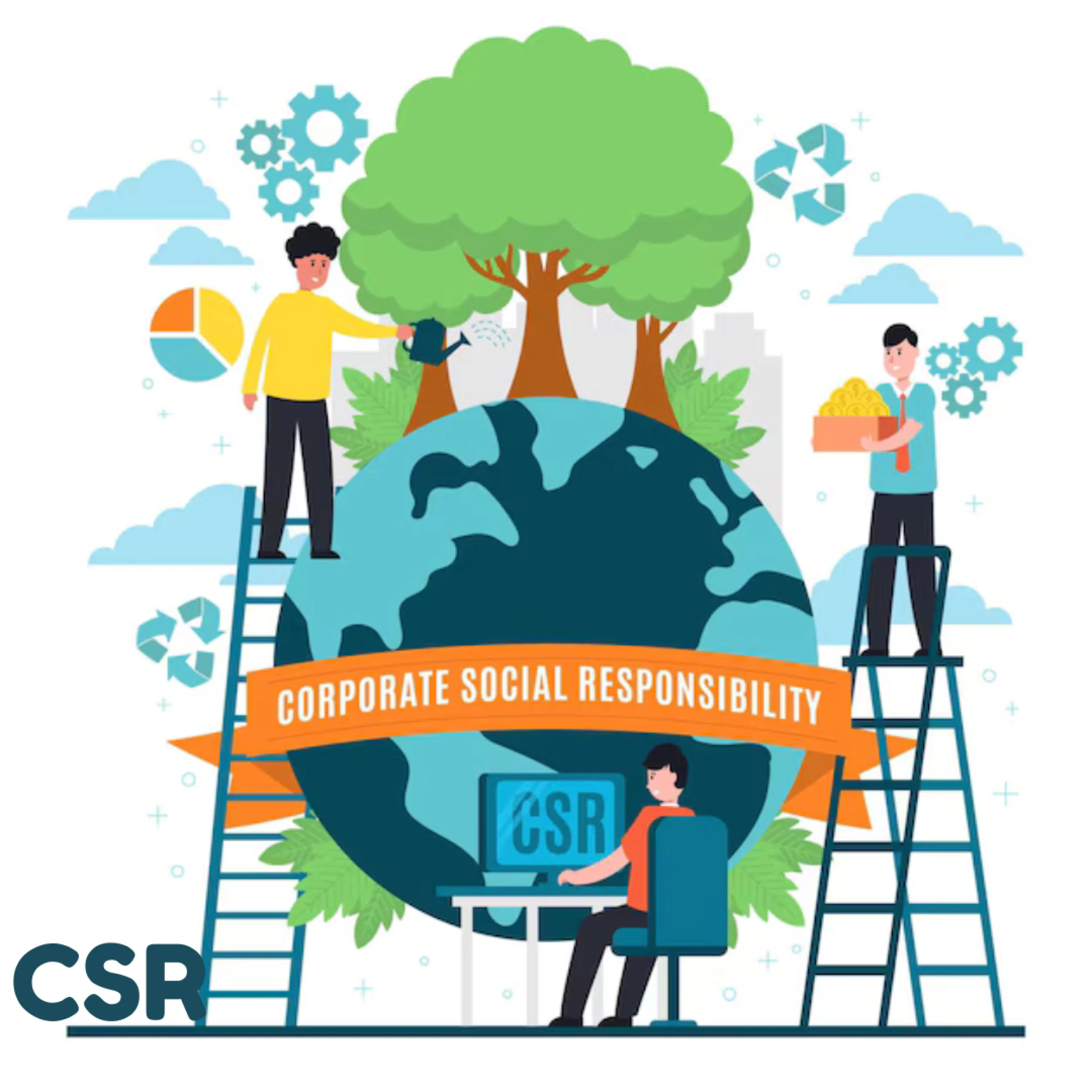
In India, where social and economic inequality persists despite the country's tremendous economic progress, corporate social responsibility, or CSR, is an essential component of the business environment. Companies can improve their company reputation and contribute to social well-being through CSR. Businesses must know how CSR applies to the Indian corporate sector in order to comply with regulatory requirements and take advantage of social responsibility's strategic benefits. This essay analyzes the subtleties of CSR registration, jumps into the framework governing CSR in India, and shows how businesses may become change agents through efficient administration of CSR funding and activities.
What is CSR? Defining Corporate Social Responsibility
Fundamentally, Corporate Social Responsibility (CSR) is a self-policing business model that assists an organization in being socially responsible to its stakeholders, the public, and itself. Businesses can make sure they conduct themselves morally by considering the effects of their operations on the environment, society, and economy by implementing corporate social responsibility (CSR). Driven by the idea that firms should take the initiative to address societal issues, corporate social responsibility (CSR) in India has changed from being a voluntary endeavor to a mandate for some organizations.
The Legal Model: Accepting CSR Applicability
The CSR applicability in India is governed by Section 135 of the Companies Act, 2013, and reinforced by the Companies (Corporate Social Responsibility Policy) Rules, 2014. According to these regulations, CSR is mandatory for companies that meet any of the following financial criteria during the immediately preceding financial year:
- Net Worth: INR 500 crore or more.
- Turnover: INR 1,000 crore or more.
- Net Profit: INR 5 crore or more.
Companies that fall under these thresholds are required to spend at least 2% of their average net profits from the last three financial years on CSR activities. Additionally, these companies must establish a CSR committee consisting of at least three directors, including an independent director, to oversee CSR policies and initiatives. For private companies, the committee can consist of two directors, and for one-person companies, a single director can suffice.
This mandatory requirement signifies the Indian government’s commitment to integrating social development into the corporate agenda, thereby leveraging private sector resources and expertise for public good.
CSR Registration: The Gateway to Compliance and Accountability
To make sure transparency and proper governance, companies engaged in CSR must undertake CSR registration. This involves filing Form CSR-1 with the Ministry of Corporate Affairs (MCA), a step mandatory for companies and implementing agencies such as NGOs, trusts, or Section 8 companies planning to undertake CSR activities on behalf of businesses.
The CSR Registration Process
- Form CSR-1 Submission: Companies and implementing agencies must fill out and submit Form CSR-1 electronically through the MCA portal. This form requires basic information about the entity, including:
- Name and address.
- PAN details.
- Nature of the entity (company, trust, society).
- Contact information of authorized representatives.
- Supporting Documents: Attachments include:
- A copy of the registration certificate of the entity.
- A copy of the PAN card.
- A board resolution authorizing the company to undertake CSR activities.
- Digital Signature: The form must be digitally signed by an authorized signatory.
- Approval and CSR Registration Number: Upon successful submission and verification, the MCA issues a unique CSR Registration Number. This number is essential for tracking and monitoring CSR fund utilization and confirming accountability.
Effective Management of CSR Funds
To maximize social impact, CSR funding must be allocated and managed effectively. Projects that fit the authorized list of activities under Schedule VII of the Companies Act of 2013 are the focus of these funding. Good management guarantees that funds are allocated to worthwhile projects that provide communities with observable advantages.
Strategic Allocation of CSR Funds
- Detecting Focus Areas: Companies should align their CSR strategies with core business values while addressing pressing societal issues. Common focus areas include:
- Education and skill development.
- Healthcare and sanitation.
- Environmental sustainability.
- Rural development and poverty alleviation.
- Transparent Reporting: To maintain credibility, companies must transparently report CSR fund allocation and outcomes in their annual reports. This not only fulfills regulatory requirements but also builds trust among stakeholders.
- Impact Assessment: Conducting regular impact assessments helps measure the effectiveness of CSR initiatives, confirming that CSR funds are being utilized efficiently and achieving desired outcomes.
Designing Impactful CSR Activities
CSR activities are the actionable part of a company’s CSR strategy. By carefully designing and executing projects, companies can create lasting positive changes in society.
Key Elements of Successful CSR Activities
- Community Engagement: Recognizing the needs of the community confirms that CSR projects are relevant and well-received. Engaging with community leaders and local organizations can increase project effectiveness.
- Partnerships: Collaborating with credible NGOs and government bodies can amplify the reach and impact of CSR activities. It also confirms compliance with regulatory standards, particularly if the implementing agency requires CSR registration.
- Sustainable Impact: Projects that offer long-term benefits, such as vocational training or environmental conservation, provide enduring value to society and reflect positively on the company.
Challenges in CSR Implementation
Despite a well-structured regulatory framework, companies often face challenges in implementing effective CSR initiatives.
- Regulatory Compliance: Confirming compliance with evolving CSR norms can be challenging, particularly for companies unfamiliar with legal intricacies.
- Fund Misallocation: Without strategic planning, CSR funds can be misallocated to less impactful projects, diminishing their societal benefits.
- Stakeholder Expectations: Balancing the expectations of different stakeholders—investors, customers, employees, and communities—requires careful planning and transparent communication.
Solutions to Improve CSR Compliance
To cross these challenges, companies can adopt a proactive approach:
- Educate and Train: Regular training for CSR committees and staff on legal requirements and effective CSR strategies can bridge knowledge gaps.
- Leverage Technology: Digital tools for project tracking and reporting can simplify compliance and improve transparency.
- Engage Stakeholders: Regular dialogue with stakeholders confirms CSR activities are aligned with societal expectations and corporate goals.
Conclusion
CSR applicability is more than just a legal requirement; it represents the notion that companies have an ethical obligation to advance society. Companies can successfully manage their CSR finances, create effective CSR initiatives, and negotiate the challenges of CSR registration by following the guidelines outlined in the Companies Act of 2013. In addition to promoting company expansion, this dedication to ethical business practices opens the door to a more just and sustainable future.
Integrating corporate social responsibility (CSR) into the company fabric is now a strategic need, as social consciousness influences investor and consumer decisions. Businesses can transform compliance into a competitive advantage by realizing the subtleties of CSR applicability. This will strengthen and fortify communities and increase the legitimacy and dependability of their brand.




























Sign in to leave a comment.