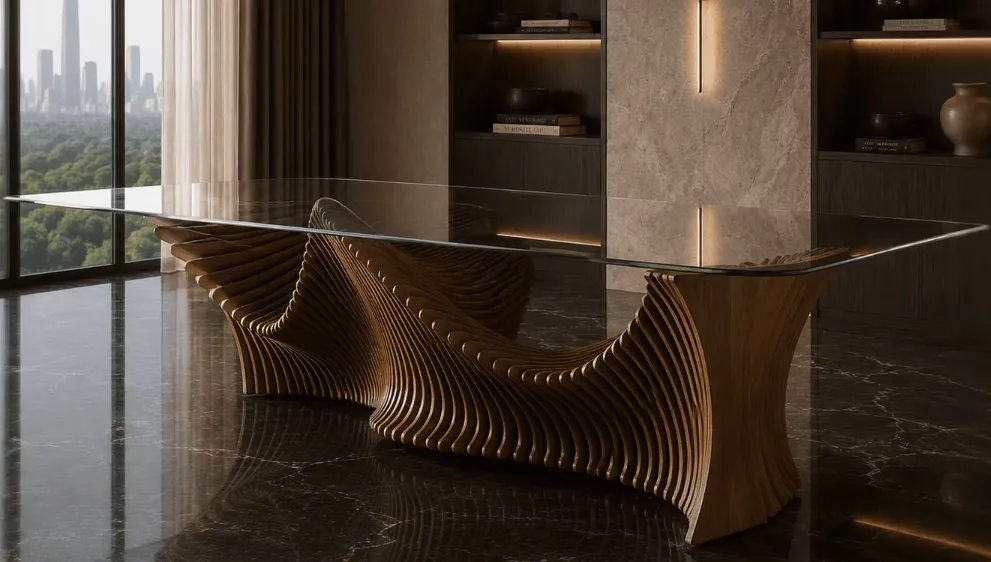

Shopping for a new dining table often starts with excitement about design possibilities, but the most successful purchases come down to getting the practical details right first. A custom dining table offers the flexibility to tailor size, shape, and style precisely to your space, but making the most of that flexibility requires understanding a few key considerations before finalizing your design.
This guide from Zorka Furniture walks through everything you need to know when planning a custom dining table, helping you create a piece that fits your room and lifestyle perfectly.
Why Choose a Custom Table
Standard, mass-produced dining tables are built to fit average room dimensions and general design preferences, which often means compromising on fit or style. A custom dining table removes these constraints, allowing you to specify exact measurements, materials, and design details that align with your specific space and vision.
This flexibility is especially valuable for unconventional room layouts, such as narrow dining areas, open-concept spaces requiring a strong visual anchor, or rooms with irregular angles that standard rectangular or round tables don't accommodate well.
Getting the Size Right
Size is often the most important factor to get right, since a table that's too large or too small can throw off the entire room's balance. Start by measuring your dining area, leaving enough clearance around the table for chairs to be pulled out and for guests to move comfortably. A general guideline is to allow at least three feet of clearance on all sides of the table.
Consider your household's typical seating needs as well. Everyday family meals may only require seating for four, while households that frequently entertain might benefit from a larger table, or one with extendable leaves that provide additional flexibility during gatherings without permanently taking up more space.
Choosing the Right Shape
Shape plays a significant role in how a table functions within a room. Rectangular tables tend to work well in longer spaces and efficiently accommodate larger gatherings, offering ample seating along both long sides. Round tables create a more intimate dining experience and often work better in square-shaped rooms or smaller nooks, since their lack of corners helps optimize circulation in tighter spaces.
For homes with unique architectural features, a custom wood dining table can be designed in a shape specifically suited to the room, including elongated or asymmetrical forms that standard retail options simply don't offer.
Selecting a Style That Fits Your Interior
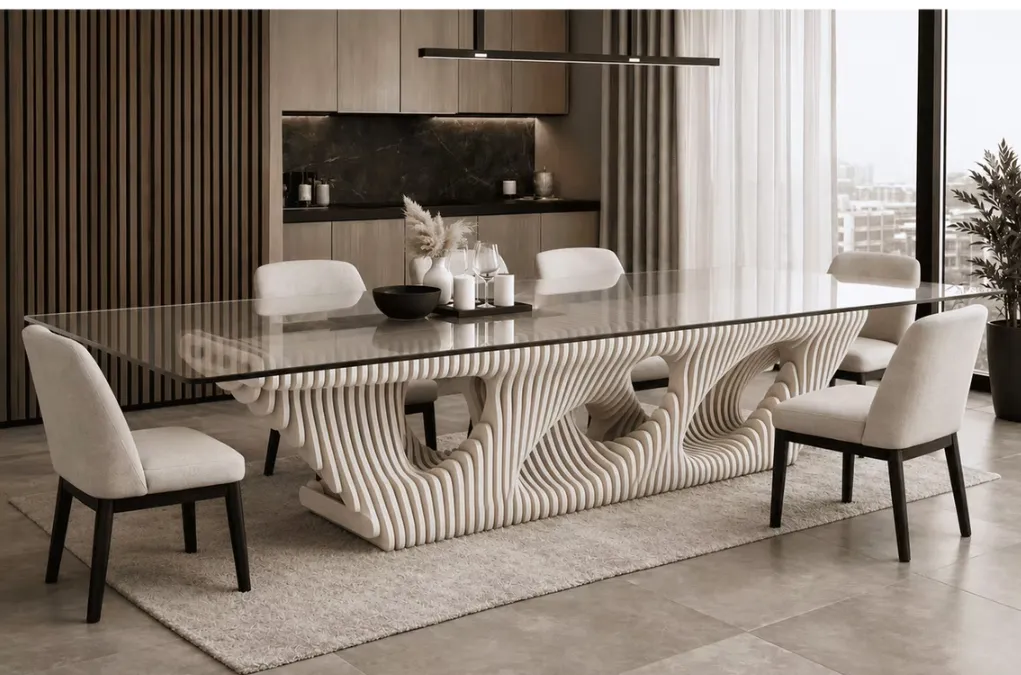
Once size and shape are settled, style becomes the next major consideration. Custom tables allow for far greater design flexibility than standard options, particularly when it comes to matching an existing interior aesthetic. Minimalist interiors often benefit from clean, simple bases, while more expressive spaces may call for sculptural or architecturally inspired designs that serve as a genuine centerpiece.
Color and finish also play an important role in achieving visual cohesion. Matching or complementing existing flooring, cabinetry, or other furniture pieces helps ensure your new table feels like an intentional part of the room rather than a standalone addition.
Material Choices for Durability and Style
Material selection significantly impacts both the table's appearance and its long-term durability. Solid wood offers timeless warmth and natural grain variation, making it a versatile choice for both traditional and contemporary interiors. Acrylic or glass tabletops introduce a lighter, more modern feel, often paired with sculptural or metal bases for visual contrast.
Households with young children may want to prioritize scratch-resistant coatings, while more formal dining spaces might lean toward finishes that emphasize elegance over heavy-duty performance.
Considering Household Lifestyle
Before finalizing your design, think carefully about how your family actually uses the dining space. Is the table primarily used for everyday meals, or does it need to accommodate frequent entertaining? This distinction can influence whether features like extendable sections are worth including in your custom design.
Households that regularly host larger gatherings may benefit from custom made dining tables designed with expandable leaves, allowing the table to grow when needed while maintaining a more compact footprint for daily use.
Working with an Experienced Furniture Maker
Successfully designing a custom dining table requires collaborating with a maker who understands both aesthetic design and structural engineering. Clear communication about your spatial constraints, style preferences, and lifestyle needs throughout the design process helps ensure the final table meets both your visual expectations and practical requirements.
Budgeting for Your Custom Table
Custom furniture typically involves a different investment structure compared to standard retail pieces, reflecting the tailored design and specialized fabrication involved. When budgeting, factor in material choice, size, and design complexity, as more intricate shapes or premium materials will generally increase overall cost.
Final Thoughts
A well-planned custom dining table allows you to move beyond the limitations of standard retail furniture, creating a piece built specifically for your space, your household, and your design vision. By carefully considering size, shape, and style, you can ensure your new table becomes a lasting centerpiece for daily meals and special occasions alike. Explore Zorka Furniture full table collection and start designing a custom dining table built entirely around your needs
Frequently Asked Questions (FAQs)
1. How much clearance should I leave around a custom dining table?
It's generally recommended to leave at least three feet of clearance on all sides to allow chairs to be pulled out and guests to move comfortably.
2. What shape of dining table works best for a small room?
Round tables often feel more intimate and work well in smaller or square-shaped dining areas compared to larger rectangular designs.
3. Are custom dining tables more expensive than standard options?
Custom pieces typically involve a different cost structure due to tailored design and fabrication, with pricing influenced by material choice and design complexity.
4. Can a custom dining table include extendable sections?
Yes, expandable designs can be incorporated for households that frequently host larger gatherings while still wanting a compact table for daily use.
5. What materials are most durable for families with children?
Solid wood with scratch-resistant coatings tends to hold up well in households with young children compared to more delicate finishes like glass.






















Sign in to leave a comment.