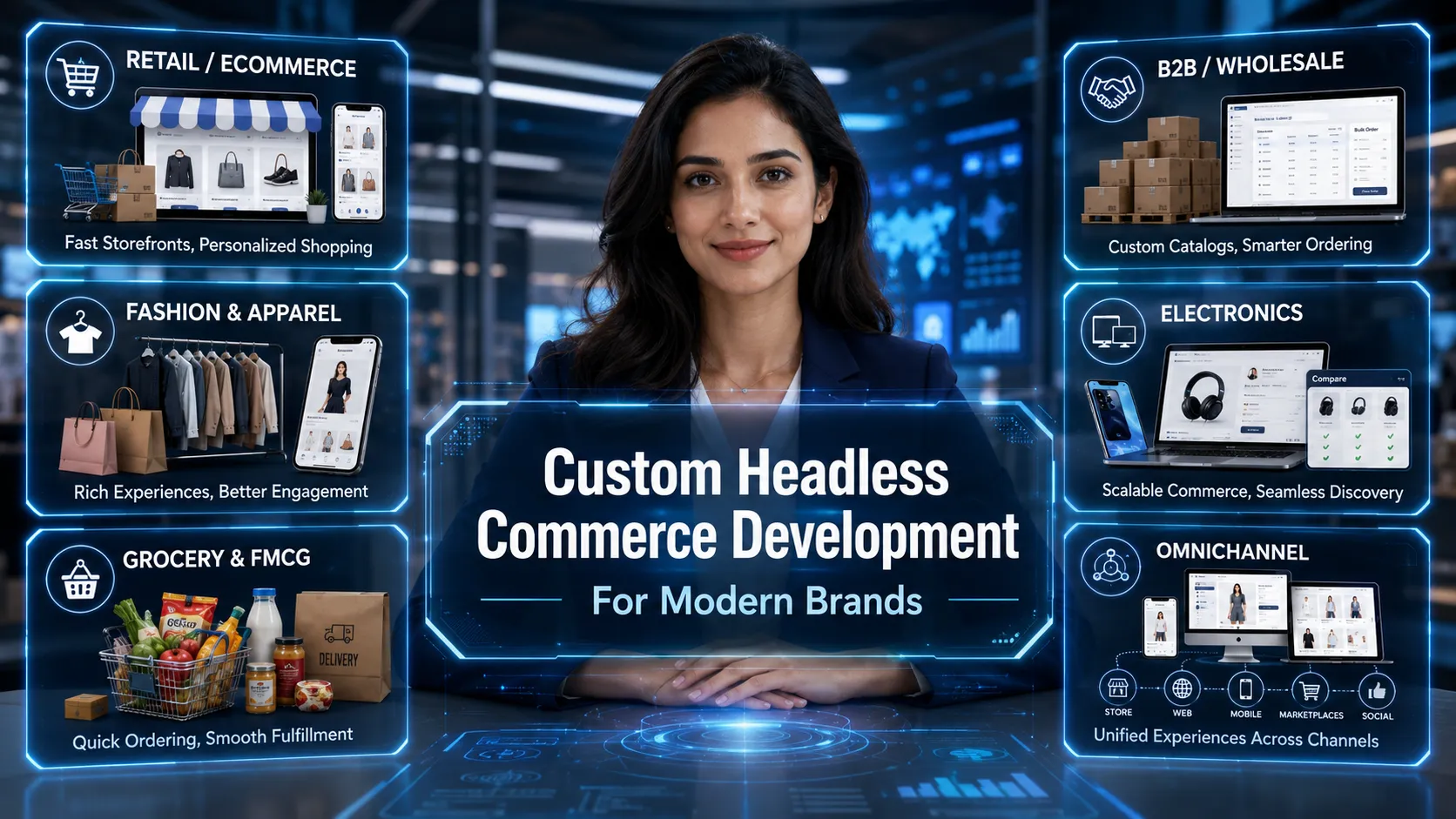

Modern customers do not shop from only one place anymore. They explore products on websites, mobile apps, social media, marketplaces, voice assistants, and even in-store digital screens. For brands, this means the shopping experience must be fast, flexible, and consistent across every channel. Traditional commerce platforms can sometimes limit how quickly a business can change its frontend experience or add new customer touchpoints. This is why many modern brands are choosing Headless commerce development services to build flexible, scalable, and future-ready digital commerce experiences.
What Is Headless Commerce?
Headless commerce is an eCommerce architecture where the frontend and backend are separated. The frontend is the part customers see, such as the website, mobile app, or digital storefront. The backend manages products, orders, payments, inventory, customer data, and business logic.
In a traditional eCommerce setup, the frontend and backend are usually connected inside one system. This can make customization slower and more restrictive. With Headless Commerce Development, brands can design the frontend freely while still using a powerful backend to manage commerce operations.
This approach gives businesses more control over customer experience. Developers can create fast, custom, and engaging interfaces without being limited by the backend platform’s default templates or themes.
Why Modern Brands Need Headless Commerce
Customer expectations are higher than ever. People want fast-loading pages, smooth navigation, personalized recommendations, simple checkout, and a consistent experience across devices. If a website is slow or difficult to use, customers may leave and buy from another brand.
Headless commerce helps brands respond to these expectations more effectively. Since the frontend is separate, businesses can update designs, add features, test layouts, and improve user journeys without disturbing backend operations.
This is especially useful for brands that want to scale across multiple channels. A business can use the same backend to power a website, mobile app, kiosk, marketplace experience, or social commerce interface. With Headless Commerce Development, the brand can deliver a connected shopping experience while keeping flexibility at the frontend level.
Key Benefits Of Custom Headless Commerce Development
Custom headless commerce gives brands the freedom to build experiences that match their goals, customers, and industry needs. Instead of depending on fixed templates, businesses can create unique storefronts that reflect their brand identity.
One major benefit is performance. Headless storefronts can be built using modern frontend technologies that improve page speed and user experience. Faster websites can support better engagement, lower bounce rates, and smoother shopping journeys.
Another benefit is flexibility. Brands can add new features, connect third-party tools, personalize content, and improve the design without rebuilding the entire commerce system. This makes it easier to test ideas and respond to market changes.
Scalability is also important. As a business grows, it may need to manage more products, more traffic, more regions, and more sales channels. Headless commerce development services can support this growth by creating a strong and flexible commerce foundation.
How Headless Commerce Improves Customer Experience
A good customer experience is not just about attractive design. It is about speed, convenience, personalization, and trust. Headless commerce allows brands to build digital experiences around how customers actually shop.
For example, a fashion brand can create a highly visual mobile-first storefront with product videos, style guides, and personalized recommendations. A B2B company can build a custom ordering portal with bulk pricing, account-based catalogs, and quick reorder options. A lifestyle brand can create content-led shopping experiences where blogs, guides, and products work together naturally.
With Headless Commerce Development, brands can design these experiences without being restricted by standard platform layouts. This helps create a smoother journey from product discovery to checkout.
Personalization also becomes easier when commerce systems are connected with customer data, analytics, and marketing tools. Brands can show relevant products, offers, and content based on user behavior, location, purchase history, or preferences.
Important Features Of A Headless Commerce Solution
A strong headless commerce solution should be fast, secure, easy to manage, and ready for future growth. It should also connect smoothly with the tools a business already uses.
Common features include custom storefront development, API-based architecture, product catalog management, secure checkout, payment gateway integration, inventory synchronization, order management, CRM integration, ERP integration, analytics, and personalized content delivery.
For brands selling in multiple regions, features like multi-language support, multi-currency pricing, tax management, and regional product catalogs are also important.
Headless commerce development services should focus on both customer-facing design and backend efficiency. A beautiful storefront is not enough if the backend cannot manage orders, inventory, payments, and customer data properly.
Custom Development Vs Ready-Made Themes
Ready-made themes can be useful for small stores or businesses that need a quick launch. They are simple, affordable, and easy to set up. However, they may not provide enough flexibility for growing brands with unique customer journeys or complex business needs.
Custom headless commerce development is better suited for businesses that want full control over design, performance, features, and integrations. It allows brands to build a digital commerce experience that is aligned with their exact goals.
For example, a brand may need a custom product configurator, subscription model, loyalty program, advanced search, AI-based recommendations, or content-driven shopping experience. These features may be difficult to implement properly with a standard theme.
Custom development also helps brands stand out. In competitive markets, a unique and smooth shopping experience can make a strong difference in how customers remember and trust the brand.
The Role Of APIs And Integrations
APIs are the foundation of headless commerce. They allow the frontend and backend to communicate with each other. They also help connect different systems such as payment gateways, shipping providers, CRM platforms, ERP systems, marketing tools, analytics software, and customer support platforms.
This connected structure gives businesses more flexibility. If a brand wants to change its frontend design, add a mobile app, or connect a new marketing tool, it can do so without replacing the entire commerce platform.
Reliable integrations are also important for operational accuracy. Product details, stock levels, customer data, orders, shipping updates, and payment records must move correctly between systems. If these systems are not connected properly, the customer experience can suffer.
This is why choosing experienced Headless commerce development services matters. The right team can create a clean architecture that supports smooth data flow, secure API connections, and long-term scalability.
Industries That Can Benefit From Headless Commerce
Headless commerce is useful for many industries, especially those that need flexible customer experiences. Fashion, beauty, electronics, furniture, grocery, healthcare products, automotive parts, and lifestyle brands can all benefit from this approach.
B2B companies can also use headless commerce to create custom buyer portals, approval workflows, account-based pricing, and complex catalog structures. This is helpful for manufacturers, wholesalers, distributors, and suppliers.
D2C brands can use headless commerce to build rich storytelling experiences, launch campaigns faster, and create personalized shopping journeys. Retailers can use it to connect online and offline channels more effectively.
For businesses planning long-term digital growth, headless commerce development services can provide the flexibility needed to expand into new channels, markets, and customer segments.
How To Choose The Right Development Partner
Choosing the right partner is important because headless commerce involves architecture, frontend design, backend development, APIs, integrations, performance optimization, and security. A weak setup can create technical problems and slow down business growth.
Look for a team with strong experience in eCommerce platforms, frontend technologies, API development, cloud infrastructure, UX design, and third-party integrations. They should understand both technical requirements and business goals.
Ask about their previous headless commerce projects, development process, testing methods, security practices, and post-launch support. A reliable partner will first understand your brand, customers, operations, and growth plans before suggesting a solution.
The best Headless commerce development services provider will not only build a storefront. They will help you create a commerce ecosystem that supports better customer experience, easier management, and future expansion.
Final Thoughts
Custom headless commerce development is a smart choice for modern brands that want more control, speed, and flexibility in their digital commerce strategy. It allows businesses to create unique shopping experiences while keeping backend operations strong and scalable.
As customer expectations continue to grow, brands need commerce systems that can adapt quickly. A headless approach helps businesses launch new experiences faster, connect multiple channels, improve performance, and personalize the buying journey.
By investing in Headless commerce development services, modern brands can build a strong foundation for digital growth. With the right strategy and development partner, headless commerce can help businesses deliver better experiences, improve conversions, and stay ready for the future.
























Sign in to leave a comment.