
With demand for medical devices expected to continue climbing, there's a strong need for innovation. Materials science experts are stepping up to the challenge.
One of the most popular materials for medical device elastomers is liquid silicone rubber (LSR). It offers superior electrical insulating qualities and comes in a wide range of composition and hardness.
Liquid Silicone Rubber (LSR)
Liquid silicone rubber (LSR) is a unique material that offers many benefits over traditional plastics and metals. It's resistant to heat and cold, durable and safe for use in a variety of applications. It's also highly inert and can be molded into virtually any shape.
LSR is often used in the medical industry because of its inert and biocompatible characteristics. It is widely utilized in surgical instruments, respirator masks, valves and diaphragms, drug delivery devices, and other critical components that require heightened cleanliness and tight tolerances.
Thermosetting liquid silicone rubbers come in a wide variety of hardness and composition to meet various application requirements. They also offer resistance to a wide range of temperatures, from -50 deg C to +232 deg C (-58 deg F to +450 deg F).
Unlike other elastomers, LSR is a very pure material. It does not contain any plasticizers, curing agents or stabilizers and is cured by a platinum-catalyzed reaction that generates no by-products.
In the manufacturing process, LSR is injected into a mold through a liquid injection molding process. This process involves a two-component, platinum curable LSR material compound that flows into a mold for production of custom molded rubber products.
The liquid silicone injection molding process is a cost-effective solution for a wide range of applications, including medical and automotive. Its fast cycle times and elevated temperature capabilities make it the ideal choice for producing complex part geometries and precise dimensions.
One of the advantages of the liquid injection molding process is that it can be performed at much higher temperatures than thermoplastic injection molding, allowing for faster injection cycles and longer parts lifespans. Additionally, the process does not require the post cure that is required with hot compression molding (HCR).
Another benefit of the liquid injection molding process is that it enables production of smaller parts than thermoplastic injection molding. This is due to the fact that LSR has a lower viscosity than HCR, meaning that it can be injected into a mold and then cured quickly without requiring additional molding. This means that a manufacturer can produce more of the same amount of molded parts, which saves them money.
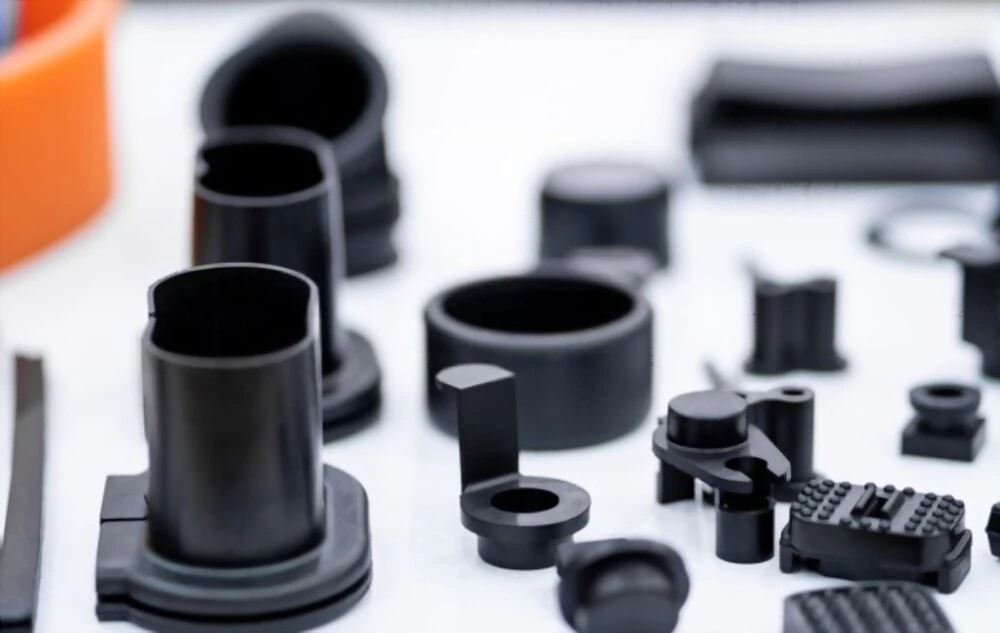
Custom Black Rubber
As medical device manufacturers continue to build innovative solutions that treat a growing number of illnesses and conditions, they must also adapt to changing supply chain challenges. This is especially true as global markets become more regulated and stringent.
To meet these requirements, manufacturers need to streamline testing and certification. This can be accomplished by incorporating a comprehensive strategy that examines emerging safety considerations and applicable standards.
By engaging materials science providers early in the product development cycle, device engineers have more control over materials selection and can select critical-to-function components that deliver superior results in trials, on the manufacturing floor and in the field. In addition, this approach can help overcome supply chain uncertainty and uncover critical-to-function materials that improve product reliability.
One such material is custom black rubber, which has many characteristics that medical device makers like. It offers electrical insulation, good cold temperature flexibility (from -50 degC/ -58 degF), high temperature tolerance, chemical resistance, strong compression characteristics and a clean surface finish.
This FDA-approved rubber is ideal for seals, gaskets and custom-designed components in a wide range of demanding applications. Its resistance to polar fluids, polar solvents, alkaline-based cleaners and steam/hot water makes it the perfect choice for protecting critical equipment and sensitive environments.
It has outstanding abrasion resistance and can withstand temperatures up to 320 degF/160 degC, with special grades up to 392 degF/200 degC. It’s compatible in most sterilization environments and offers low, long-term compression set and long life in polar solvents, steam and hot water.
With a host of properties and capabilities, FDA-approved rubber is a highly flexible and versatile material that’s easy to mold and form into complex shapes. It has the benefits of durability, biocompatibility, heat and chemical resistance, and is available in a variety of colors to meet specific design requirements.
In addition, FDA-approved rubber is very clean and free of impurities and contaminants. It does not emit odors or taste, which is especially important in healthcare and food processing. It also meets European Union (EU) standards and is RoHS compliant.
Polyurethane (PU)
Polyurethane (PU) is a highly versatile material that has a multitude of uses. It is commonly used in a variety of products and industries, including automotive, aerospace, sports equipment, furniture and more. It is also incredibly affordable to produce, which makes it an ideal choice for many different companies.
PU is used to make a variety of different types of custom molded rubber products, which are often referred to as “urethanes.” Urethanes have many unique benefits that make them an excellent choice for several different applications. Among them are the following:
Abrasion Resistance: Like rubber, urethanes have exceptional abrasion resistance. This means that they are great for items that will be subjected to abrasions, such as sprockets and rollers.
This is a good thing because abrasions can cause damage to components and other items. Having a polyurethane that can be molded into these different items is a great way to keep them in good condition, so they will not need to be replaced as often.
In addition, urethanes can be made in a wide range of colors to match other parts or items. This is another reason why they are so popular.
These materials can be molded into a number of different shapes, which is a big advantage for manufacturers who need to have products that are as diverse as possible. This is especially useful in the medical industry, where there are a lot of unique shapes that need to be made.
Abrasion and tear resistance are some of the most important benefits that polyurethane can offer, so they should be considered when choosing a PU product. This is why it is essential to work with a manufacturer that can provide you with a quality product that will last for a long time.
One of the most common things that a manufacturer can do to ensure that their products are as durable as possible is to add anti-microbial agents to them. This will prevent bacteria from growing on the surface of the item and will ensure that they are safe to use in a variety of different environments.
Polyethylene (PE)
Whether used for medical applications, industrial products, or consumer goods, rubber compounds play an essential role in the daily lives of millions of people. This includes everything from syringes to insulin pumps to surgical power tools, and seals play a crucial role in a number of these products as well.
Medical devices are highly regulated, which means that their components need to be made from materials that meet strict standards. These requirements can vary, but commonly include material durability and longevity, impact strength, high-temperature resistance, stiffness, biocompatibility, and sterility.
Plastics that meet these needs are not easy to find, and many require testing in order to determine their suitability for the application. Additionally, medical device manufacturers need to ensure that the components they use are safe for patient use and can be sterilized properly in order to avoid any potential risks to patients or staff.
There are a few ways that custom molded rubber can be manufactured, including compression molding, injection molding, and extrusion. Each technique has its own unique advantages, but they all have one thing in common - they can produce rubber products that are of the exact size and shape necessary for the end product.
Compression molding is a process where rubber is poured into an open mold and then heated to the desired temperature. The heat is applied until the rubber has bonded to the mold and is able to fill all of the cavities within it. Depending on the type of rubber that is used and the product being created, there may be a certain cycle time that needs to be adhered to in order for the product to be fully cured.
Injection molding is a process that involves placing rubber into a closed mold and heating it until it flows and fills all of the cavities within it. The mold is then closed and the rubber is cured under pressure until it is ready for use.
There are a variety of applications for custom molded rubber products, but the most important one is likely to be medical devices. This is because these components are extremely specialized and require a high degree of quality and accuracy in order to function correctly. In addition, these products must be able to withstand the harsh environment of hospitals and clinics in order to be safe for patients.










Sign in to leave a comment.