
[caption class="snax-figure" align="aligncenter" width="662"][/caption]
Features
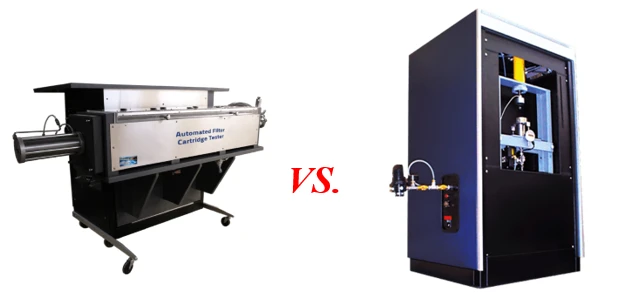
The Filter Cartridge Analyzer controls measures, collects, and generates data based on Windows-based software, which the operator can manually control. This means that if you take control of the device, you can make it work in defined test conditions and gather appropriate results.
Moreover, you can also see the entire test status during the operation, which will give you a better idea of the end result. The length of the test is about 10 minutes for each individual sample, which, according to industry standards, is fast.
The machine also accepts a variety of different geometric samples for filling the filter cartridge. There’s also a transparent sample room for you to visually judge the test process as it happens.
The Complete Filter Cartridge Analyzer requires minimal maintenance, which suits best the cost efficiency aspect of the device.
On the flip side
The unique feature of the Cyclic Compression Porometer is the compression stress test. Only with this porometer can you measure the compression values of the various samples.
The other tests conducted by this device are non-destructive and will always leave the tested samples intact. Speaking of tests, this porometer can also calculate bubble point, mean flow pore diameters, permeability, and pore distribution.
What’s more, is that this kind of porometer can adjust even the largest of samples with ease. The process of testing is fully automated, so you don’t need any operational contact with the machine during its operation.
Application
The Filer Cartridge Analyzer will automatically analyze the sample geometries on the basis of perforation. This machine is actually ideal for research and development as well as quality control in industries such as:
- Pollution control
- Sintered metal
- Filter cartridges
- Automobile manufacturing
- Pharmaceutical
- Biotechnical
What’s more, is that this device measures foaming points, pore size distributions, average pore sizes, Frazier permeabilities, and the filter integrity of the chamber.
Whereas
The Cyclic Compression Porometer is designed for the characterization of pore structures of compressed materials. Industries worldwide prefer using the compression porometer due to the high-volume sample testing that it brings with it.
The high-volume tests include filtration media, paper, and battery separators, membranes, etc.; this instrument permits you to run simulated tests. Meaning, you can tremendously save costs as you don’t have to worry about what’s happening outside of the sample chamber.
What this means is the samples will stay in the shape you simulated, ignoring everything outside, such as ever-changing weather.
Conclusion,
It’s become clear that these devices are chief contributors to research, development, and quality control in industries. Both the devices mentioned above have their unique strengths and weaknesses, but which one is better than the other?
You be the judge of that.










Sign in to leave a comment.