

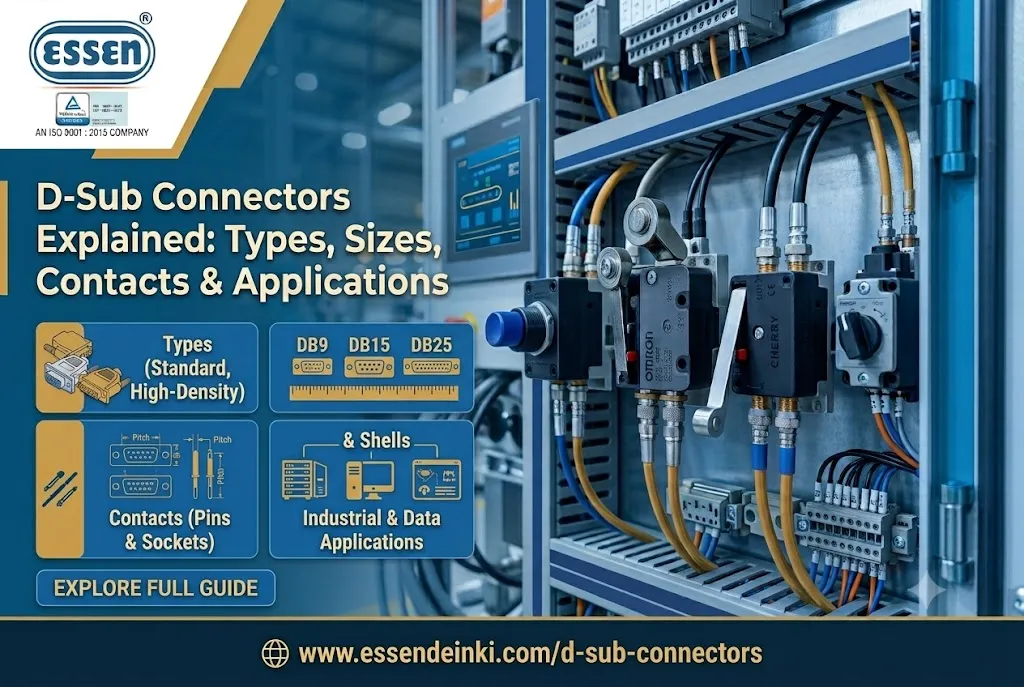
When reliable electrical connections are important, choosing the right connector can make a significant difference to the performance of industrial equipment and electronic systems. D-Sub Connectors are widely used for connecting cables, control equipment, computers, instrumentation and other electrical devices. Their familiar D-shaped design provides a secure connection while helping prevent incorrect orientation during installation.
But D-Sub connectors are available in different sizes, contact configurations and mounting styles. Understanding these differences can help you select the right connector for your application.
What Are D-Sub Connectors?
D-Sub, short for D-subminiature, is a family of electrical connectors recognized by their characteristic D-shaped metal shell. The shape provides mechanical stability and helps ensure that the connector is correctly aligned before mating.
Depending on the design, D-Sub Connectors can be used for signal transmission, control circuits, data connections and other electrical applications. They are available with different numbers of contacts, allowing users to select a configuration according to the requirements of their equipment.
ESSEN Deinki offers a range of D-Sub connectors through its M Series, 863 Series, IDL Series and C Series, providing different configurations for industrial and electronic applications.
Understanding D-Sub Connector Sizes
One of the easiest ways to distinguish D-Sub connectors is by their contact count. Common configurations include 9, 15, 25, 37 and 50 contacts.
A connector with fewer contacts may be suitable when only a limited number of signals need to be transferred. Applications requiring more individual connections can use higher-contact configurations.
However, contact count is not the only consideration. The physical dimensions, mounting arrangement, cable requirements and available installation space should also be checked before selecting a connector.
Contact Configuration Matters
The contact arrangement determines how the connector interfaces with the electrical circuit. Depending on the application, you may need a specific male or female configuration and a particular number of contacts.
Contact specifications such as current rating, contact resistance and insulation characteristics can also influence connector selection. For industrial equipment, it is important to compare the manufacturer's specifications with the electrical requirements of the system.
ESSEN Deinki's D-Sub range includes different contact configurations and construction options, making it possible to select a connector according to the connection requirements of a particular application.
Different Types of D-Sub Connectors
D-Sub Connectors can differ in more than just their contact count. Their construction and mounting style can also vary.
Some connectors are designed for panel mounting, while others are suitable for cable or PCB-related applications. Depending on the product series, features such as metal shells, locking arrangements and different termination options may be available.
For example, the ESSEN Deinki M Series and C Series provide different D-Sub configurations for industrial connection requirements, while the 863 Series and IDL Series offer additional options for specific installation needs.
Selecting the correct construction is important because the connector should fit securely and provide the required mechanical and electrical performance.
Applications of D-Sub Connectors
Because of their versatile design, D-Sub Connectors can be found across many electrical and industrial environments. Typical applications include industrial control systems, automation equipment, instrumentation, communication equipment, computers and electronic devices.
They can be particularly useful where multiple signal or control connections need to be grouped into a single compact connector. Their established design also makes them a practical option for equipment where dependable, serviceable connections are required.
How to Choose the Right D-Sub Connector
Before choosing a D-Sub connector, consider several factors:
- Number of contacts: Select a configuration that accommodates the required connections.
- Mounting method: Check whether the connector needs panel, cable or PCB mounting.
- Electrical specifications: Compare voltage, current and contact characteristics with the application.
- Available space: Make sure the connector and backshell can fit comfortably in the installation.
- Environmental conditions: Consider vibration, dust, moisture and temperature where applicable.
- Mechanical requirements: Check the locking and mounting arrangement to ensure a secure connection.
Final Thoughts
Understanding the different D-Sub Connectors available makes it easier to select a suitable option for industrial and electronic applications. Contact count, connector type, mounting method, electrical characteristics and environmental conditions should all be considered before making a final choice.
ESSEN Deinki provides multiple D-Sub connector series designed for different connection requirements. By comparing the available specifications with the needs of your equipment, you can choose a connector that provides a practical and reliable connection for your application.
Explore the ESSEN Deinki D-Sub Connectors range to learn more about the available connector configurations.





















Sign in to leave a comment.