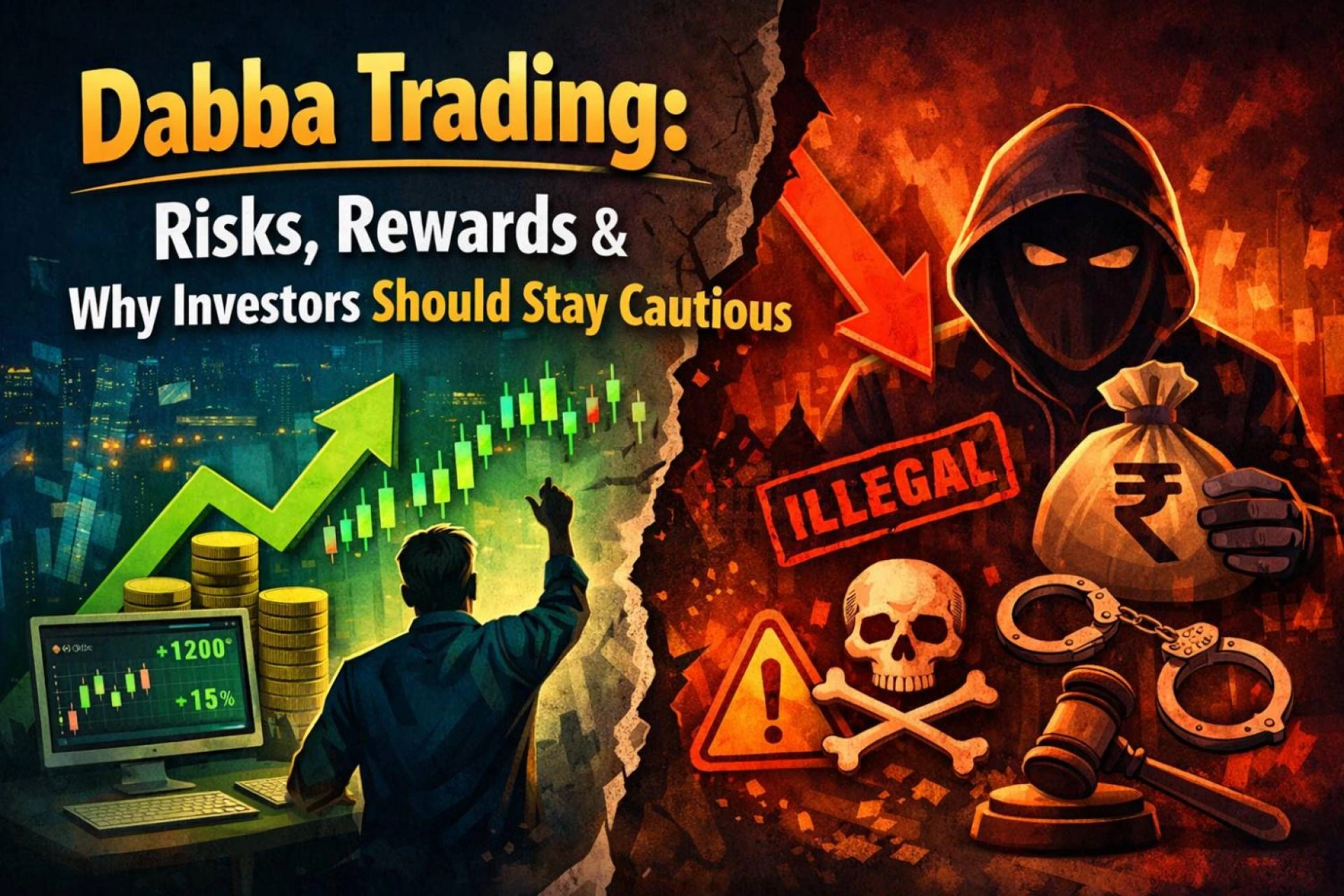

Dabba trading has gained attention in recent years as an alternative way to participate in the stock market. While it may appear attractive due to high returns and fewer regulations, it comes with serious risks that every investor must understand before getting involved.
What is Dabba Trading?
Dabba trading is an illegal form of stock market trading that takes place outside recognized exchanges like NSE and BSE. Instead of actual buying and selling of shares, traders simply bet on price movements, and profits or losses are settled in cash.
Since these trades are not recorded on official exchanges, they operate completely outside regulatory oversight.
How Dabba Trading Works
In dabba trading, a broker or operator manages trades privately. Investors place bets on stock price movements, and the broker settles the difference without executing real trades in the market.
This system often attracts traders due to:
- High leverage opportunities
- No strict documentation or KYC
- Quick account setup
- Low transaction costs
However, these benefits come at a significant cost.
Rewards of Dabba Trading
Despite being illegal, dabba trading continues to attract users because of perceived advantages:
1. High Profit Potential
Traders can earn quick profits due to high leverage and speculative nature.
2. Minimal Regulations
There are no strict compliance requirements, making entry easy for beginners.
3. Lower Costs
Since trades are off-market, brokerage and taxes are often avoided.
4. Faster Transactions
Settlements are usually quick and done directly with the broker.
Major Risks of Dabba Trading
While the rewards may seem appealing, the risks are far more serious and often outweigh the benefits.
1. Illegal Activity
Dabba trading is prohibited in India and violates multiple laws, including the SEBI Act.
2. No Investor Protection
Since trades are not recorded on official exchanges, investors have no legal support or grievance redressal system.
3. High Risk of Fraud
Operators can manipulate trades, refuse withdrawals, or disappear with funds.
4. Financial Losses
Without transparency or regulation, investors can lose their entire capital.
5. Legal Consequences
Participants may face penalties, fines, or even imprisonment for engaging in illegal trading activities.
Real-World Concerns
Regulatory authorities like SEBI have repeatedly warned investors to avoid dabba trading platforms. These platforms operate without oversight and expose traders to fraud, scams, and financial loss.
Recent cases have also shown large-scale frauds and crackdowns on illegal trading networks, highlighting the seriousness of the issue
Should You Invest in Dabba Trading?
The simple answer is No.
Although dabba trading may promise quick profits, the risks involved—including fraud, lack of legal protection, and legal consequences—make it extremely unsafe.
Instead, investors should always trade through:
- SEBI-registered brokers
- Recognized stock exchanges
- Transparent and regulated platforms
Conclusion
Dabba trading might look like a shortcut to quick money, but it is filled with hidden dangers. The lack of regulation, high chances of fraud, and legal risks make it a poor choice for any serious investor.
For long-term success and financial security, always choose legal and regulated trading platforms. Safe investing is smart investing.










Sign in to leave a comment.