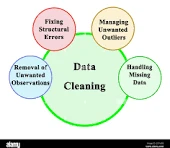

Data Cleansing: Ensuring Accuracy and Quality in Data
Introduction
In today's data-driven world, the quality of data plays a pivotal role in driving business decisions, improving customer experience, and enhancing operational efficiency. However, raw data is often riddled with errors, inconsistencies, duplicates, and missing values. This is where data cleansing (also known as data cleaning or data scrubbing) comes in.
Data cleansing is the process of detecting and correcting (or removing) corrupt or inaccurate records from a dataset. It ensures that the data used for analysis, reporting, or machine learning is accurate, consistent, and reliable.
https://data-finder.co.uk/service/data-cleansing/
Why Data Cleansing Is Important
- Improves Decision-Making: Clean data leads to better insights, helping businesses make informed and accurate decisions.
- Enhances Efficiency: Reduces errors and rework caused by bad data, saving time and resources.
- Boosts Customer Trust: Accurate data ensures better personalization and communication with customers.
- Compliance and Risk Reduction: Ensures adherence to data regulations such as GDPR, HIPAA, or CCPA by maintaining data integrity.
Common Data Quality Issues
- Missing values: Data fields are left blank or unrecorded.
- Duplicates: Redundant records that skew analysis.
- Inconsistencies: Different formats or spellings for the same information (e.g., "NY" vs. "New York").
- Incorrect data: Typos, wrong entries, or outdated information.
- Outliers and noise: Data points that deviate significantly from the rest and can distort results.
Steps in the Data Cleansing Process
- Data Profiling
- Understand the data structure and identify anomalies.
- Generate summary statistics to detect outliers and missing data.
- Identify Issues
- Detect duplicates, null values, and inconsistencies.
- Use validation rules to check for incorrect formats or invalid entries.
- Clean the Data
- Remove duplicates: Use algorithms or manual review.
- Fill in missing values: Using statistical imputation or default values.
- Standardize formats: Consistent naming conventions, date formats, etc.
- Correct errors: Use cross-referencing or automated tools to fix mistakes.
- Validate Data
- Ensure the cleaned data meets quality standards and business rules.
- Perform consistency checks across different data sources.
- Document and Monitor
- Keep a log of the changes made.
- Set up automated tools to continuously monitor data quality.
Tools for Data Cleansing
Several tools and platforms offer data cleansing features, including:
- Excel/Google Sheets: Useful for small-scale manual data cleaning.
- OpenRefine: Open-source tool for data wrangling and cleaning.
- Trifacta Wrangler: Intuitive interface for data transformation.
- Talend Data Quality: Enterprise-grade solution with profiling, cleaning, and monitoring.
- Python/R: Programming languages with libraries like pandas, numpy, and dplyr for automated cleaning.
Challenges in Data Cleansing
- Volume and Variety: Cleaning large, diverse datasets is time-consuming.
- Subjectivity: Deciding what counts as an "error" can vary by context.
- Resource Intensive: Requires time, tools, and skilled professionals.
- Continuous Process: Data cleansing is not a one-time task; it requires ongoing attention.
Conclusion
Data cleansing is a foundational step in data management and analytics. Clean, accurate, and reliable data fuels better insights, boosts efficiency, and builds trust across stakeholders. As the volume of data continues to grow, investing in effective data cleansing processes and tools is essential for any organization aiming to stay competitive and data-driven.
Let me know if you'd like a downloadable PDF version, or if you want this tailored to a specific industry or use case (e.g., healthcare, e-commerce, etc.).























Sign in to leave a comment.