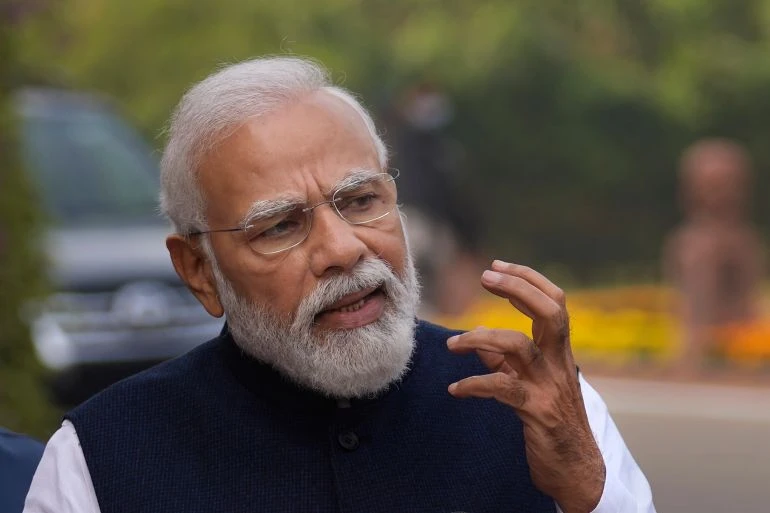

The political landscape in India is abuzz with anticipation as the parliament prepares to engage in a pivotal debate on a no-confidence motion lodged by opposition parties against the government led by Prime Minister Narendra Modi. At the center of this parliamentary showdown is Congress party leader Rahul Gandhi, who, fresh from his reinstatement as a lawmaker, will champion the opposition's cause during the debate. While the government is assured of prevailing in the subsequent vote, the debate holds significance as it compels Prime Minister Modi to address the simmering ethnic clashes in Manipur state. Amidst the turmoil and the prospect of heated deliberations, this episode is emblematic of the complex interplay between democratic discourse, governance, and social challenges in modern-day India.
A High-Stakes Parliamentary Theater
As the Indian parliament prepares to convene, the stage is set for a high-stakes display of democratic process. The no-confidence motion, introduced by the opposition, symbolizes their dissatisfaction with the performance of Prime Minister Narendra Modi's government. While the outcome of the vote may be predictable, the ensuing debate offers an opportunity for opposition leaders, led by Rahul Gandhi, to articulate their concerns and hold the ruling party accountable.
Rahul Gandhi's Return: A Rallying Point for the Opposition
The return of Rahul Gandhi to the political forefront following his reinstatement as a lawmaker has infused renewed energy into the opposition's ranks. With the baton of leadership firmly in his grasp, Gandhi is poised to lead the charge in the upcoming parliamentary debate. His prominent role underscores the significance of the debate as a platform to not only challenge the government's policies but also to rally the opposition forces under a unified banner.
Read More:https://businessoutrank.com/
A Confluence of Concerns: Ethnic Clashes in Manipur
While the government's majority ensures the no-confidence motion's ultimate failure, the debate is far from inconsequential. Opposition leaders are strategically leveraging this parliamentary forum to compel Prime Minister Modi to address the pressing issue of ethnic clashes in Manipur state. The violence between the Meitei group and the tribal Kuki minority has claimed numerous lives and displaced tens of thousands, casting a shadow over the region's stability and peace.
Demanding Accountability: Opposition's Quest for Answers
The ongoing parliament session has witnessed a chorus of opposition leaders demanding accountability from the government over the Manipur crisis. Amidst disruptions and protests, key legislation has been expedited with limited debate. The no-confidence motion, however, stands as an assertion of the opposition's prerogative to hold the government accountable and elicit substantive responses on critical matters that impact the nation's social fabric.
Unity Amid Diversity: The INDIA Alliance's Moment
The parliamentary debate on the no-confidence motion serves as a defining moment for the recently formed opposition alliance, aptly named INDIA. Comprising 26 parties united by a common purpose, this coalition seeks to challenge the dominance of Prime Minister Modi's Bharatiya Janata Party (BJP) in the impending general election. The debate provides INDIA with a platform to exhibit its unity and cohesiveness, projecting a formidable force against the ruling party.
The Modi Factor: A Defiant Response Expected
As the no-confidence motion takes center stage, all eyes are on Prime Minister Narendra Modi. Known for his oratory prowess and dynamic leadership, Modi's response to the opposition's arguments carries significant weight. While the government's numerical advantage ensures victory, the quality of Modi's response and his ability to address the concerns raised by the opposition will be closely scrutinized by both supporters and critics alike.
Beyond the Debate: Implications and Prospects
While the no-confidence debate will conclude with a predictable outcome, its reverberations extend beyond the parliamentary floor. The discourse, deliberations, and political maneuvering within this episode will shape public perceptions, political narratives, and the trajectory of the opposition's mobilization efforts. As the nation witnesses this spectacle of democratic engagement, questions of governance, accountability, and the role of opposition within the Indian democratic framework come to the forefront.
Conclusion:
As the Indian parliament braces for the no-confidence motion debate, the essence of democracy pulsates vibrantly. In this arena of ideas, conflicting viewpoints clash and harmonize, reflecting the robustness of India's democratic fabric. While the outcome may be predetermined, the act of parliamentary debate serves as a testament to the power of discourse, accountability, and the pursuit of social justice. Beyond the political theatrics, the debate underscores the enduring spirit of democracy, a cornerstone upon which the nation's governance and progress are built.




























Sign in to leave a comment.