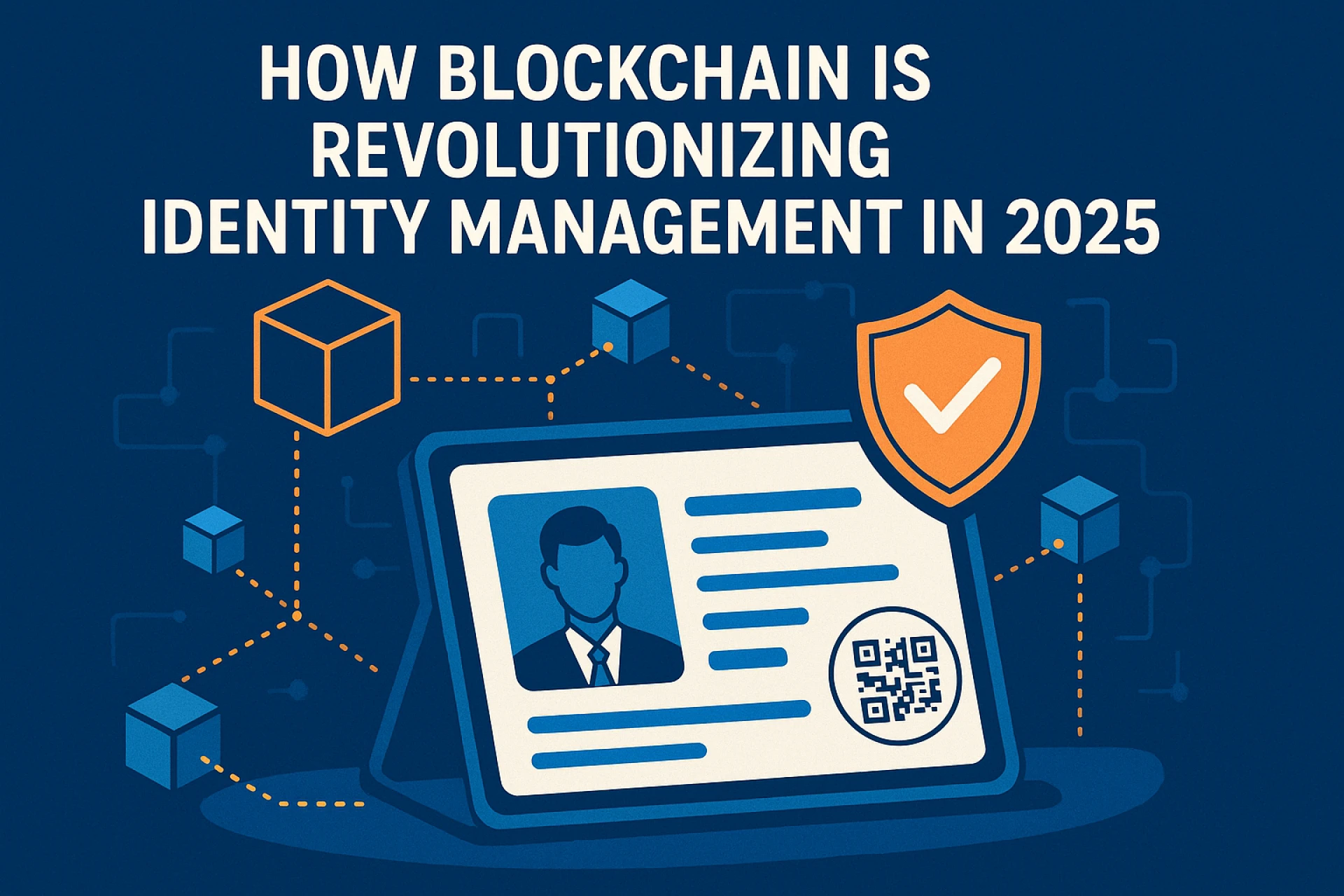

In 2025, digital identity is no longer just a convenience—it’s a critical piece of how individuals interact with governments, businesses, and digital platforms. Traditional identity systems, mostly centralized, have proven vulnerable to breaches, identity theft, and lack of control for users. As data breaches increase, so does the demand for a system that provides secure, user-centric identity management. This is where blockchain has stepped in, offering a decentralized approach to digital identity that’s gaining momentum globally.
Decentralized identity, often referred to as self-sovereign identity (SSI), is a model that allows individuals to control their own identity without relying on a central authority. At its core, blockchain provides the foundation for this shift, offering a tamper-proof, transparent ledger that can record and verify credentials without compromising security or privacy. The transformation is real, and in 2025, blockchain is already reshaping how identity is managed across industries and borders.
The Problem With Centralized Identity Systems
For decades, identity management has relied on centralized databases. Whether it’s a social media platform, a government ID system, or a banking portal, personal data is typically stored on a central server controlled by the service provider. The challenge with this model is twofold: first, it makes a single point of failure highly attractive to hackers; second, it gives organizations excessive control over individual data.
Users often have little insight into how their personal data is stored, shared, or monetized. A single data breach can expose millions of records—names, addresses, passport numbers, and more. In recent years, multiple high-profile incidents have led to growing distrust among users and regulators. Despite implementing stricter compliance protocols, centralized systems continue to show vulnerabilities.
That’s where blockchain changes the equation. It eliminates the need for a central authority by enabling a peer-to-peer method for storing and sharing verified credentials. This model significantly reduces the risk of mass data breaches while giving individuals direct control over their identity.
What Is Decentralized Identity?
Decentralized identity (DID) allows individuals to create and manage their digital identity independently of any institution. Instead of having a centralized profile stored on someone else’s server, users can store verifiable credentials in a digital wallet—similar to a crypto wallet but specifically designed for identity data.
Each identity is anchored on the blockchain with a unique identifier that can be verified by others without revealing the underlying data. For example, a user can prove they are over 18 or that they hold a valid driver’s license without sharing the actual birthdate or license number. This selective disclosure is a key advantage of blockchain-based identity systems.
In practice, this means fewer data leaks, better privacy, and smoother access to services. Whether applying for a loan, signing up for a subscription, or verifying age at a liquor store, decentralized ID can streamline the process without compromising personal information.
How Blockchain Makes It Possible
Blockchain supports decentralized identity through a few key mechanisms:
Immutable Ledger:
Once data is written to the blockchain, it can’t be changed or deleted. This makes it ideal for storing identity claims that need to be verified over time.
Decentralized Public Key Infrastructure (DPKI):
Each identity is tied to a cryptographic key pair—public and private. Blockchain enables a decentralized registry of these public keys, removing the need for centralized certificate authorities.
Verifiable Credentials:
Users can receive credentials from trusted issuers (like banks, schools, or governments) and store them in their digital wallet. These credentials can then be verified against the blockchain by any third party, ensuring authenticity without direct contact with the issuer.
Privacy by Design:
Many blockchain identity solutions use zero-knowledge proofs and other cryptographic techniques to allow users to prove things about their identity without revealing the data itself.
These technical components come together to create a user-controlled identity system that is both secure and scalable. Many blockchain development services now focus on building infrastructure that supports these systems, including wallet applications, issuer platforms, and verification tools.
Real-World Use Cases in 2025
By 2025, several industries are already deploying blockchain-based identity systems. Financial institutions, healthcare providers, educational institutions, and governments are all leveraging decentralized identity models to enhance service delivery and security.
In finance, customer onboarding—once a paperwork-heavy, time-consuming process—has become faster and safer. With verifiable credentials stored in a digital wallet, Know Your Customer (KYC) processes can now be completed with a single click, reducing friction and compliance costs.
In healthcare, patients use decentralized identities to carry their medical records securely across providers. This ensures continuity of care while protecting sensitive information from unauthorized access.
In education, academic institutions issue blockchain-based diplomas and certificates, making it easy for employers or other schools to verify credentials instantly without contacting the issuing body.
Even governments are joining in. Digital national IDs based on blockchain have begun to roll out in several countries, allowing residents to access public services, vote digitally, and pay taxes through a secure identity platform.
The push from governments and enterprises has also created a growing demand for the best blockchain development company to design and implement these decentralized systems. These companies specialize in integrating blockchain with existing IT infrastructure and ensuring regulatory compliance in identity systems.
User Experience and Accessibility
A major factor in the success of decentralized identity systems in 2025 is the improvement in user interfaces and accessibility. Early blockchain applications were often complex and difficult for average users to adopt. But now, with intuitive mobile wallets and simplified onboarding processes, users can easily manage their credentials, grant access, or revoke permissions with a few taps.
Interoperability has also seen progress. Thanks to evolving standards, identities issued on one platform can be recognized and verified across others. This means users no longer need to maintain multiple logins or duplicate identity checks for different services. A universal identity, under the user’s control, is finally becoming a reality.
Regulatory and Compliance Considerations
Regulators around the world are paying attention to blockchain-based identity systems. While the decentralized nature offers privacy benefits, it also raises questions around data protection, legal accountability, and jurisdiction.
In many regions, decentralized ID is being viewed as a positive step toward compliance with data protection laws. Because users hold and control their data, consent becomes explicit, traceable, and easy to manage. Furthermore, the system aligns well with principles of data minimization and user consent outlined in most privacy frameworks.
Still, developers and organizations must ensure that identity solutions meet legal requirements. Working with a blockchain development company that understands both the technical and regulatory environment is critical. From smart contract auditing to integrating with legal identity frameworks, the expertise of such firms is shaping the future of digital ID.
Challenges and Limitations
While the benefits are clear, decentralized identity is not without challenges. First, widespread adoption depends on collaboration between stakeholders—governments, tech providers, businesses, and users. Without a shared commitment to interoperability and open standards, the ecosystem risks becoming fragmented.
Second, blockchain itself is not a silver bullet. Storing sensitive identity data directly on-chain is generally discouraged due to privacy risks. Solutions must balance on-chain immutability with off-chain confidentiality.
Third, user education is still a major hurdle. Most people are unfamiliar with concepts like private keys, digital wallets, or verifiable credentials. Simplifying the user journey and reducing friction are ongoing efforts within the community.
Despite these challenges, progress continues. Many blockchain development services now focus not just on technical deployment but on building human-centered design and educating both businesses and users about the value of decentralized ID.
What to Expect Moving Forward
As 2025 progresses, we can expect continued momentum behind decentralized identity. More industries will embrace blockchain-based identity systems, and user adoption will accelerate as digital interactions become more trusted and seamless.
Investment in blockchain infrastructure is growing. Governments are funding pilot projects, enterprises are integrating decentralized ID into customer workflows, and startups are launching wallet apps and platforms to support digital identity.
Moreover, identity will increasingly become portable and programmable. Smart contracts will automate identity-related processes like access control, document signing, and eligibility verification.
Organizations looking to lead in this space are turning to the best blockchain development company partners to ensure they stay ahead of the curve. Whether it’s building custom identity solutions or integrating with existing decentralized identity networks, the demand for skilled blockchain developers continues to grow.
Conclusion
Decentralized identity powered by blockchain is no longer an experimental concept—it’s a practical solution being deployed across the globe in 2025. It addresses the critical flaws of centralized identity systems by putting control back in the hands of users, enhancing privacy, and improving security.
Blockchain offers a robust foundation for this transformation, with immutable records, decentralized key management, and verifiable credentials that can be used across platforms. The result is a more trustworthy, flexible, and efficient way to manage identity in an increasingly digital world.
As industries adapt to this shift, the role of blockchain development services becomes even more essential. From designing user-friendly wallets to implementing back-end verification logic, these services are laying the groundwork for the identity systems of tomorrow.
For businesses, governments, and individuals alike, decentralized identity represents not just a technical upgrade—but a fundamental rethinking of how we define and protect who we are in the digital age.





























Sign in to leave a comment.