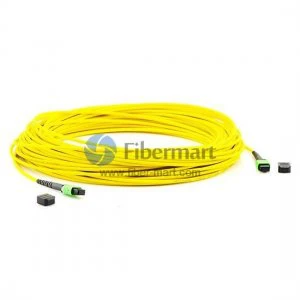

In the world of fiber optics, where data races through strands of glass at the speed of light, the efficiency and reliability of communication systems hinge on an intricate understanding of fiber loss. Fiber loss, often referred to as signal attenuation, occurs as light traverses the length of an optical fiber, and various factors contribute to this inevitable reduction in signal strength.
Read on as specialists at Fibermart share insights into calculating and, more importantly, optimizing fiber loss is paramount for navigating the complexities of fiber optic communication systems.
Understanding Fiber Loss
Fiber loss, often expressed in decibels (dB), refers to the reduction in optical power as light travels through a fiber optic cable. This phenomenon occurs due to various factors, including scattering, absorption, and bending of light within the fiber. The goal of calculating fiber loss is to assess the signal's strength at different points in the optical network and ensure it remains within acceptable limits for proper data transmission.
Fundamental Factors That Contribute To Signal Attenuation In Optical Fibers
Absorption
Optical fibers are not perfectly transparent; they exhibit some degree of absorption, especially at specific wavelengths. This absorption, influenced by impurities in the glass, contributes to the overall loss in signal strength.
Scattering
Light traveling through an optical fiber can scatter due to irregularities and imperfections in the glass. Scattering results in the divergence of light energy, leading to signal attenuation.
Bend Loss
Optical fibers have a minimum bend radius below which light experiences increased loss. Bending the fiber beyond this threshold can cause significant signal attenuation, making bend loss a crucial consideration in fiber optic installations.
Modal Dispersion
In multimode fibers, where multiple modes of light can propagate, modal dispersion occurs due to variations in the arrival times of different modes at the fiber's output. This dispersion leads to signal distortion and contributes to overall fiber loss.
Connector and Splice Loss
Each connection or splice in an optical network introduces additional loss. These losses can stem from imperfect mating of connectors, misalignment, or imperfections in the splicing process.
Chromatic Dispersion
Chromatic dispersion occurs because different wavelengths of light travel at slightly different speeds through the fiber, causing light pulses to spread over distance. This dispersion can lead to signal distortion and loss.
Calculating Fiber Loss
Accurately calculating fiber loss involves considering each contributing factor and understanding their cumulative impact on signal strength. The total fiber loss is typically expressed in decibels (dB), a logarithmic unit that quantifies the relative difference in signal power.
Absorption Loss
The absorption loss can be determined based on the specific characteristics of the fiber and the wavelength of light used. Manufacturers provide absorption coefficients for different types of optical fibers at various wavelengths.
Scattering Loss
Scattering loss is challenging to quantify directly and often relies on empirical data or measurements. Manufacturers may provide scattering coefficients for their fibers, but accurately calculating scattering loss often involves specialized equipment.
Connector and Splice Loss
Connector and splice losses are typically provided by manufacturers and can be directly incorporated into the overall loss budget for the system.
Optimizing Fiber Optic Communication Systems
With a comprehensive understanding of fiber loss, optimizing fiber optic communication systems becomes a strategic endeavor. Here are key strategies to enhance system performance:
Minimize Bend Loss
Adhering to recommended bend radii and utilizing bend-insensitive fibers can mitigate bend loss. Proper cable management and installation practices play a crucial role in minimizing these losses.
Single-Mode vs. Multimode Fibers
Consider the specific requirements of the communication system. Single-mode fibers, with lower modal dispersion, are suitable for long-distance transmissions, while multimode fibers may be preferred for shorter distances and higher bandwidth applications.
Optimize Connectors and Splices
Employ high-quality connectors and splicing techniques to minimize losses at connection points. Regular inspection and maintenance are essential to ensure optimal performance.
Compensate for Chromatic Dispersion
In systems where chromatic dispersion is a concern, compensating devices such as dispersion-shifted fibers or dispersion-compensating modules can be employed.
Effective Cable Management
Minimizing cable bends and maintaining proper bend radii through effective cable management can prevent additional loss due to bending. Careful planning and routing of cables contribute to the overall health of the optical network.
Invest in Testing and Monitoring
Regular testing and monitoring of fiber optic networks are essential for identifying potential issues, such as connector contamination or fiber degradation, before they impact system performance. Advanced tools, such as optical time-domain reflectometers (OTDRs), can aid in pinpointing the location of losses.
Continuous Training and Education
Keep professionals abreast of the latest developments in fiber optic technologies through continuous training and education. Staying informed about emerging solutions and best practices ensures that optimization efforts align with industry advancements.
Use of Low-Loss Connectors and Splices
Employing connectors and splices with low absorption and scattering coefficients can significantly reduce inherent losses. Manufacturers often provide specifications detailing these characteristics for different fiber types. Investing in high-quality components, even if they come at a slightly higher cost, can yield long-term benefits in terms of network reliability.
If you’re looking for options to elevate your network’s performance, Fibermart offers a range of cutting-edge fiber optic solutions. From advanced cables to precision connectors and state-of-the-art termination solutions, the company redefines connectivity standards.
Reach out to order high-performance products designed for modern communication networks and unlock seamless connectivity, reduce signal loss, and optimize your fiber optic systems.
Explore Fibermart now!
About the Author
James P is an avid tech enthusiast who is passionate about unraveling the complexities of cutting-edge technologies. With a background in telecommunications and a keen interest in fiber optics, they bring a unique blend of technical expertise and storytelling flair to the world of connectivity.








Sign in to leave a comment.