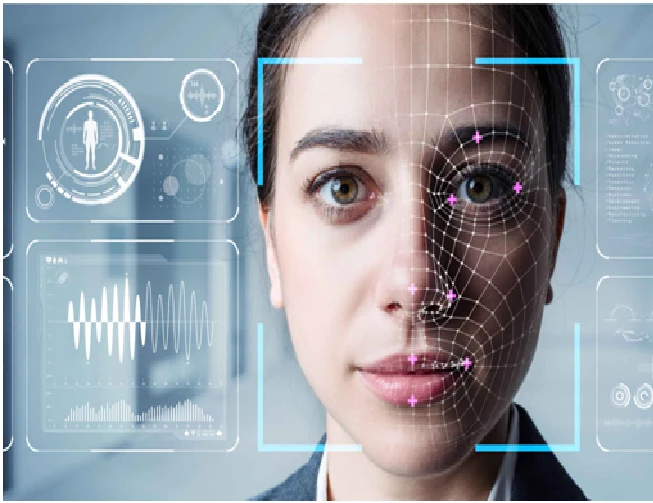

What is Deepfake Technology?
Deepfake Technology, often known as "deepfakes," refers to the manipulation of pictures or videos using technologies enabled by artificial intelligence. These technologies allow the resemblance of one person to be spliced onto another person's face. It can modify images or videos of a person to give the impression that they are doing or saying something that never really occurred. The word "deep learning," which is a component of AI, is where the prefix "deep" in the name derives from. These deep-fake systems can replicate your likeness and generate visualizations of you, fake ones, by learning about your face and facial expressions and doing so with as little as one minute of dialogue. They do this by learning about your face and facial emotions.
Since 2017, the technology that underpins this software has seen fast expansion, resulting in programs that are far more intuitive to use, of higher quality, and significantly lower cost than when they were first introduced. Now, individuals from all over the globe can utilize this new technology; in some cases, people will use it freely via programs built by third parties designed to capture and keep your information.
DeepfakeCreation Process
Facial recognition is the fundamental idea that underpins this technology. Users of Snapchat are likely already aware of the "face swap" and "filters" functionalities, which allow you to make modifications to your appearance or enhance your facial characteristics. Deepfakes are somewhat similar, yet they are far more lifelike. Using a machine learning method known as a "generative adversarial network," it is possible to generate fake videos. For instance, a GAN may analyze hundreds of pictures of Beyoncé and develop a new image similar to those pictures but not an exact replica of any of the pictures.
GAN is a versatile technology that may be used to create new audio from existing audio or new text from existing text. It can also be used to produce new audio from existing text. The technology used to construct deepfakes is trained to map faces according to certain places known as "landmarks." The corners of your eyes and lips, the shape of your nostrils, and the curve of your jawline are examples of these facial characteristics.
DeepfakeDetection Process
Deepfake detection technologies are similarly based on artificial intelligence and use algorithms that are conceptually comparable to those used in developing deepfakes themselves. They can recognize indications that would not be there in actual photographs or videos. In the beginning, a good indicator of a deepfake was a blink of the eyes that did not seem natural or the lack of eyes altogether. But over time, algorithms have evolved to imitate eye blinking. Among the signs are:
Skin tone variations or colors that don't exist in real lifeJerky motionsLack of synchrony between the movement of the lips and the speechProblems with the lighting result in faces or figures of the person being less distinct than the backdropExtra pixels inserted into the frameUses of Deepfake
The use of the deepfake technology is not always done with malevolent intent, and the stakeholders interested in using it for study should be engaged in formulating policies for its usage. The medical and entertainment sectors have vested interests in using and disseminating this technology. In medicine, this technology is used for research purposes, such as the generation of realistic MRI pictures for training. Additionally, it may assist patients in regaining control of their voices in certain instances.
Disney was one of the first companies to use this technology and one of the first to use it to recreate original Star Wars characters compellingly. Given Disney's preferences in using this form of sampling, the company fought very hard against legislation in New York State that tried to ban the technology completely. As some companies have already started investigating, another use for deepfakes in the business world is the production of training films in different languages.









Sign in to leave a comment.