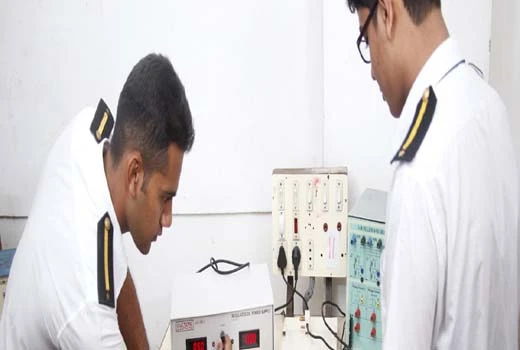

The vast maritime industry, the lifeblood of global trade, relies not only on skilled navigators and experienced captains but also on a team of dedicated professionals working behind the scenes. Among these crucial roles is the Electro Technical Officer (ETO), often referred to as the ship\'s electrician. This blog sheds light on the enigmatic world of ETOs, unveiling their responsibilities, the qualifications required, and the exciting career path this role offers.
Beyond the Bridge: Unveiling the ETO\'s Domain
While captains steer the ship and navigate the course, ETOs are the silent guardians of a vessel\'s electrical heartbeat. Their domain encompasses a wide range of duties, ensuring the smooth operation and safety of all electrical and electronic systems onboard:
- Maintaining Navigation and Communication Equipment: From radars and GPS systems to communication equipment like radios and satellite systems, ETOs ensure these vital tools function flawlessly, guaranteeing safe navigation and seamless communication.
- Power Generation and Distribution: The smooth operation of a ship hinges on its reliable power supply. ETOs are responsible for the maintenance and operation of generators, switchboards, and power distribution systems, ensuring uninterrupted power for all onboard systems.
- Troubleshooting and Repairs: Technical snags are inevitable at sea. ETOs possess the expertise to diagnose electrical faults, conduct repairs, and ensure the swift restoration of essential systems.
- Safety and Regulatory Compliance: Maritime safety regulations are stringent, and ETOs play a vital role in ensuring compliance. They conduct regular safety checks, maintain logs, and adhere to international regulations governing electrical installations on ships.
- Bridge Collaboration: Effective communication and collaboration with the bridge team are paramount. ETOs keep the captain and officers informed about the status of electrical systems and any potential issues that might affect navigation or safety.
In essence, ETOs are the backbone of a vessel\'s electrical infrastructure. Their expertise keeps the ship\'s vital systems functioning flawlessly, ensuring a safe and efficient voyage.
The ETO\'s Skillset: A Blend of Technical Expertise and Soft Skills
Excelling as an ETO requires a unique blend of technical knowledge, practical skills, and personal qualities:
- Technical Knowledge: A strong foundation in electrical engineering principles, electronics, and automation is essential. Understanding electrical systems, power generation, and control mechanisms is crucial for effective troubleshooting and maintenance.
- Practical Skills: The ability to use various electrical tools and instruments for testing, diagnosis, and repair is paramount. Experience with soldering, cable splicing, and electrical panel maintenance is highly valued.
- Problem-Solving Skills: Identifying and resolving electrical faults efficiently is a core responsibility. Strong analytical thinking and problem-solving abilities are essential for navigating technical challenges at sea.
- Teamwork and Communication: Collaboration with the engine room crew, bridge officers, and other departments is crucial. Effective communication skills ensure everyone is informed and works together seamlessly.
- Adaptability and Resilience: Life at sea can be demanding. Adaptability to a changing environment, the ability to work independently, and the resilience to handle pressure are essential for success.
A thirst for knowledge, a commitment to continuous learning, and a dedication to safety are additional qualities that distinguish exceptional ETOs.
The Path to Becoming an ETO: Charting Your Course
The journey to becoming an Electro Technical Officer involves dedication, focused training, and a commitment to professional development. Here\'s a roadmap to guide you:
- Educational Qualifications: Minimum educational qualifications typically require a Diploma in Marine Engineering or a related field, along with a CoC (Certificate of Competency) as an Electro-Technical Officer. Some institutions offer dedicated ETO programs.
- Mandatory Training: Aspiring ETOs must undergo mandatory pre-sea training programs approved by the Directorate General of Shipping (DGS) of India. These programs provide hands-on training and prepare you for the official competency exams.
- On-the-Job Experience: Gaining practical experience at sea is crucial. Start your career as a junior ETO and progress through the ranks with experience and by successfully passing competency exams for higher levels of certification.
- Continuous Learning: The maritime industry is constantly evolving, and staying updated with advancements in technology is essential. ETOs can pursue additional certifications and training programs to enhance their skillset and career prospects.
Remember, dedication, a commitment to safety, and a passion for the maritime industry are key ingredients for a successful and fulfilling career as an ETO.
Conclusion
The role of an ETO offers a distinct sense of accomplishment. Your technical expertise is the invisible hand ensuring the ship runs smoothly. If you possess a passion for electrical engineering, a thirst for knowledge, and the ability to thrive in a demanding environment, a career as an ETO awaits. Set sail today and embark on a rewarding journey as the silent guardian of a vessel\'s electrical heart.







Sign in to leave a comment.