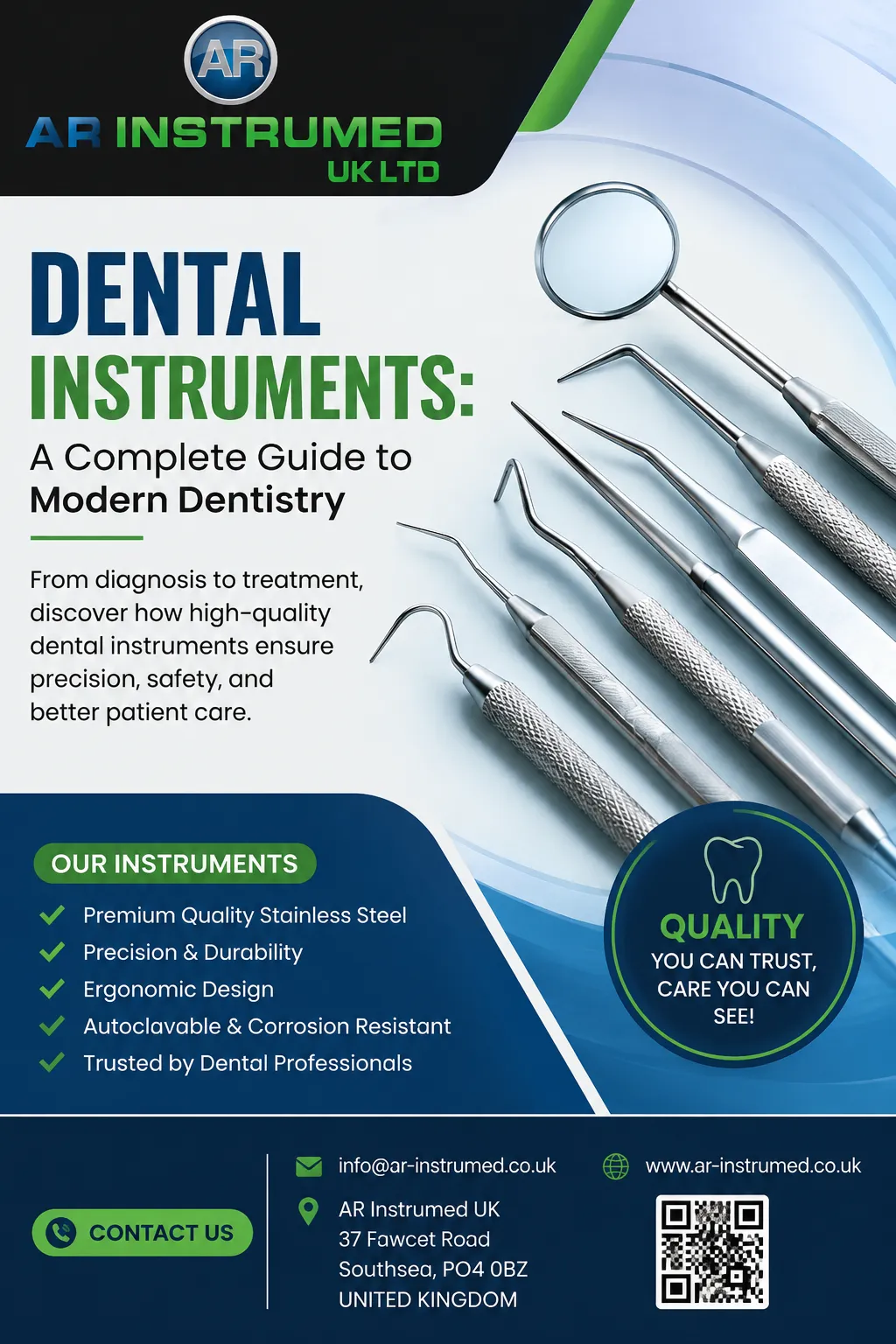

Dental Instruments are specialised tools used by dental professionals to examine, diagnose, treat, and restore oral health. Each instrument is designed to provide precision, safety, control, and comfort throughout different dental procedures. From routine examinations and professional cleanings to complex restorative treatments and oral surgeries, the correct instruments play an essential role in delivering effective patient care.
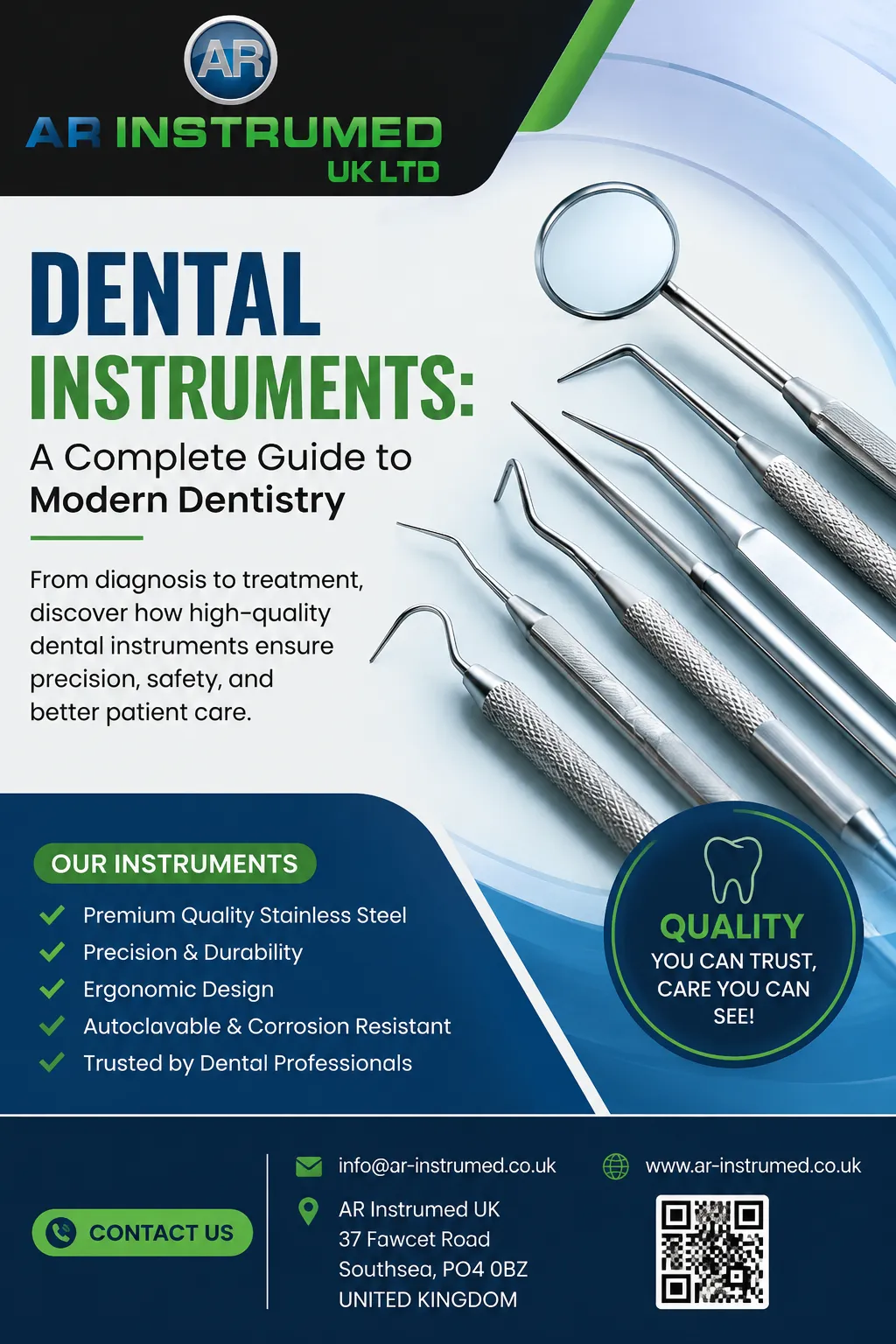
Most Dental Instruments are manufactured from surgical-grade stainless steel or other advanced alloys that offer strength, corrosion resistance, and durability. Because dental instruments are exposed to frequent cleaning and sterilisation, they must be capable of maintaining their quality through repeated use. Each instrument has a specific function, from examining teeth and removing plaque to performing extractions and placing restorative materials. Choosing dependable instruments helps dental professionals work efficiently while maintaining high standards of clinical care.
Types of Dental Instruments
Dental practices use a broad range of Dental Instruments to perform procedures safely and accurately. Diagnostic instruments, including mouth mirrors, explorers, and periodontal probes, help dentists examine teeth, gums, and surrounding oral tissues. Hand instruments such as scalers, curettes, and excavators are commonly used for removing plaque, calculus, and decayed tooth material. Surgical instruments, including forceps, elevators, and retractors, are essential for extractions and other oral surgical procedures.
Restorative dentistry also requires specialised Dental Instruments such as amalgam carriers, condensers, burnishers, and carving instruments. Orthodontic professionals use dedicated tools for placing, adjusting, and removing braces and other orthodontic appliances. Endodontic procedures depend on instruments such as files and reamers for cleaning and shaping root canals. Dental tweezers, impression trays, and mixing spatulas are also widely used for handling materials during routine procedures. Together, these instrument categories support an efficient and organised dental workflow.
Benefits of Using High-Quality Dental Instruments
High-quality Dental Instruments provide greater precision and control during dental procedures. Sharp, well-balanced instruments allow professionals to work more accurately while applying less unnecessary pressure. This can improve patient comfort and help minimise avoidable tissue trauma. Reliable instruments also contribute to consistent treatment outcomes and more efficient clinical procedures.
Durable Dental Instruments provide better long-term value because they are designed to withstand frequent cleaning, sterilisation, and daily clinical use. Ergonomically designed handles can reduce hand fatigue and improve comfort during lengthy procedures. High-quality instruments may also require fewer replacements, helping clinics reduce maintenance and equipment costs over time. Investing in dependable tools can therefore improve both clinical efficiency and the overall professional standard of a dental practice.
How to Choose the Right Dental Instruments
Choosing the right Dental Instruments starts with assessing the materials and manufacturing quality. Surgical-grade stainless steel is widely used because of its strength, corrosion resistance, durability, and compatibility with sterilisation procedures. Dental professionals should also consider instruments that meet recognised quality and safety standards. Purchasing from established and reputable manufacturers can help ensure consistent performance and dependable product quality.
Ergonomics and functionality are equally important for dental practices where instruments are used repeatedly throughout the day. Lightweight designs and comfortable handles can provide a secure grip while reducing strain on the hands and wrists. Instruments should also be compatible with the clinic's standard cleaning and sterilisation processes. Factors such as warranty coverage, manufacturer reputation, customer feedback, and after-sales support can further assist buyers in making informed decisions.
Caring for Dental Instruments
Proper care and maintenance are essential for extending the lifespan and preserving the performance of Dental Instruments. Instruments should be cleaned promptly after each procedure to remove blood, debris, and other contaminants before sterilisation. Approved cleaning solutions and ultrasonic cleaning systems can help remove residue effectively while protecting instrument surfaces. Instruments should also be dried thoroughly after cleaning to reduce the risk of corrosion.
Regular inspection helps dental professionals identify dull, damaged, worn, or malfunctioning instruments before they affect treatment quality. Hinged instruments should be lubricated according to the manufacturer's recommendations to maintain smooth operation. Proper storage in sterilisation trays, cassettes, or other protective systems can help prevent accidental damage and contamination. Following appropriate maintenance procedures supports effective infection control while preserving instrument performance and durability.
Frequently Asked Questions
1. What are Dental Instruments used for?
Dental Instruments are used for examining, diagnosing, cleaning, restoring, and treating a wide range of oral health conditions and dental problems.
2. Which material is best for Dental Instruments?
Surgical-grade stainless steel is one of the most widely preferred materials because it provides durability, corrosion resistance, strength, and good compatibility with sterilisation procedures.
3. Why are high-quality Dental Instruments important?
High-quality instruments provide better precision and control, improve treatment efficiency, support patient comfort, reduce the need for frequent replacements, and contribute to consistent clinical results.
4. How should Dental Instruments be maintained?
Dental Instruments should be cleaned promptly after use, properly sterilised, completely dried, regularly inspected, lubricated when required, and stored in suitable protective trays or cassettes.
5. How do I choose the right Dental Instruments?
Choose instruments made from durable, high-quality materials with ergonomic designs and reliable performance. They should also be compatible with your sterilisation procedures and purchased from reputable manufacturers.
Conclusion
Dental Instruments are fundamental to modern dentistry and support almost every stage of patient care, from routine examinations and preventive treatments to restorative procedures and oral surgery. Using the appropriate instruments helps dental professionals achieve greater precision, improve efficiency, and maintain a safe clinical environment. High-quality instruments can also provide long-term value through their durability, reliable performance, and resistance to repeated sterilisation.
As dental technology continues to develop, professional Dental Instruments are becoming increasingly precise, ergonomic, and durable. Dental practices that prioritise quality equipment, proper maintenance, and careful purchasing decisions are better positioned to provide consistent and comfortable treatment. Selecting the right Dental Instruments is therefore an important investment in clinical efficiency, hygiene, safety, and exceptional patient care.
























Sign in to leave a comment.