

Think of a warm tray of nankhatai cooling on the counter. The smell alone is enough to pull people into the kitchen. Many of us grew up eating biscuits like these, rich, crumbly, and just a little sandy.
That taste comes from one ingredient. Traditional bakers often use ghee, not butter, because it gives a deeper, nuttier aroma and a tender, melt-in-the-mouth bite. It is a quiet secret in many family recipes.
If you have never baked with Desi ghee, it is easier than you think. This guide explains how it differs from butter, how to swap it, which bakes suit it best, and how to avoid the usual mistakes. We will also cover buying and storage, so your jar stays fresh.

How Ghee Differs from Butter in Baking
Butter contains water and milk solids, roughly 15 to 20 percent. Ghee has almost none of either. It is nearly pure fat.
That has two effects on baking:
- Richer flavour. Ghee tastes toasted and nutty, while butter tastes creamy and sweet.
- Less moisture. With no water, bakes can turn out more crumbly and tender.
Neither is better. They simply give different results.
An Easy Swap Rule
Because ghee is pure fat, you usually need a little less than butter. As a rough guide, use about 80 to 85 percent of the butter amount. For 100 g of butter, try around 80 to 85 g of ghee. This varies by recipe, so treat it as a starting point and adjust after your first batch.
Also remember:
- Soften ghee until it is creamy, not fully melted, if the recipe asks you to cream it.
- Chill dough briefly if it feels too soft.
- Keep the oven temperature steady.
Bakes That Suit Ghee Best
Nankhatai. Flour, ghee, sugar, and a little semolina or gram flour make a classic crumbly biscuit. Ghee is what gives it that famous texture.
Shortbread-style cookies. Simple butter-style cookies often work well with ghee.
Pound cake and tea cake. Ghee gives a warm aroma and a tender crumb.
Banana bread. Mix in melted ghee for a rich, moist loaf.
Flaky parathas and pastry. A thin layer of ghee gives layers a golden finish.
Bakes that rely on whipped butter for lift, like light sponge cakes, may need more care. Trial and error helps.
Buying Desi Ghee for Baking
Because ghee is a main flavour in baking, quality shows. When you buy desi ghee, read the pack slowly, the way you would read a medicine label. Look for these points:
- The ingredient list should name only milk, cream, or butter.
- Check the manufacturing and expiry dates.
- Look for a batch number and the maker’s address.
- Find licence or registration details from your food authority, where they apply.
- Choose sealed packaging that has not been tampered with.
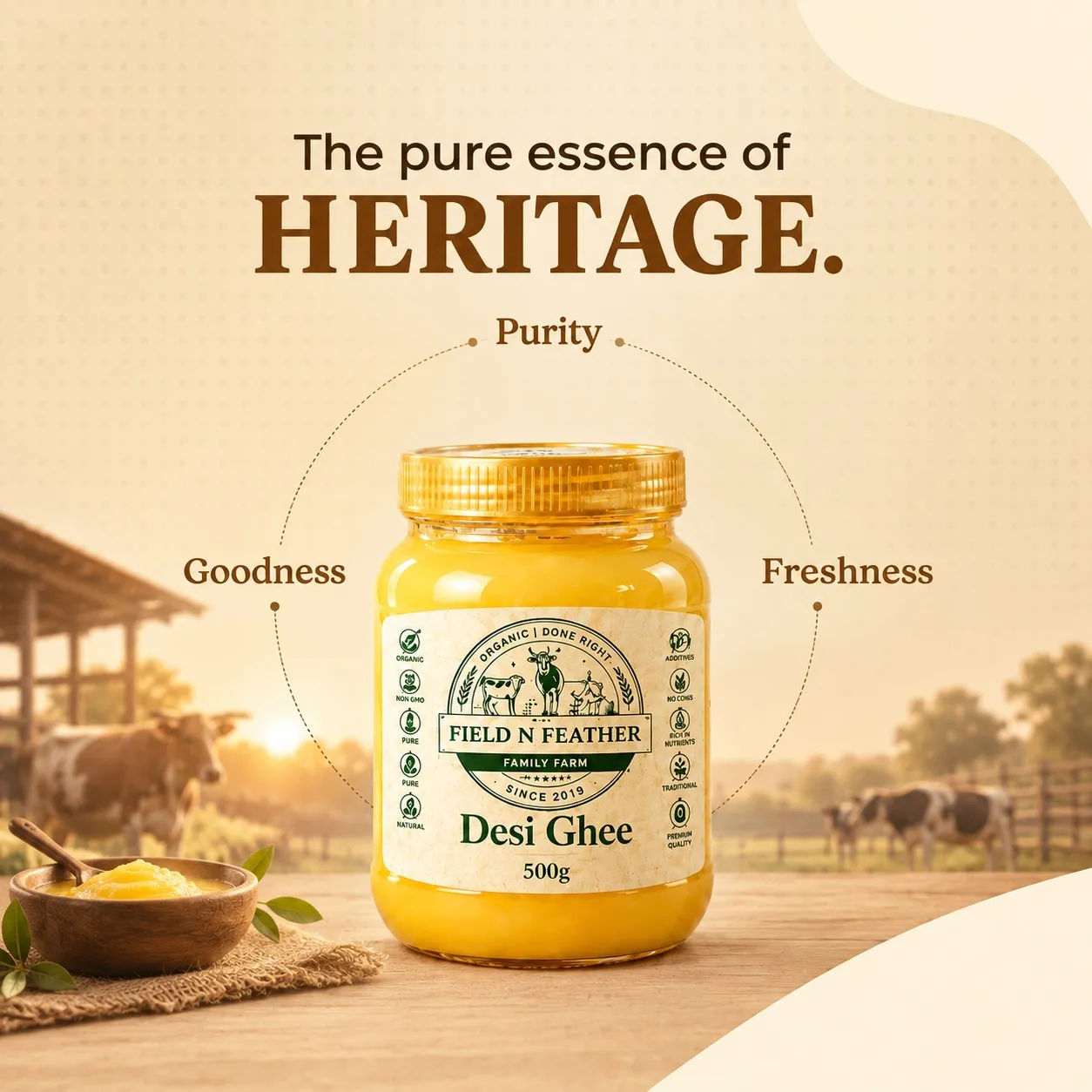
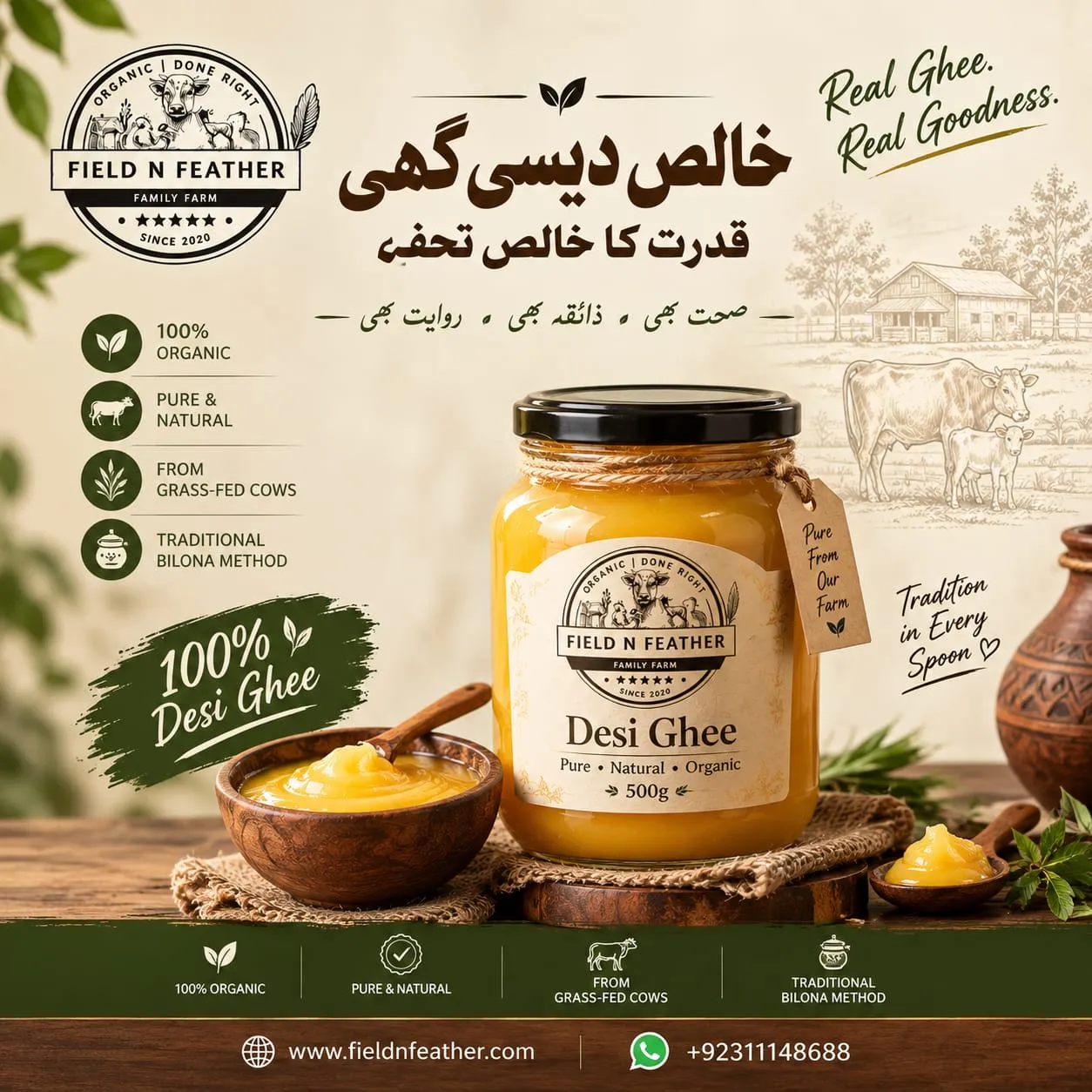
If you shop online, read recent reviews and look at photos of the back of the pack. Many shoppers compare brands such as Field N Feather, so it helps to see how its product page lists ingredients, dates, and sourcing next to other sellers. Use the same checklist for every brand.
Common Baking Mistakes to Avoid
Even confident bakers slip up. Watch out for these:
- Using too much ghee. It can make cookies spread or turn greasy.
- Using fully hot, liquid ghee in cookie dough. It may make the dough too soft.
- Overmixing. It makes baked goods tough.
- Skipping the rest time. Chilling dough helps cookies hold their shape.
- Opening the oven too early. A sudden heat drop can make cakes sink.
A Quick Sensory Check
Before baking, smell the jar. Good ghee smells warm, nutty, and buttery. A spoonful melted in a warm pan should turn into clear, golden liquid. A flat, sharp, or sour smell is a warning sign, since it will show in your bake. If something feels off, contact the seller and keep the packaging.
Storing Ghee and Baked Goods
Keep ghee in a clean, dry, airtight jar, away from the stove and sunlight. Always use a dry spoon, since even one drop of water can spoil it. You do not need to refrigerate it for regular use.
Store nankhatai and cookies in an airtight box at room temperature. They often stay good for a week or two, depending on the recipe and weather.
A Word on Balance
Baked treats made with ghee are rich. A tablespoon of ghee holds about 120 calories, and sugar adds more. Enjoy small portions, and share the tray. This article gives general information, not medical advice. If you have diabetes, heart disease, high cholesterol, or a milk allergy, ask your doctor or a registered dietitian what suits you.
Final Thoughts
Baking with ghee is a small change that brings big flavour. Start with one batch of nankhatai, adjust the amounts to suit your oven, and enjoy the smell.
When you are ready to restock, look at what Field n Feather shares about its ghee and compare the details with other brands. Choose the seller that explains how its product is made. And if you want to test first, a small pack from Field n Feather is an easy way to try your first tray of nankhatai before buying a large jar.




















Sign in to leave a comment.