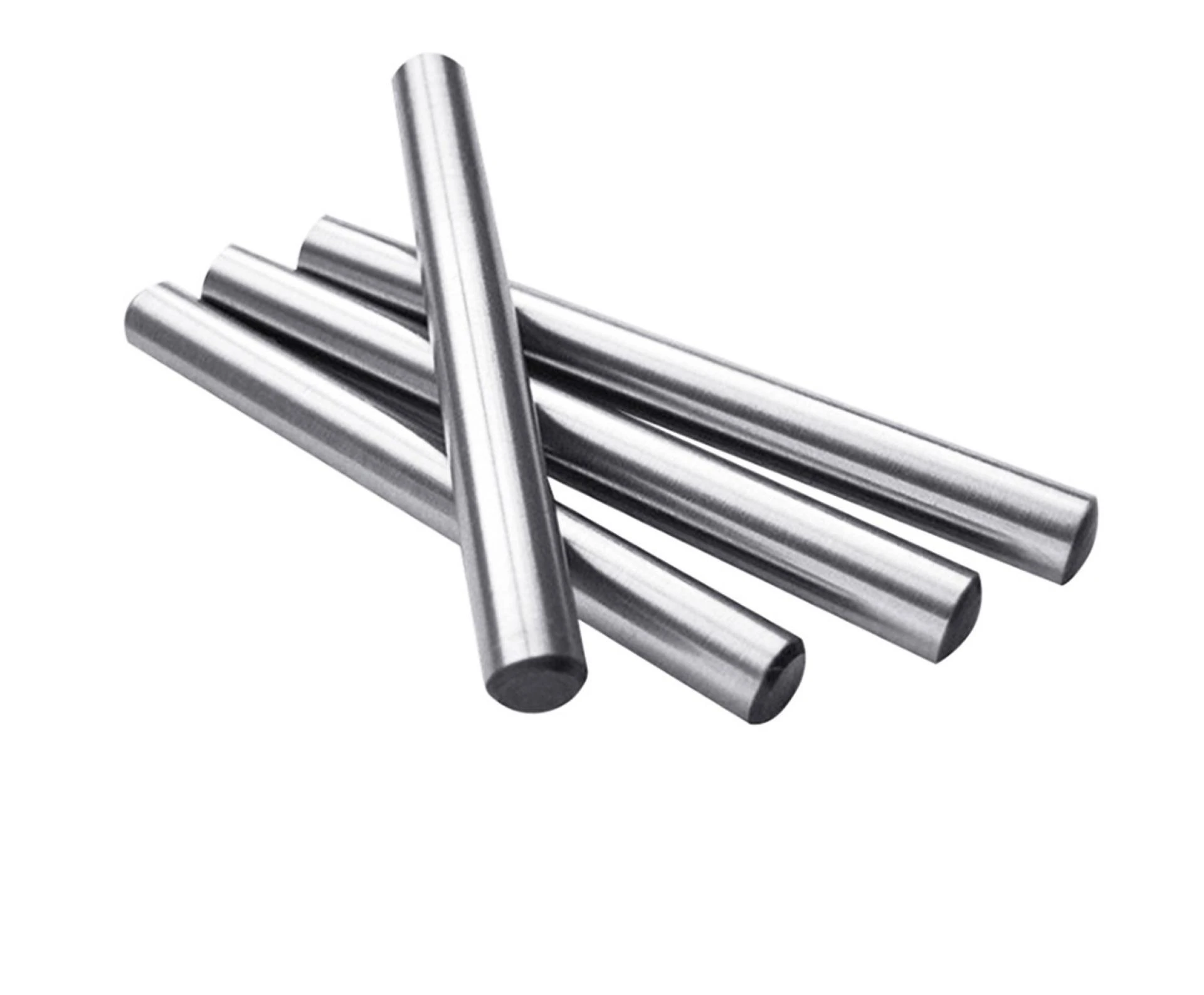

Niobium nitrogen alloy, often known as austenitic 321 stainless steel, is a highly stabilized chromium-titanium steel with exceptional oxidation resistance and creep strength. A stabilized variant of stainless steel type 304 containing titanium is known as AISI 321. When welding at temperatures between 800 and 1500°F, 321 Stainless Steel bar helps to prevent carbide precipitation owing to its titanium content.
Additionally, it permits the alloy to marginally increased temperatures. Grade 321 stainless steel bar has good creep strength and is very resistant to oxidation and corrosion. It can be utilized properly at temperatures between 800 and 1500°F for carbide precipitation in continuous and intermittent processes.
In contrast to carbon and ferritic stainless steel, which both require higher pressure, 321 stainless steel bar is ready to mold and draw. Because it work hardens more quickly than other varieties of austenitic stainless steel, 321 stainless steel may also need to be annealed after being subjected to heavy forming.
Alloy 321 can be utilized in nearly every diluted organic acid at moderate temperatures and in pure phosphoric acid at lower temperatures. It can be utilized in 10% diluted solutions at high temperatures. Alloy 321 resists polythionic acid stress corrosion cracking in hydrocarbon service. In caustic solutions free of fluoride or chloride at room temperature, alloy 321 can also be utilized.
When compared to type SS 304, SS 321 bar material has better creep and stress rupture qualities. While SS 304 and SS 304L are only capable of withstanding temperatures of 800°F, SS321 has a maximum working temperature in the range of 1500°F.
Aircraft piston engine manifolds and exhaust stacks, expansion joints, thermal oxidizers, refinery equipment, high-temperature chemical process equipment, exhaust systems, pressure vessels, and other applications are just a few examples of where type 321 stainless steel is employed.










Sign in to leave a comment.