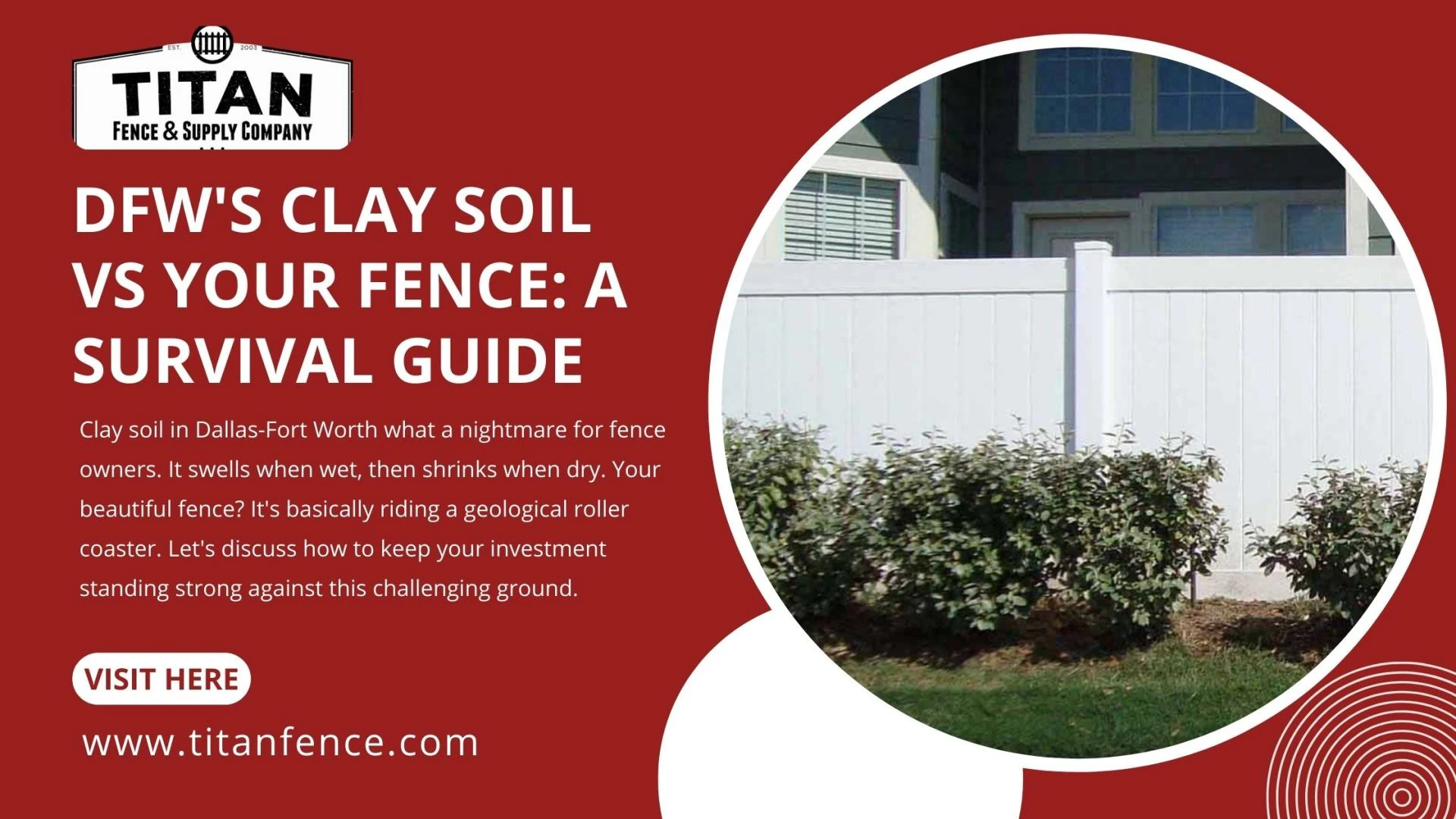
Clay soil in Dallas-Fort Worth what a nightmare for fence owners. It swells when wet, then shrinks when dry. Your beautiful fence? It's basically riding a geological roller coaster. Let's discuss how to keep your investment standing strong against this challenging ground.
Why Clay Soil Hates Fences
DFW sits on some seriously stubborn clay. When rain hits, and we get those sudden downpours, the soil expands like a sponge. Drought season? Complete opposite. The ground shrinks and cracks everywhere.
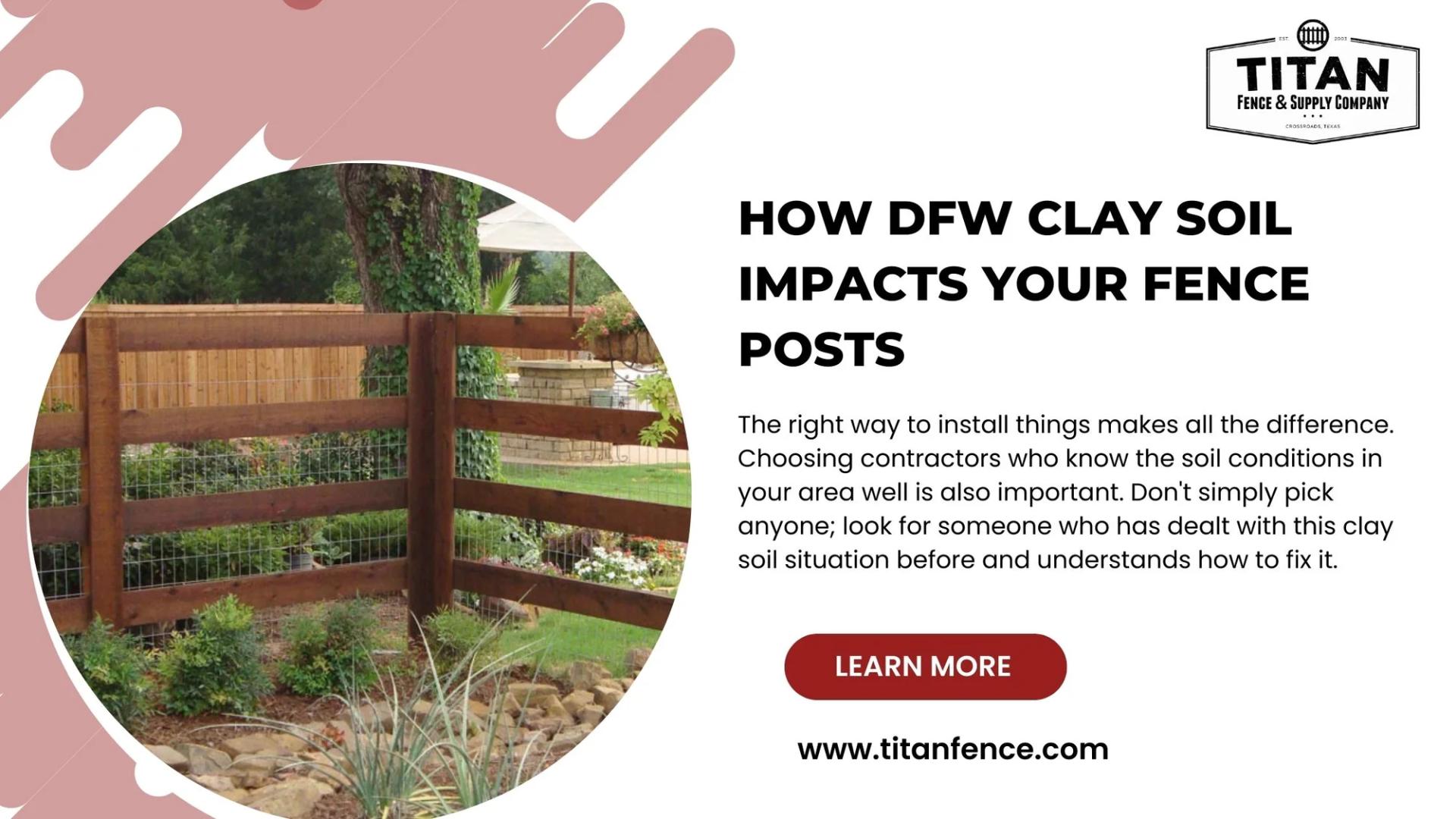
Your fence posts get pushed around constantly. Wood posts rot faster in clay because water doesn't drain well. Metal posts shift and lean over time. Even concrete footings can crack under all that pressure.
Think of clay like that friend who's constantly changing moods. One day it's supportive, the next it's working against you.
Foundation Fixes That Work
Here's the thing: proper drainage saves fences. Period.
Install posts 6-8 inches deeper than normal. Clay demands extra depth for stability. Mix gravel into your post holes, about 4-6 inches at the bottom works great for drainage.
Use concrete for all fence posts in clay areas. The concrete creates a stable anchor that clay can't easily shift around. Let it cure for 48 hours before attaching fence panels.
Wood Fence Contractor Dallas-Fort Worth professionals often recommend pressure-treated posts that are rated for ground contact. Regular wood posts fail quickly in these clay conditions.
Smart Material Choices
Wood Fencing in Dallas-Fort Worth works beautifully if you pick the right materials. Cedar and pressure-treated pine handle moisture way better than cheaper options.
Metal fencing offers real advantages in clay soil. Galvanized steel posts resist corrosion from clay's moisture retention. Custom metal fencing installations in Dallas-Fort Worth typically last longer because metal doesn't absorb water like wood does.
Vinyl fencing flexes with soil movement better than rigid materials. It won't crack like wood or rust like untreated metal.
Installation Timing Matters
Never install fences during DFW's wet season. Clay becomes nearly impossible to work with when it's saturated.
Late fall through early spring offers the best conditions. Clay stays more stable when the temperature remains consistent day to day.
Best Fence Installation Dallas-Fort Worth companies schedule clay soil projects during these optimal weather windows. Smart timing prevents future headaches.
Maintenance: Your Clay Soil Fence Needs
Check post stability twice yearly. Clay movement happens gradually, so problems tend to sneak up on homeowners.
Clear drainage around fence lines regularly. Standing water makes clay movement worse. Remove debris from fence base areas.
Custom Gates Dallas-Fort Worth installations need extra attention. Gates experience more stress from opening and closing, so hinges and posts require regular checks.
Touch up protective coatings annually. Clay holds moisture against fence materials longer than other soil types do.
Final Words
Every fence has trouble with clay soil, but good planning can help. Your fence will stay strong against anything clay throws at it as long as the posts are deep, the drainage is good, and the materials are clever. Taking care of things regularly stops problems from getting worse and costing a lot of money to fix. Your fence can undoubtedly win this fight against DFW clay.


























Sign in to leave a comment.