Many Indian companies, especially startups and expanding businesses, rely on foreign investments.
The global investments are the major growth driver for Indian companies. However, when the foreign investment is involved, the businesses must comply with the reporting norms under the Foreign Exchange Management (FEMA) and Reserve Bank of India guidelines.
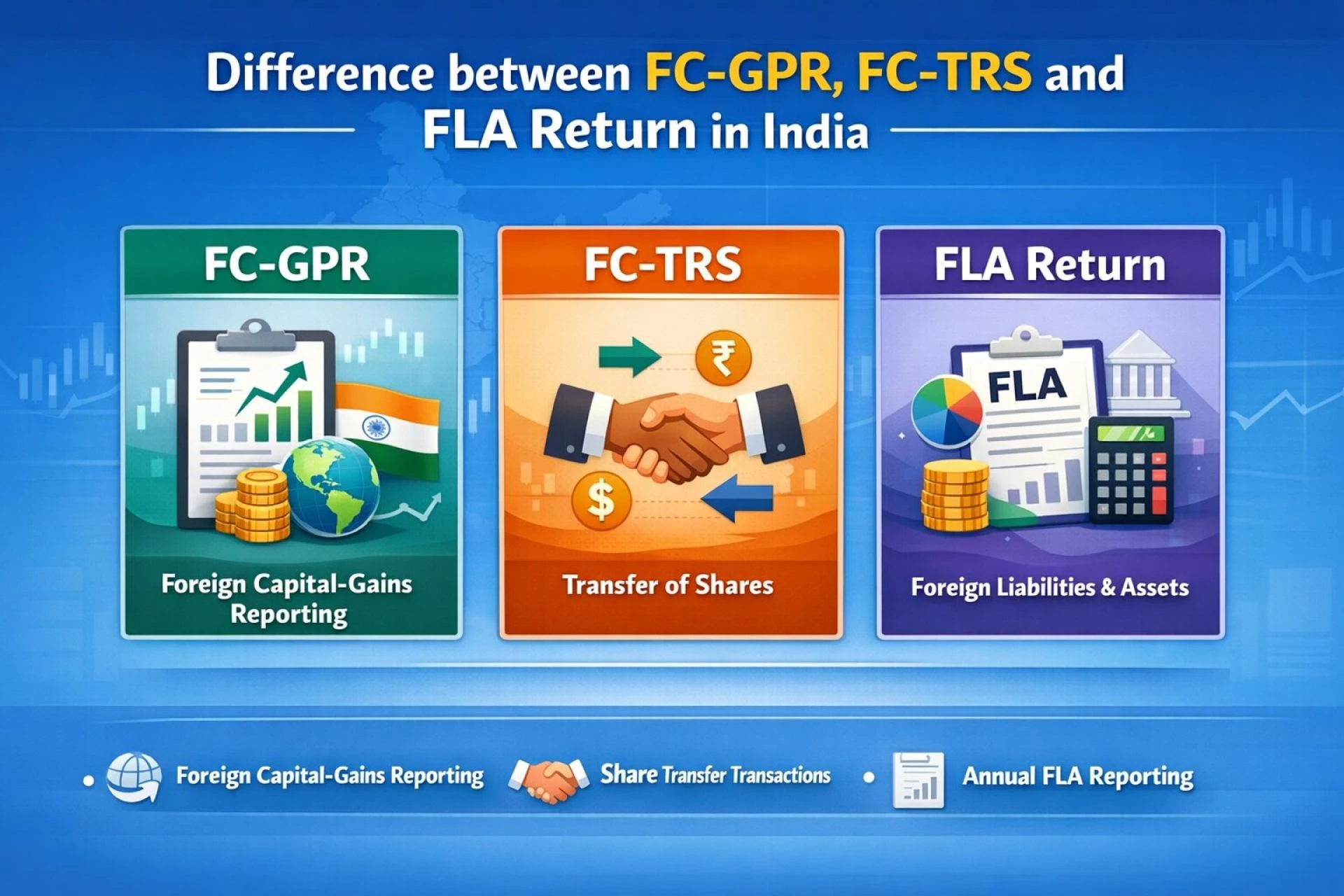
The companies often have to face three important filings, including FC-GPR, FC-TRS and FLA Return filing in India.
As all these filings relate to foreign investment reporting compliance in India, many business owners get confused.
Understanding the difference between FLA, FC-GPR and FC-TRS in India is important for maintaining regulatory compliance and avoiding huge penalties.
What is FC-GPR Filing in India?
It is filed when an Indian company issues shares or convertible instruments to a foreign investor. Whenever a company receives FDI and issues equity shares, compulsory convertible debentures, or preference shares to a foreign entity or individual, the company must report the transaction to the RBI through the FC-GPR form.
Key features of FC-GPR
• It is filed by the Indian company receiving FDI
• Used when new shares are issued to foreign investors.
• It must be filed within 30 days of the date of share allotment
• Filed through the RBI FIRMS portal
• It requires a valuation certificate and a board resolution
This return ensures the RBI is informed about fresh capital inflow from foreign investors.
What is FC-TRS Filing in India?
It is used when the shares of an Indian company are transferred between a resident and a non-resident.
This form is used for the transfer of the existing shares.
Key Features of FC-TRS
• It is filed when the shares are transferred between resident and non-resident investors
• Applies to the sale or gift of shares
• It must be filed within 6 days of the transfer of shares or receipt of payment.
• Filed through the RBI FIRMs portal
• It requires a share transfer agreement and a valuation certificate
It helps the RBI track the changes in foreign ownership of Indian companies.
What is FLA Return in India?
The FLA Return – Foreign Liabilities and Asset Return is one of the RBI foreign investment reporting forms, an annual reporting requirement for Indian companies that have received foreign investment or have overseas investments.
This return provides an annual summary of foreign liabilities and assets.
Key features of FLA Return
• It is filed by the companies with FDI or Overseas Direct Investment
• It is submitted annually to the RBI
• It is filed through the RBI FLAIR portal
• Reports the total foreign assets and liabilities of the company.
This return helps RBI track India’s international investment options.
FC-GPR v/s FC-TRS v/s FLA Return- Key Differences
Understanding the difference between FC GPR v/ FLA Return v/s FC-TRS in India helps business stay compliant
| Filing Type | Purpose- Reporting | When is to be Filed | Who Files It |
| FC-GPR | New shares issues to foreign investors | Within 30 days of share allotment | Indian Company |
| FC-TRS | Transfer Shares | Within 60 days | Buyer or seller |
| FLA Return | Annual reporting of foreign assets and liabilities | Every year by 5th July | Indian Company with foreign investment |
Failure to file these returns within the prescribed timeline can invite penalties under FEMA.
Foreign investment reporting in India involves many filings. Work with a dedicated professional to navigate the filings effectively to ensure smooth operations, regulatory transparency and easier access to future global investments.





























Sign in to leave a comment.